At this hour, the headlines say that Donald Trump has called off strikes on Iran because negotiations are almost concluded, while Iran denies that there are any talks. Maybe an agreement will soon be signed, but I think not.
Financial Times commentator Chris Giles argues that the US-Iran war is in a “bounded equilibrium.” Whenever the combatants exchange attacks or ramp up their rhetoric, crude oil prices rise. As the price of a barrel approaches $100, Donald Trump worries about becoming the new Herbert Hoover and restrains US attacks, claiming that an amazing deal is on the table. However, as tankers begin to traverse the Strait of Hormuz, the price of a barrel sinks toward $70 and the Iranian regime attacks ships or land targets in the region to reassert control.
As a result, the world is stuck in a range that can be measured in terms of oil prices ($70-100), the number of ships moving through the Strait (zero-80/day) and fatalities from airstrikes and drones (zero-540/day). The first trend moves inversely to the other two.
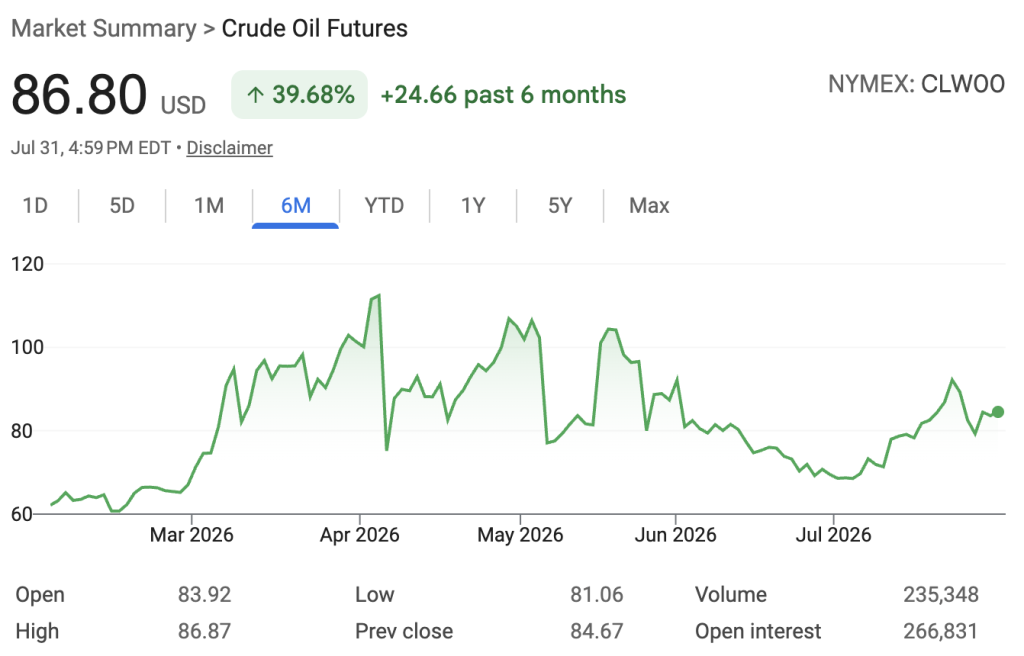
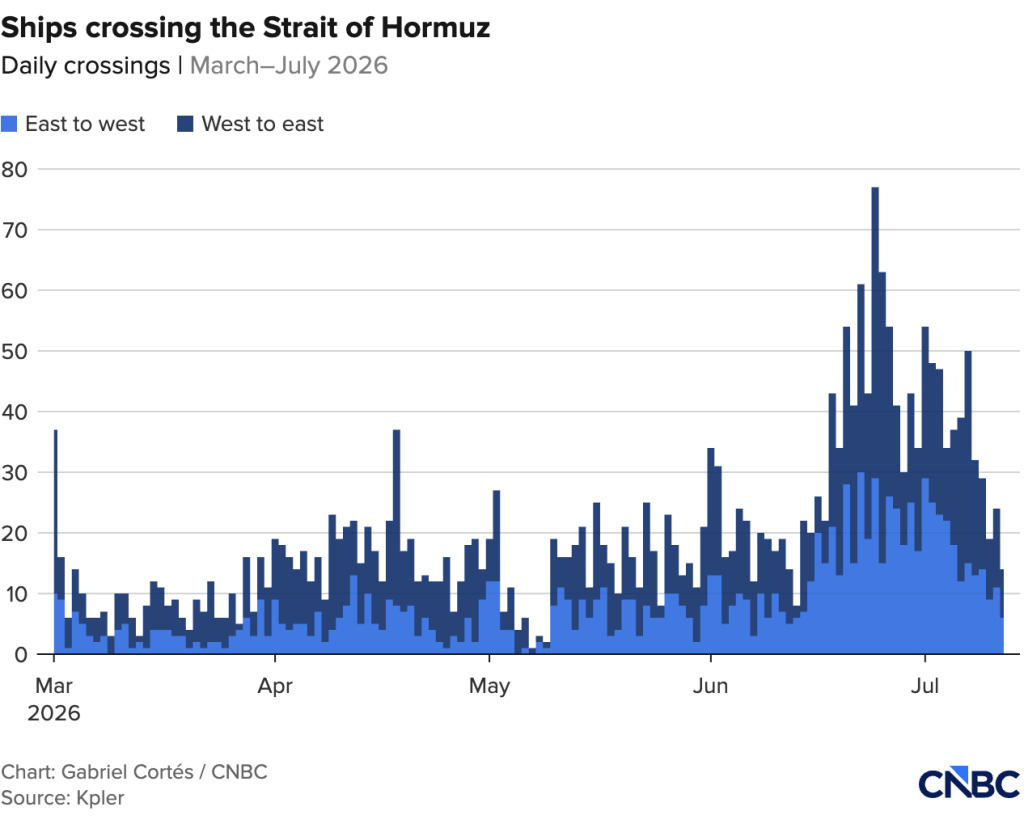
The Institute for the Study of War tends to interpret daily changes in Iran’s posture as the result of competition among factions in the regime, some more bellicose than others. (See yesterday’s report, for example.) But that form of explanation is compatible with Giles’ equilibrium theory. Perhaps aggressive factions tend to gain influence whenever oil prices slide.
For the Iranian regime, the status quo is tolerable, but they risk losing leverage when shipping goes back to normal. On the other hand, they do incur costs when the US strikes Iranian targets. These twin pressures keep their behavior within a range.
This current equilibrium is not truly stable. Although I wouldn’t be surprised if the status quo lasts for months or even a couple of years, the underlying situation is subject to breakdown in various ways.
The US economy may take a major hit once global oil reserves run out, or simply as a result of sustained energy shortages plus other vulnerabilities, such as an overpriced stock market. If a serious US recession follows the attacks on Iran, that may deter future US aggression and make Iran less interested in developing other deterrents, such as nuclear weapons. In a recession, Trump might be motivated to entice the Iranian government to reopen the Strait by offering security guarantees, sanctions relief, or pressure on Israel.
On the other hand, the Iranian economy could collapse, or the Iranian regime could face other pressures that persuade its leaders to reopen the strait without tolls. I find this outcome harder to envision, but it is possible.
In the meantime, I would tune out daily news about negotiations. I would not use the oil futures market to predict the future, although the current price does indicate the situation of the day.
The current situation may continue long enough that Democratic candidates in the 2028 presidential race will start having to offer solutions.
See also: how markets predict news; Prisoner’s Dilemma in the Gulf; the Gulf War and the energy transition