vestiges of feudalism in Emma; or, why the gentry acts as it does

Here is a passage–one of thousands from many sources–in which a member of the landed gentry expresses mild disdain for people who make their money by working. Since it’s by Jane Austen (Emma, chapter 22), it satirizes this prejudice without entirely eschewing it.

Philip Elton (a vicar, or priest) has rejected Emma’s friend Harriet as socially inferior and has returned to their community with a different fiancée on his arm. The narrator, partaking a little of Mr. Elton’s perspective, introduces this newcomer: “The charming Augusta Hawkins, in addition to all the usual advantages of perfect beauty and merit, was in possession of an independent fortune.”

But Emma “thought very little” of this lady.

What she was, must be uncertain; but who she was, might be found out; and setting aside the £10,000 it did not appear that she was at all Harriet’s superior. She brought no name, no blood, no alliance. Miss Hawkins was the youngest of the two daughters of a Bristol — merchant, of course, he must be called. … Though the father and mother had died some years ago, an uncle remained — in the law line — nothing more distinctly honourable was hazarded of him, than that he was in the law line; and with him the daughter had lived. Emma guessed him to be the drudge of some attorney, and too stupid to rise. And all the grandeur of the connection seemed dependent on the elder sister, who was very well married, to a gentleman in a great way, near Bristol, who kept two carriages! That was the wind-up of the history; that was the glory of Miss Hawkins.

(If Augusta’s uncle is a toiling “attorney,” then he is involved in trade, like his brother, whereas a barrister would be a gentleman.)

Emma’s distinctions are familiar from distant times and places. The varnas in Vedic Hinduism were the Brahmins (priests, like Mr Elton), the Kshatriyas (rulers and warriors of a class like Emma’s father), and the Vaishyas (who include merchants, like Augusta’s father), as well as the Shudras, or servants and laborers. Kshatriyas were not supposed to marry Vaishyas. Around 893 CE, King Alfred said that any realm needs three orders: “praying men, fighting men and working men.” The Four Occupations in ancient China were the shi (gentry and scholars), the nong (peasant farmers), the gong (artisans and craftsmen), and the shang (merchants and traders). Mande-speaking groups in West Africa have classified people as nobles, vassals, or as various specific craftspeople. And so on.

All these systems could be called “feudal.” It’s important to notice the differences among them and not to resort to a crude theory of universal “stages” in which feudalism always precedes capitalism. In fact, according to Arif Dirlik, “Marx’s remarks on feudalism,” which “were scattered throughout his work,” “were not meant to define a universal social type but only to describe the process whereby European feudalism was transformed into European capitalism.”

Nevertheless, we can imagine the general functions that are served by the distinctions in Emma’s mind.

First, most human beings have spent their lives working on the land to produce food. Land can be apportioned in many ways–for instance, it can belong to a village as a common resource or be traversed by nomads. But it has been common to allocate specific acres to individual owners.

Private ownership can concentrate so that a few people own most of the land. They might gain it by violent force, or it could accumulate due to luck, inheritance, and trade–or a mix of these. Emma’s family, the Woodhouses, “had been settled for several generations at Hartfield, the younger branch of a very ancient family.” Emma acknowledges that the “landed property of Hartfield” is just a “sort of notch in the Donwell Abbey estate,” which is vast. Nevertheless, the Woodhouses have a fortune “from other sources” (presumably, rents from other land) that “make[s] them scarcely secondary to Donwell Abbey itself,” and as a result, they have “a high place in the consideration of the neighbourhood” (ch. 16).

In any case, once land has concentrated, it is very much in the owner’s interests not to work but to live on the surplus of other’s labor, whether the laborers are employees, tenants, vassals, or serfs or slaves. (For Marx and Engels in the German Ideology of 1845-6, a feudal system specifically requires serfs, but I would ignore that detail.) Mr. Woodhouse is introduced as a “valetudinarian [overly anxious about his health] all his life, without activity of mind or body” (ch. 1). He evidently lives passively from the income of his estates and likes to “while away the morning” with “books of engravings, drawers of medals, cameos, corals, shells, and every other family collection” (ch. 6).

The many who labor may resent the few who don’t and may seek their land. Therefore, the landowning class has motivations to monopolize violence by training and arming themselves as professional warriors and employing military followers, by capturing the state if it is an effective mechanism of control, by promoting an ideology that justifies their status, by bequeathing each family’s land to one heir so that it doesn’t get diluted (primogeniture), and by restricting the size of their group by socializing and marrying only amongst themselves (endogamy).

These traditions have weakened by Emma Woodhouse’s time, but they still explain why many men in her circles pursue military careers and carry swords, why they dominate Parliament, why the gentry teaches and reinforces a cultural disdain for working with one’s hands, why they monopolize the main sources of ideology, such as the established Church of England, and why they prefer to marry their own. The function of these strategies is to preserve their ability to live well without working.

Emma must dramatically reassess her aspirations for Harriet once she learns that her friend’s late father had been a tradesman, not a landed gentleman:

Harriet’s parentage became known. She proved to be the daughter of a tradesman, rich enough to afford her the comfortable maintenance which had ever been hers, and decent enough to have always wished for concealment.—Such was the blood of gentility which Emma had formerly been so ready to vouch for!—It was likely to be as untainted, perhaps, as the blood of many a gentleman: but what a connexion had she been preparing for Mr. Knightley—or for the Churchills—or even for Mr. Elton!—The stain of illegitimacy, unbleached by nobility or wealth, would have been a stain indeed (ch. 19).

The novel is almost over by this point, but Emma retains a firmly feudal attitude toward inherited “gentility.”

A major complication is that there are rarely just two kinds of people: landowners and manual workers. As in the examples cited above, there may also be clergy, merchants, and manufacturers who produce at larger scales than craftspeople. What to do with these groups if you want to preserve the prerogatives of the landed gentry?

The clergy (or “men who pray”) can be handled in either of two ways. They can form their own caste, like Brahmans or (to some extent) priests in Orthodox Christianity. These men inherit religious endowments, much as the gentry inherit land. Priests and great landowners naturally cooperate, since they share stakes in the current system. Alternatively, the clergy can be denied the right to have legitimate heirs, as in Catholicism or Buddhist monasticism. Then each new cleric does not create a competitor to the gentry, but his career concludes with his death. Clerical positions are useful placements for the younger sons of gentry and for ambitious commoners.

(The English case was a complex hybrid, because some clerical positions provided income from land endowments, or “livings,” which could be retained by specific families, but others were more like jobs. Anglican priests can marry, but churches are not literally inherited.)

Merchants and manufacturers pose a different threat. Their segments of the economy can be more dynamic than agriculture, and some may build fortunes that become sources of power.

One response is to ignore them. In the Waning of the Middle Ages (1919), J. Huizinga notes that the wealth of advanced parts of medieval Europe like Burgundy came from trade and industry, Merchant-bankers were commoners, but they could have more power than monarchs. However, even though “nobility and feudalism had ceased to be really essential factors in the state and in society, they continued to impress the mind as dominant forms of life. The men of the fifteenth century could not understand that the real moving powers of political and social evolution might be looked for anywhere else than in the doings of a warlike or courtly nobility.” For instance, Georges Chastellain, a Burgundian chronicler, could only explain his realm’s prosperity as a result of its knights’ honor. Huizinga notes: “Chastellain still calls the rich burghers simply villeins.”

But this won’t work for long. If even a king needs loans to maintain his power, he can’t continue to treat his creditors like peasants. Another solution is to absorb the most successful merchants into the gentry by allowing them to buy land and live from rents and to marry their children to members of the landed class, as long as they stop trading. That proviso is important because it prevents their fortunes from continuing to grow rapidly, which would destabilize the system. This is what seems to have happened with Augusta’s family in Emma. Her father was a merchant (possibly involved in slavery), but her sister is said to have married a gentleman from the countryside, and she has landed a vicar for a husband. Any children she has with Mr. Elton will never have to work for income. But her £10,000 will not grow rapidly, because it will be invested in land.

Unfortunately for the landed gentry, the rewards of continuing to be a merchant can be high. If there’s an available ideology–such as Calvinism or Methodism–that justifies continuing to make money from trade and industry, then successful merchants may not want to retire to landed estates. They can keep getting richer, and they may be able to seize political power from the class whose wealth comes from passive land-ownership. This is the transition to capitalism that Marx observed. In the early 1900s, when Liberal parliaments voted high property taxes “to free the land that from this very hour is shackled with the chains of feudalism” (Lloyd George), it was clear that new classes of people had seized the state from the landed gentry and were even willing to bankrupt them.

Then again, even in the 21st century, some people still distinguish ordinary work from “professional” occupations that require liberal educations and that involve a lot of autonomy and reading, writing, and talking. Some parents who make money from trade or industry still give their children educations that inculcate values derived from the traditional gentry; then those children pursue professions that were considered respectable for gentlemen in Austen’s day, and they marry one another. It remains desirable not to labor at others’ direction but to spend one’s time, like old Mr. Woodhouse, reading and conversing–even if, nowadays, that usually means holding a job classified as “professional.”

See also: defining capitalism; the gentry as caste and class (from 2007); when chivalry died; the politics of Wind in the Willows; the neo-feudalism thesis; British exceptionalism 2: the unique nature of the aristocracy; David Brooks/Pierre Bourdieu; the links between capital and education.
the only man who pardoned himself out of prison

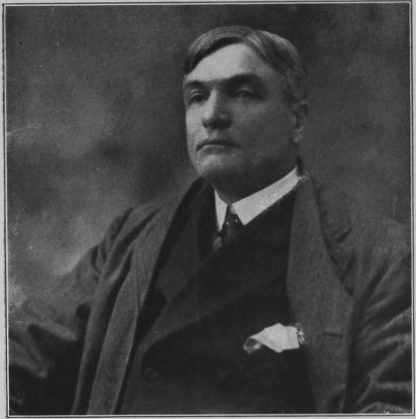
If—very hypothetically—Donald J. Trump were to be convicted and even incarcerated, but also elected president in 2024, could he pardon himself? Since a president’s pardoning power is unlimited, the constitutional question might turn on whether the act of pardoning can be reflexive. Is it a correct use of the word “pardon” to say that someone pardoned himself?

The caption with above photo reads: “The only Man on Record who is known to have Pardoned himself out of Prison. He began life as a School Teacher, Clerk in a Law Office, full fledged Lawyer and Treasurer of a Political organization in New England, with whose funds he decamped. He has been in Prison a dozen times under as many aliases, where he has spent twenty-five years. When he pardoned himself out of prison he was in Nashville, Tenn. under the name of Henry B. Davis. He is now supposed to be dead.”

Leaving aside the Trumpian capitalization in this passage, the man who called himself Henry B. Davis did not actually pardon himself. He confessed that he “forged a petition bearing upward of 150 signatures, writing differing in each, the names of the leading citizens of Tipton, Tenn., the county in which I was sentenced. I then forged a letter bearing the signature of the firm of attorneys that defended me, one of whom was a friend of the Governor … I then forged another letter purporting to have been written by the aforesaid attorney to John Tipton, representative in the Legislature in Nashville, in which he was asked to see Governor Buchanan, and to urge him to pardon Henry B. Davis (my alias). All this was done in March, 1891. On the third day of April, 1891, the pardon reached the warden at Tracy City.”

In any case, this was not the only person to have pardoned himself. A Google search led me to a book by my friend Cynthia Levinson and Sanford Levinson, Fault Lines in the Constitution, which mentions the case of Isaac Stephens. While governor of the Territory of Washington, Stephens was convicted and fined for abusing his power. He was fighting a terrible war against Native people but was fined for offenses against white settlers. He actually pardoned himself and got away with it, although just six years later he died heroically on the Union side of the Civil War.

Neither example is very honorable, and I haven’t been able to find other cases of successful self-pardoning … so far.

Sources: John Josiah Munro, The New York Tombs, Inside and Out!: Scenes and Reminiscences Coming Down to the Present.–A Story Stranger Than Fiction, with an Historic Account of America’s Most Famous Prison (1909) and Cynthia Levinson and Sanford Levinson, Fault Lines in the Constitution: The Framers, Their Fights, and the Flaws that Affect Us Today.

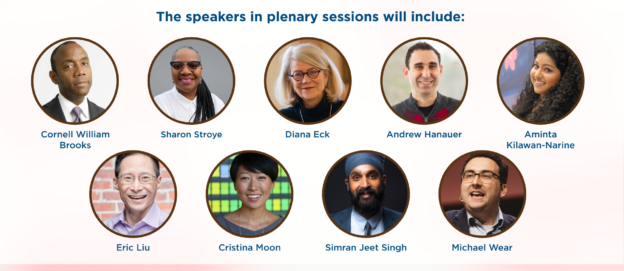
Portraits of featured speakers

Frontiers of Democracy 2023

The annual Frontiers of Democracy conference at Tufts is coming up: July 13 (5-7 pm) to July 15 (noon) at Tufts University in Medford, MA. We have an excellent complement of registered participants, but there is still room for some more to register.

Come for:

  • Nine profound and experienced thinkers who will discuss religious pluralism, democracy, and racial equity in plenary panels.
  • Twenty-one carefully constructed, interactive concurrent sessions on a range of topics, from the North Carolina Leadership Forum’s model of transpartisan dialogue to lowering the voting age, from faith and trauma to climate resilience, from civic education to community organizing.
  • Six opportunities to learn specific methods of democratic practice in training sessions.
  • The rough-cut of a new documentary, with an opportunity to influence the final version.
  • Open-space discussions of topics that you can propose on the spot.
  • A display of books by authors at the conference, which you can purchase.
  • A beautiful art installation celebrating a major influence on our conference, Elinor Ostrom.
  • Snacks and meals.
  • Lots of interaction with 100 or more experienced and diverse activists for democracy from several countries.

The draft agenda is here: https://tufts.app.box.com/v/tisch-frontiers-2023-schedule. Registration information is here.

when does a narrower range of opinions reflect learning?

John Stuart Mill’s On Liberty is the classic argument that all views should be freely expressed–by people who sincerely hold them–because unfettered debate contributes to public reasoning and learning. For Mill, controversy is good. However, he acknowledges a complication:

The cessation, on one question after another, of serious controversy, is one of the necessary incidents of the consolidation of opinion; a consolidation as salutary in the case of true opinions, as it is dangerous and noxious when the opinions are erroneous (Mill 1859/2011, 81)

In other words, as people reason together, they may discard or marginalize some views, leaving a narrower range to be considered. Whether such narrowing is desirable depends on whether the range of views that remains is (to quote Mill) “true.” His invocation of truth–as opposed to the procedural value of free speech–creates some complications for Mill’s philosophical position. But the challenge he poses is highly relevant to our current debates about speech in academia.

I think one influential view is that discussion is mostly the expression of beliefs or opinions, and more of that is better. When the range of opinions in a particular context becomes narrow, this can indicate a lack of freedom and diversity. For instance, the liberal/progressive tilt in some reaches of academia might represent a lack of viewpoint diversity.

A different prevalent view is that inquiry is meant to resolve issues, and therefore, the existence of multiple opinions about the same topic indicates a deficit. It means that an intellectual problem has not yet been resolved. To be sure, the pursuit of knowledge is permanent–disagreement is always to be expected–but we should generally celebrate when any given thesis achieves consensus.

Relatedly, some people see college as something like a debate club or editorial page, in which the main activity is expressing diverse opinions. Others see it as more like a laboratory, which is mainly a place for applying rigorous methods to get answers. (Of course, it could be a bit of both, or something entirely different.)

In 2015, we organized simultaneous student discussions of the same issue–the causes of health disparities–at Kansas State University and Tufts University. The results are here. At Kansas State, students discussed–and disagreed about–whether structural issues like race and class and/or personal behavioral choices explain health disparities. At Tufts, students quickly rejected the behavioral explanations and spent their time on the structural ones. Our graphic representation of the discussions shows a broader conversation at K-State and what Mill would call a “consolidated” one at Tufts.

A complication is that Tufts students happened to hear a professional lecture about the structural causes of health disparities before they discussed the issue, and we didn’t mirror that experience at K-State. Some Tufts students explicitly cited this lecture when rejecting individual/behavioral explanations of health disparities in their discussion.

Here are two competing reactions to this experiment.

First, Kansas State students demonstrated more ideological diversity and had a better conversation than the one at Tufts because it was broader. They also explicitly considered a claim that is prominently made in public–that individuals are responsible for their own poor health. Debating that thesis would prepare them for public engagement, regardless of where they stand on the issue. The Tufts conversation, on the other hand, was constrained, possibly due to the excessive influence of professors who hold contentious views of their own. The Tufts classroom was in a “bubble.”

Alternatively, the Tufts students happened to have a better opportunity to learn than their K-State peers because they heard an expert share the current state of research, and they chose to reject certain views as erroneous. It’s not that they were better citizens or that they know more (in general) than their counterparts at KSU, but simply that their discussion of this topic was better informed. Insofar as the lecture on public health found a receptive audience in the Tufts classroom, it was because these students had previously absorbed valid lessons about structural inequality from other sources.

I am not sure how to adjudicate these interpretations without independently evaluating the thesis that health disparities are caused by structural factors. If that thesis is true, then the narrowing reflected at Tufts is “salutary.” If it is false, then the narrowing is “dangerous and noxious.”

I don’t think it’s satisfactory to say that we can never tell, because then we can never believe that anything is true. But it can be hard to be sure …

See also: modeling a political discussion; “Analyzing Political Opinions and Discussions as Networks of Ideas“; right and left on campus today; academic freedom for individuals and for groups; marginalizing odious views: a strategy; vaccination, masking, political polarization, and the authority of science etc.

the human coordination involved in AI

When we are amazed by the magic of a new software application, like ChatGPT, we should not be impressed by the machine, nor by the specific firm that offers the product, but by the enormous array of human brains that have been connected so that they can accomplish complex tasks together.

Brian Chau is writing a series of detailed posts arguing that the innovation curve for artificial intelligence may be tapering off, not accelerating. The curve may be s-shaped, starting with a long period of slow progress, followed by rapid breakthroughs that are now largely over, with another period of slow growth ahead.

Although his evidence seems robust, I cannot assess his thesis. What struck me as I read his analysis was the vast amount of coordinated human effort that produces something like ChatGPT.

AI requires hardware–not just the big servers that run the model, but also the components that connect to it, including my laptop, and its power cord, and the generator that supplies it with electricity. All hardware requires design, manufacture, raw materials, and transportation.

AI also involves software of many kinds, which requires vast amounts of human work. People need appropriate educations and training to do all the relevant tasks, from mining minerals to writing code. Information must be created and circulated, including information that is free and public rather than proprietary. And a whole range of businesses and other organizations (e.g., engineering schools) must be financed, managed, marketed, staffed, etc.

Prices play important roles in all of this. They are signals that create incentives. For instance, there is a market price for the kinds of data-processing required by AI, and as that price rises, people see that they can make money providing the service. But prices hardly ever suffice for coordinating large and complex systems.

For one thing, you can’t interpret a price signal without a lot of information. For instance, the starting salary of computer science majors is projected to fall by 4 percent this year. That is a price signal, but it’s confusing without more context. A prospective major would need to know what is causing this short-term shift in the average price of this category of labor.

Even when the message of a price signal is clear, you can’t act on it unless you have substantive knowledge of the topic. I am aware that certain kinds of software are in high demand, but I don’t know how to write modern code, so I couldn’t take advantage of the price (even if I wanted to). Many people who do know how to code were taught that skill, and teaching is a different form of communication from prices (even though most teachers are paid, and schools and colleges have market aspects).

Whether the results of all this human coordination are beneficial is a different question …

See also the design choice to make ChatGPT sound like a human ; the difference between human and artificial intelligence: relationships; artificial intelligence and problems of collective action.