Category Archives: advocating civic education

suing for better civics

(DCA) Robert Pondiscio for the Fordham Institute:

Many of us who view ourselves as civic-education advocates spend lots of time writing earnest op-eds and columns, attending conferences, and speaking on panels … Collectively, we have spilled gallons of ink urging states, school districts, and teachers to return public education to its roots.

Well, to hell with all that jawboning, says Michael Rebell, in effect. He’s going to force the issue by making a federal case out of it. Literally.

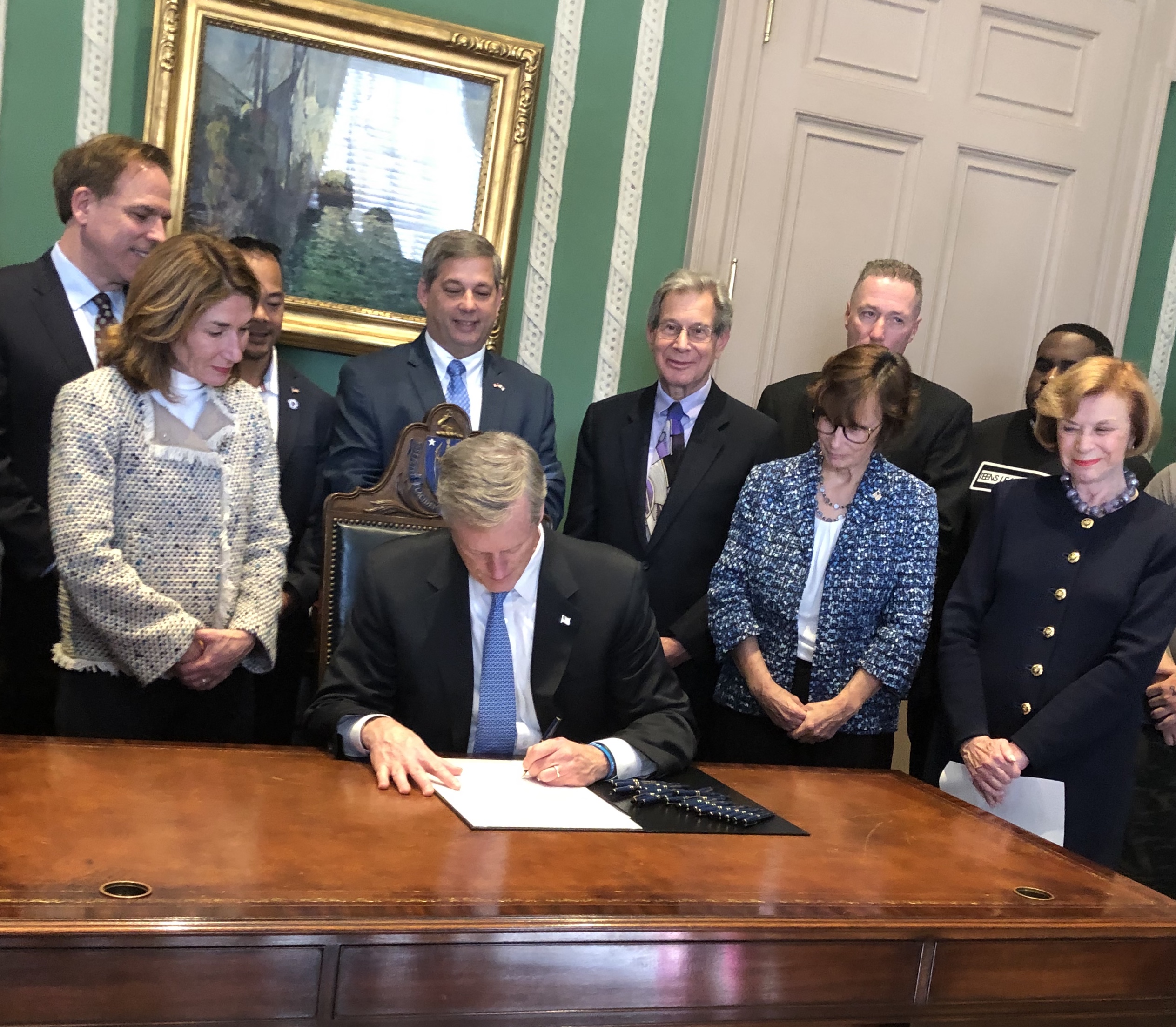
An attorney and Columbia professor, Rebell has been quietly working with a group of law school students to prepare a federal lawsuit to be filed next month, arguing that our public schools are not adequately preparing children for citizenship. ….

Before you write this off as a quixotic quest or mere law school exercise, know that Rebell isn’t just some lawyer, or even some professor. In 1993, he led the landmark Campaign for Fiscal Equity lawsuit against the State of New York and won …

I would add that Rebell’s new book, Flunking Democracy: Schools, Courts, and Civic Participation (University of Chicago Press, 2018) is a thoughtful, well-informed, and judicious overview of civics–valuable even if you aren’t interested in the lawsuit. The book also helpfully explains what would happen if the plaintiffs won. They wouldn’t ask courts to set education policy but to require a deliberative process (involving elected officials and others) that would make progress on civics.

take a survey to help develop a strategy for improving civic education in the USA

A coalition called CivXNow is working to expand and improve civic education in the USA. I am on this coalition’s steering committee.

We recently fielded a survey to collect ideas for improving civic education. More than 6,500 people took that survey. A major component was a “Five Whys” exercise, asking why civics is not as good as it should be. If you took the “Five Whys” survey, please complete a second survey now to help refine and organize the results. The format of this second survey is innovative and should be fun.

If you did not take that first survey, we would still welcome your input as we hone the ideas that emerged from it. We have designed a survey for people who didn’t take the first one but still wish to have input. It is online and will take less than 15 minutes to complete. It can be taken on a computer or a smartphone. You can take it by clicking here.

coming soon: Democracy’s Discontent and Civic Learning

Now available for pre-ordering is Charles S. White (ed.), Democracy’s Discontent and Civic Learning: Multiple Perspectives. Chapters include:

  • “The Populist Moment,” by William A. Galston.
  • “Populism, Democracy, and the Education of Citizens,” by Thomas S. Vontz and J. Spencer Clark, (with Stephen L. Schechter).
  • “Are Europe’s Democracies in Danger? A View of the Populist Challenge,” by Karlheinz Duerr.
  • “Confronting a Global Democracy Recession: The Role of United States International Democracy Support Programs,” by Liza Prendergast
  • “Democracy’s Pharmakon: Technology as Remedy and Poison,” by Charles S. White.
  • “Judicial Legitimacy in the Age of Populism,” by Alison Staudinger.
  • “Fulfilling the Promise of Democracy: How Black Lives Matter Can Foster Empowered Civic Engagement,” by Amy J. Samuels and Gregory L. Samuels.
  • “Does P–12 Educational Research Ameliorate or Perpetuate Inequity?” by Jacob S. Bennett.
  • “Democracy’s Discontent and Teacher Education: Countering Populism and Cultivating Democracy,” by Stephanie Schroeder.
  • “A Primer on Trump Economics: Populist or Something Else?” by James E. Davis.
  • “Going for Depth in Civic Education: A Design Experiment,” by Walter C. Parker. With responses:
    • “What Public Philosophy Should We Teach? A Reply to Parker,” by Peter Levine
    • “Fidelity of Implementation: A Reply to Parker,” by James E. Davis
    • “Contrasting Landscapes: A Reply to Parker,” by Karlheinz Duerr

new survey on Americans’ views of democracy

(Salt Lake City, Utah) Freedom House, the George W. Bush Institute, and the Penn Biden Center for Diplomacy and Global Engagement have released a new national survey on Americans’ attitudes toward democracy.

The headline finding is that Americans value democratic norms–regardless of party–and they worry that those norms are weakening. Almost exactly the same proportion of Democrats and Republicans (63% and 65%) say that it is “absolutely important” to live in a democracy.

But only one in three young adults think it’s “very important” to live in a democracy. The perceived importance of living in a democracy rises steadily and steeply by age. This trend could be generational, in which case democracy is in trouble as we face a century dominated by people who aren’t committed to democracy. Or it could be a life-cycle effect: perhaps people gradually develop more commitment as they grow older.

This graph is an argument for better civics. Almost 90 percent of poll respondents want to “ensure that schools make civic education a bigger part of the curriculum.”

Respondents were asked what is wrong with our democracy today. Youth are much more likely that other groups to point to racism and discrimination. They are somewhat less likely to condemn unreliable media and partisan news. Hardly any youth are concerned about a “breakdown in traditional American values.” But partisan news and a breakdown of traditional values are the two most serious problems according to Republicans.

civic education that is less about the state

We are completing the tenth (!) annual Summer Institute of Civic Studies, which revolves around the three schools of civic theory outlined below. (Each “school” encompasses diverse views and criticisms.) Today we talked about what these theories would mean for civic education at various levels and in several nations.

I certainly don’t advocate assigning The Theory of Communicative Action vols. 1-2Governing the Commons, or Hind Swaraj in an 8th grade civics class. But we might involve 8th graders in managing common resources, incorporate them in the public sphere by inviting them to join public deliberations, and ask them to develop strategies for addressing power disparities at the human level. Indeed, we do all these things, but they tend to be somewhat marginal in civics curricula around the world, which focus much more on the state, the law, and the citizen in relation to those.

The Bloomington School of Political Economy (Elinor Ostrom et al) The Frankfurt School in its second generation (Jurgen Habermas et al) Nonviolent social movements (Gandhi/King)
Fundamental problem People fail to achieve what would be good for them collectively People manipulate other people by influencing their opinions and goals People fail to view others (or themselves) as fully human
Characteristic starting point People know what they want but can’t get it People don’t know what they want or want the wrong things Some people won’t recognize other people as fellow citizens
Prominent example of failure We destroy an environmental asset by failing to work together Government or corporate propaganda distorts our authentic values One national or ethnic group exploits another
Essential behavior of a citizen Working together to make or preserve something. Talking and listening about controversial values. Using nonviolent sacrifice to compel change
Keyword Collaboration Deliberation Relationships
Instead of homo economicus (the individual who maximizes material self-interest) we need … Homo faber (the person as a maker) Homo sapiens (the person as a reasoner) or homo politicus (the participant in public assemblies) A satyagrahi (the person as a bearer of soul force)
Role of the state A set of nested and overlapping associations, not fundamentally different from other associations (firms, nonprofits, etc.) Citizens form public opinion, which should guide the state, which makes law. The state should be radically distinct from other sectors A target of demands
Modernity is … A threat to local and traditional ways of cooperating, but we can use science to assist people in solving their own problems A process of enlightenment that liberates people, but it goes wrong when states and markets “colonize” the private domain For Gandhi: An imperialist imposition, undermining swaraj
How facts and values are combined Not explicitly. Implicitly by using research on collective action to liberate people for reflective self-government By proposing counterfactual ideals such as “the ideal speech situation” and diagnosing the reasons these are not met Through “experiments in living”

In a prophetic mode

Main interdisciplinary combination Game theory plus observations of indigenous problem-solving Normative philosophy (mainly achieved through critical readings of past philosophers) plus system-level sociology Critical theology plus military strategy