game theory and the fiscal cliff

I am not one of those who saw the recent fiscal cliff brinksmanship as a failure of courage or wisdom. I think the president and congressional leaders faced a classic game-theory dilemma that was difficult to solve. Wall Street brokers assume that politicians are strictly self-interested; they can’t understand why Washington didn’t just make a deal. But the difficulty can best be explained as a result of politicians’ pursuing conflicting ideals.

If we presume that the parties hold the ideological commitments that they claim they do, then the situation on Dec. 31 was either a Prisoner’s Dilemma or a Chicken Game. To simplify, let’s assume there were just two players, the Democrats and the Republicans, and they faced one choice. To “defect” was to refuse a deal and head over the cliff. To “cooperate” was to agree to split the difference midway between the parties’ preferences. If the game was a Prisoner’s Dilemma, it looked like this:
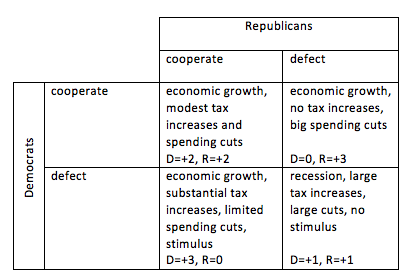
The dominant outcome (the one that would result when both parties maximized their own goals) was the bottom-right: recession. My preference was the bottom-left, but Republicans weren’t going to allow that in a one-round game. The top-left is better than the bottom-right, but the parties could not get there without each doing something that violated its own principles. That’s why it was hard.

One interpretation of the outcome is that the president simply caved, cooperating when the Republicans defected, and the result was the top-right corner. But even tough liberal critics don’t really think that. They think that Obama got something, just not as much as he could have won if he had opted for the bottom-right now and bargained again in January. For instance, Paul Krugman: “what Obama appears to have done is trade away part of the revenue from high-income taxpayers in return for some of the spending items he wanted.” From a conservative perspective, the bill certainly felt like a win for the president: taxes went up and no cuts were made. Charles Krauthammer called the deal a “complete rout for Democrats” and “complete surrender” for the GOP. In the Senate, only one liberal (Tom Harkin) voted against the agreement. I think the outcome counts as a compromise (i.e., cooperation by both sides, in game-theoretical terms). The only question is whether the president misplayed because the game is not final. It will continue, and perhaps he would have won more in 2013 if he had defected in 2012.

Prisoner’s Dilemmas are called “dilemmas” because it is very hard to get out of the bottom-right corner. Perhaps Biden and Reid McConnell got us out of there, helped by the fact that the game would recur–opponents are more likely to cooperate when they know they have to play again. Another theory is that it wasn’t actually a Prisoner’s Dilemma. If you change the rank-ordering of the cells, you can turn a Prisoner’s Dilemma into a Chicken Game, which looks like this:
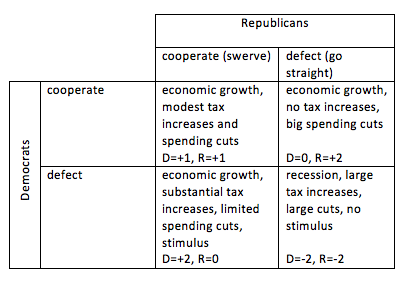
Unlike a Prisoner’s Dilemma, a Chicken Game has two stable outcomes: top-left and bottom-right. Either player may believe that the other will swerve and therefore drive straight ahead. If they both do that, they will crash. On the other hand, both may blink. Then they will reach the top-left cell, which is where I think we find ourselves.

If this was a Chicken Game, then liberal critics have a point. The best way to win a Chicken Game is to commit in such a way that you cannot take it back; then the other side must swerve. If you throw your steering wheel out the window, the other driver has to get out of the way. Thus Obama should have pre-committed to veto anything that didn’t meet his original position. On the other hand, both players in a Chicken game can pre-commit more or less simultaneously, and that is when they ram into each other. The Republicans had acted on several occasions as if they were throwing their steering wheels out of the window. That makes the president’s swerve somewhat understandable.

Only one thing really puzzles me. It would have served the Republicans’ interests to have gone over the cliff, let that reality sink in, and then voted for tax cuts. In that scenario, they would have accepted the same outcome that we got to yesterday but after a somewhat longer delay. The game would have looked like a two-step affair. In the first step, Republicans could have gone home to their right-wing districts saying that they had defied the president’s call for tax increases and the recession was his fault. In the second round, they would have cooperated with Obama on tax cuts to save the economy, looking good back home. Instead, they allowed the two stages essentially to merge into one, and as a result it appears they supported a tax increase. That seems to me a bad play.
a national discussion on safety

The New York Times has published an “Invitation to a Dialogue” by our friend Harry Boyte. Harry writes:

In response to the killings in Connecticut (“Looking for America,” column, Dec. 15), Gail Collins calls for breaking the silence about gun laws. But the discussion needs to address more than guns and extra bullet capacity.

The spreading pattern of violence grows from many sources, not simply guns. These include television news coverage, video games and movies, as well as family and community dynamics.

Public policy on guns can play a role. But mitigating the devaluation of human life will require a much more powerful civic response. Families, schools, colleges, congregations, businesses, consumer groups and others need to work together to challenge and change the culture of violence, reaching well beyond debates about the Second Amendment.

For instance, parents and teachers can develop early warning strategies; local journalists can spotlight programs that work for disaffected young adults; and young people themselves can organize peer-to-peer anti-bullying and anti-violence campaigns.

We need a broad citizen movement if we are to reweave the social fabric.

Readers are invited to respond today in order to for their comments to be considered for publication on Sunday. E-mail: letters@nytimes.com.

I’ll offer a few comments about what would make for a good discussion:

1) Everything should be on the table, certainly including gun control. That issue must not be suppressed because of the Second Amendment, the power of the gun lobby, or the fact that the President has been accused of wanting to take away people’s guns when actually he had no intention of addressing that issue. On the other hand, we shouldn’t ignore the very spotty empirical evidence for the benefits of the various gun control provisions that are being serious considered. Symbolic legislative victories do us no credit. For example, to reinstate the old federal assault weapon ban seems irrelevant, since Connecticut already had the same policy via state law, and the gun used in Newtown was legal.

2) We should define the problem broadly and with analytic clarity, not being driven by Newtown or any other notorious case alone. Huge numbers of young Americans are killed by guns every year. Policies and community actions that would reduce the overall homicide rate may be irrelevant to the still-rare cases of mass murder/suicide.

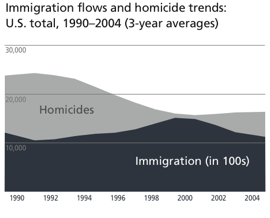
Online, you can find many comparisons of the numbers of children killed in Newtown and in Chicago this year. In Chicago, the 2012 toll is said to be 58, although I can’t confirm that from official statistics. In any case, 290 school-age children were shot in Chicago in 2009, and that is completely unacceptable. As I’ve written before, “If the fundamental responsibility of a government is protect citizens’ lives, then such violence puts the very legitimacy of the regime in question, to say nothing of the human tragedy that each gunshot represents.” But teen homicide rates have generally been falling, and although Chicago draws appropriate attention because of its recent spike, New York City has seen  declining numbers of homicides for 20 years. A productive discussion would not assume the premise that violence is rapidly increasing, because that can lead to irrelevant solutions. By the way, plausible explanations for the general decrease in violent crime include lead-paint abatement and immigration:

3) As Harry argues, we should think about much more than governmental policies and the kinds of causes that governments can address. I suspect that two reasons for the rash of mass school shootings are the general glorification of violence and the obsessive media attention devoted to tragedies in schools. The government cannot regulate the news and entertainment media (in relevant ways), but we citizens can choose which media to consume and produce. Citizens’ movements have influenced prevailing attitudes towards race, gender, sexual orientation, disabilities, littering, and drunk-driving, among other matters. The glorification of violence in our culture–whether that is increasing or declining–is an example of a problem that we must address without much help from the state.

Meanwhile, pervasive community-level changes are being made without getting a lot of attention. Elementary schools now drill students on how to respond to violent attacks; schools’ security systems and policies are being redesigned. Are these changes wise? Are the best strategies being used? Do we talk about these threats in appropriate ways?

4) How to define the topic or set the frame of the discussion is a difficult question, as anyone knows who has organized deliberative events. Watch the president take a question on gun control and try to place that issue in the larger context of children’s welfare and safety. To be sure, he has political reasons to try to make that shift–he has done a lot for children’s health but little about gun violence. Nevertheless, he may be right that child welfare rather than school shootings or gun control is the best frame.

CIRCLE’s finds iCivics boosts writing skills

Today, CIRCLE released the results of a randomized experiment using a computer-based teaching module called Drafting Board, from the nonprofit organization iCivics. Justice Sandra Day O’Connor founded iCivics to improve civic education through video games and related products.

Drafting Board is not exactly a game; it’s a computer-based lesson that takes students through the steps of writing an argumentative essay. It includes tools like the Issue Analyzer, the Claim Creator, and the Critic Crusher.

We conducted a study in urban Florida schools, involving 3,700 students. About half were randomly assigned to use Drafting Board; the rest used their regular curricula. Afterwards, every student hand-wrote an additional argumentative essay in the form of a letter to their school newspaper regarding a hypothetical proposal to lengthen the school year. Graduate students at Tufts graded all the papers, blind to whether the students had used Drafting Board or not. Those who had used it scored considerably better on the essays, despite the fact that they had used Drafting Board for only 2-3 sessions, and even though the students in the treatment group happened to be less advantaged than those in the control group.

I consider this study a double win for civic education. First, it establishes the quality of an iCivics’ product, and iCivics is a valuable player in the field. Second, the outcome–writing a persuasive essay on a policy issue–is itself a civic achievement.

Please see please see Kei Kawashima-Ginsberg, “Summary of Findings from the Evaluation of iCivics’ Drafting Board Intervention,” CIRCLE Working Paper #76 (2012).

the spatial logic of cities

Michael E. Smith writes, “The spatial division of cities into districts or neighborhoods is one of the few universals of urban life from the earliest cities to the present. Neighborhoods are even found in some large village settlements, and they seem to appear quickly in ‘spontaneous’ informal settlements (shantytowns).”

I found this article via a note in Robert Sampson’s Great American City: Chicago and the Enduring Neighborhood Effect. Sampson shows that neighborhoods have durable characters and reputations that deeply influence the prospects of their residents. A neighborhood’s character may remain even if its entire population changes–for instance, African Americans replacing Italian Americans. Although people make choices about where to live, our choices are much more influenced than we believe by the logic of the city. Given vouchers to move to higher-income neighborhoods, for example, residents overwhelmingly move to particular neighborhoods linked to their current locations.

Sampson’s study focuses on a brutally unequal and racially segregated city, but the same patterns have been found in Stockholm. The most dangerous neighborhood of Stockholm are safer than Chicago’s safest neighborhoods, but in both cities, neighborhoods differ and are related in the same ways.

Peter Ackroyd’s London: The Biography is far less systematic and persuasive than Sampson’s book, but Ackroyd also cites intriguing evidence that particular spots in London have retained the same character since Roman times. A given street corner near Holborn may be mildly scruffy and transitional now, and archaeological evidence suggests it had the same function 2,000 years ago. I think a pattern was established by the high Middle Ages that the dominant areas were north of the Thames, the commercial center lay to the east, the government center to the west, and the socioeconomic gradient generally rose as one moved westward through London. That logic has withstood everything from a Great Fire to the Blitz and the Docklands restoration.

Clearly, there is no one pattern to the spatial organization of cities. In many American towns, the poor districts are central, and the suburbs are affluent. The reverse is basically true in Paris. But there may still be some general principles. The affluent want to live apart from the manufacturing center. It needs to lie near transportation hubs. The political/military core occupies the most strategically valuable land, whether a hilltop, an access point, or simply the center of town. The rich want to live within easy access of the political core.

The implication is that we must consider the spatial organization of cities as well as the bundle of goods, rights, and services that individuals receive, if we want to help improve lives.

religious freedom and non-discrimination at a private university

What should a university do when a religious student group applies internal rules that are discriminatory? For example, theologically conservative Jewish, Catholic, Protestant, Orthodox Christian, and Muslim groups may want to discriminate against gay students or may maintain that clerical roles are only open to men and expect their lay student leaders to endorse those views.

Tufts seeks to protect members of religious groups, women, and gay students against discrimination. When religious associations discriminate, that creates a dilemma. Indeed, the Tufts student government recently withdrew recognition from the Tufts Christian Fellowship on the grounds of discrimination against gays. On appeal, the Committee on Student Life (predominantly professors) ruled that the student government had enforced existing policy appropriately, but that the rules should be changed to accommodate religious freedom. The resulting decision deserves to be read in full, because it is fairly subtle and complex. In summary, it has these features:

(1) It distinguishes between membership and leadership. Tufts Hillel is required to admit Catholic members, but it could (in theory) choose to reserve its officer roles for observant Jews.

(2) It requires religious groups to state explicitly that they dissent from aspects of Tufts non-discrimination policy. For example, if they discriminate against gays, they have to say so. That may harm their overall reputation, but it’s fair enough because they should be accountable for their views. By the way, this policy opens a valuable opportunity to discuss what counts as discrimination. The Tufts Christian Fellowship requires chastity, presumably for all students regardless of sexual orientation. But it is discriminatory if straight students can hold hands when gay students cannot. The transparency policy requires them to make those judgments publicly and to pay the price in public opinion.

(3) It permits discriminatory policies within religious groups only if they are consistent with “doctrine”; and the chaplain’s office must review whether a doctrine really supports any given discrimination. It will be interesting to see how the professionals in the chaplain’s office make those judgments. One consequence will be to put a whole denomination in the hot seat if its representatives on campus assert that its doctrine is in conflict with Tufts anti-discrimination policy.

(4) It encourages pluralism. Tufts has a non-duplication policy: the university won’t recognize, for example, two evangelical Protestant student groups unless they differ in some meaningful way. Given the transparency policy, it is now possible for evangelicals who are pro-equality to create a rival group to the one that has taken a discriminatory stance.

I don’t believe that a university is simply a free speech zone that must give equal recognition and support to all views just because they are freely expressed. A university is primarily in the business of favoring excellent speech and disfavoring bad speech. Some religious speech that is discriminatory should be disfavored. For instance, many denominations were at one time openly racist. If they stuck to those views, a private university would be right to deny them official certification.

So why is it OK to express discriminatory positions about gays and women? I don’t think this is morally acceptable, but the question is what to do about it when the world’s biggest faiths remain widely committed to such discrimination. If a predominantly secular university like Tufts responds by decertifying religious groups that follow their own mainstream doctrines, then I think we will lose religious students and the opportunity to interact with them. The purpose of many religious student associations is to convince and persuade–to make converts or at least strengthen the faith of their own adherents. But conversion runs two ways. If religious students study at a place like Tufts, they are likely to liberalize their views of homosexuality and gender roles. If we chase them away, we lose that opportunity.

Overall, I think the new policy is sophisticated and wise. That’s easy for me to say as a straight man. No one is adopting formal positions that disparage my identity. So I recognize that I may be too tolerant of intolerance against other people. But I think the argument for deliberative accountability and pluralism is pretty strong, and it has the best chance of producing more equitable views in the long run.

(See also: On religion in public debates and specifically in middle school classrooms; and A theory of free speech on campus)