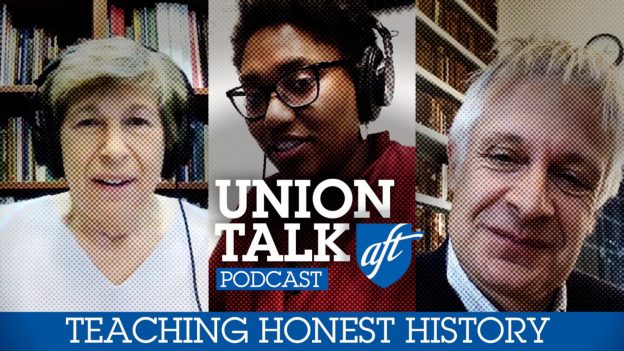
When the Lotus Bloomed

Thanks to Cambridge Arts’ Sidewalk Poetry program, this poem is now imprinted in cement at Clarendon Ave. and Massachusetts Ave. in Cambridge (Mass.). The text appeared first on my blog. I meant to answer Rabindranath Tagore’s Gitanjali #20, “On the Day When the Lotus Bloomed,” which begins—in Tagore’s own translation from Bengali—“On the day when the lotus bloomed, alas, my mind was straying, and I knew it not. My basket was empty and the flower remained unheeded.”

By the way, Tagore’s English versions of his own verse are criticized for being sentimental, archaizing, and didactic and less challenging than the originals. For instance, Amit Chaudhuri writes, “Tagore’s English version of the Gitanjali, for which he was awarded the Nobel prize in 1913, is what Mother Teresa once was to Calcutta, the royal family to England, and Kingsley to Gandhi: a tantalising mirage that obstructs the view of what’s behind it.” My response, then, must be even further from Tagore’s Bengali original, which I cannot read. But I think these eight lines convey some of me, and I hope they offer a touch of peace in North Cambridge.

Civic Studies call for proposals for APSA 2022

Call for proposals from Civic Studies (formerly Committee on the Political Economy of the Good Society)

Related Group Chair(s): Peter Levine, Tufts University, peter.levine@tufts.edu and Trygve Throntveit, Minnesota Humanities Center, throntv@gmail.com

The Civic Studies Related Group invites proposals for panels, round tables, and individual papers that make a significant contribution to the civic studies field; articulate a civic studies perspective on some important issue; or contribute to theoretical, empirical, or practical debates in civic studies. We especially encourage proposals that emphasize actual or potential civic responses to current social and political crises, their origins, and possible consequences.

Civic studies is a field defined by diversity yet connected by participants’ commitments to promoting interdisciplinary research, theory, and practice in support of civic renewal: the strengthening of civic (i.e., citizen-powered and citizen-empowering) politics, initiatives, institutions, and culture. Its concern is not with citizenship understood as legal membership in a particular polity, but with guiding civic ideals and a practical ethos embraced by individuals loyal to, empowered by, and invested in the communities they form and re-form together. Its goal is to promote these ideals through improved institutional designs, enhanced public deliberation, new and improved forms of public work among citizens, or clearer and more imaginative political theory.

The civic studies framework adopted in 2007 cites two ideals for the emerging discipline: “public spiritedness” (or “commitment to the public good”) and “the idea of the citizen as a creative agent.” Civic studies is an intellectual community that takes these two ideals seriously. Although new, it draws from several important strands of ongoing research and theory, including the work of Elinor and Vincent Ostrom and the Bloomington School, of Juergen Habermas and critical social theory, Brent Flyvbjerg and social science as phronesis, and more diffuse traditions such as philosophical pragmatism, Gandhian nonviolence, the African American Freedom Struggle. It supports work on deliberative democracy, on public work, on civic engagement and community organizing, among others.

To propose a session, click here when logged in as an APSA member or else navigate as follows: open the conference platform; click “Submit or Edit a Proposal,” click “Submit a Division, Related Group, or Partner Association Proposal,” scroll down to and click “Related Groups,” and select “Civic Studies.”

APSA members can also join the Civic Studies group (free) at this link.

academic freedom for individuals and for groups

One type of academic freedom belongs to individuals. A teacher, researcher, or student either has freedom or not. The question is whether academics may say what they wish to say.

This form of freedom is very important, and I am an avid defender of it, although it has some limits. First, academics shouldn’t be able to say literally anything as part of their jobs, including making demonstrably false statements. Second, it is not always clear when this right should become a positive one. Although I shouldn’t be fired for adopting a controversial position, do I have a right to be hired, published, or invited to speak after I’ve done so? (If I have a positive right to speak, then I want my invitation to the University of Hawaii right now.)

Although academic freedom in the individual sense is important, it is not the only kind. I have worked at universities for 29 years. Only for the last three have I had individual academic freedom, safeguarded by tenure and a right to earn my salary primarily by teaching. Before that, I was always involved in collective efforts–team projects–that had funders, staff, and partners. These projects involved communication and advocacy as well as research. I always had to be careful what I said because that could affect my colleagues and allies. On occasion, I said things that had negative consequences for our fundraising or other goals. Much more often, I held my tongue.

Only very rarely did I experience this situation as a lack of freedom. Generally, I thought of myself and my colleagues as being free in the political sense of the word. We could collaboratively develop and implement strategies to influence society. People who opposed us weren’t violating our freedom; they were freely acting at odds with us. Much more common than actual opposition were decisions not to support us for various reasons. If (for instance) someone chose not to approve a grant proposal that we had submitted, that was not a violation of our rights. The alternative would have been to fund us and reject someone else. We operated in a controversial space with numerous decision-makers and finite resources. To the extent that I complained about limitations on our liberty or rights, it was only when arbitrary–from my perspective–bureaucratic rules interfered. I suppose I would have cried foul if administrators within our own institution had blocked us because of their beliefs, but then I would have been complaining about their overstepping their specific responsibilities. More generally, I expected opposition and competition and didn’t think of those as threats to our freedom.

If you want a classic framework for this distinction, Benjamin Constant’s will serve. Normal academic freedom is an example of what Constant called the “liberty of the moderns.” The freedom to collaborate in a contested space is the “liberty of the ancients.”

I think there are epistemological as well as ethical reasons to enhance collaborative, applied forms of research as complements to individual scholarship.* These approaches come under such headings as “transdisciplinary research,” “civically engaged research,” “community-based participatory research” (CPBR), and “participant-action research” (PAR). For such efforts, we need a robust account of academic freedom as the ability to build things together, often in the face of opposition that is legitimate. The question cannot be whether an individual is permitted to say what is in that person’s mind. It should become a question about the resources and rewards available to groups of people who seek to co-create knowledge and thereby change the world.

According to this theory, when the NIH, the Ford Foundation, or the American Political Science Association increases its support for engaged research, freedom is enhanced. (Support can mean money, training–like ICER–or recognition.) However, there will never be enough resources to allow every group to undertake every project it wants to do. Many applicants will be rejected; in fact, competition is desirable. Freedom of this kind is not a yes-or-no matter but an outcome of wise institutional design and allocation of resources.

*See civically engaged research in political science; how to keep political science in touch with politicsmethods for engaged researchwhat must we believe?civically engaged research in political sciencewhat gives some research methods legitimacy?; etc.
Teaching Honest History: a conversation with Randi Weingarten and Marcia Chatelain

AFT President Randi Weingarten invited Georgetown historian Marcia Chatelain and me to discuss controversies about American history and race in public schools on her podcast. I enjoyed the whole conversation and learned a lot.

You can listen here.

At one point, we discussed the idea of “teaching both sides.” I said that many issues do not have two sides. One view may be correct, or there may be many valid perspectives. I worry that looking for exactly two sides on every issue reinforces partisan polarization. Nevertheless, I see value in identifying issues that have two worthy sides and delving into them. I said that I choose school choice as a signature issue in my public policy course because there are valid arguments on both sides, and it is an opportunity to think about deep value conflicts.

Marcia Chatelain proposed that we really should teach both–or all–sides. Students should study the whole range of opinion. I volunteered that perhaps students should read John C. Calhoun’s defenses of slavery, and she agreed. White supremacy and slavery are parts of history.

I liked her argument and concurred with it. In retrospect, I’d only add that the best way to deal with controversy may vary by discipline. History encompasses all the opinions that people have held, and an important step in historical interpretation involves suspending one’s own judgment to understand what people–even very bad people–were trying to say. Philosophy (and the study of public policy) are inquiries into what is right. In those disciplines, it is more appropriate to be selective and evaluative. At the same time, history is crucial background for reasoning well about ethical and political issues. Anyone who is trying to decide what we should do now ought to know what Calhoun argued, because his deeply and widely held views remain part of our reality. In this sense, history and ethical/political reasoning are complementary, but they do imply different skills–and different educational choices.

See also: “Just teach the facts”; discussing school choice; school choice is a question of values not data; 50 Core American Documents; two dimensions of debate about civics; NAEd Report on Educating for Civic Reasoning and Discourse, etc.

professionals as grizzled veterans or as reflective learners

In stressful, front-line professions–such as teaching, military service, nursing, or policing–you may encounter the idea of a “professional” as someone who has done the job in one of its harder forms for a long time. People who merely study or teach the topic, or those who have had brief or sheltered experience on the job, are not true professionals.

An alternative sense of a “professional” is someone who has reflected deeply on the role from a variety of perspectives. For instance, reading and talking about the history and sociology of schools may contribute to a teacher’s professional development.

Of course, there are other senses of professionalism apart from these two. I like the idea of “democratic professionalism” developed by Albert Dzur and others: a professional as someone who works with citizens who hold other jobs and roles to strengthen democracy together. There is also a trustee ideal, in which the professional safeguards public values in return for the right to provide certain services.

But those are ideals. In almost any actual professional setting, you can find grizzled veterans telling the newbies how it’s really done, plus formal academic requirements and assessments. These two ways of thinking about professionalism constantly compete for legitimacy, while more idealistic conceptions remain somewhat hidden or marginal.

If veterancy and academic study are the main options, then I’d advocate for a mix of the two. Experience is valuable. It can impart practical wisdom drawn from numerous concrete examples (phronesis). People who have spent years in a job often (not always) deserve respect for their service. Thus there are benefits to hiring veteran professionals as teachers and professors, employing them as mentors, placing students in practical internships, etc.

Yet professionals should also hold a critical stance toward their own role and learn from the concepts and tools of other disciplines. For instance, a teacher is better off understanding the sociology of schools even if the authors of sociology articles would make bad K-12 teachers. Their value does not derive from direct personal experience. Phronesis is useful, but so are other forms of knowledge, including theory and empirical data.

In pretentious settings, such as highly selective college and universities, it can be necessary to fight for the legitimacy of experience and to make space for veteran practitioners. However, in places like police stations and some K-12 schools, it can be hard to make space for critique. Whether teaching professionals in an academic way will improve their practice is an empirical question; the answer will probably vary depending on who teaches what, to whom, and how. There is no guarantee it will work. However, if a profession is going to improve, then at least some people who hold the job must draw insights from outside their field, including from scholarship.

See also: separating populism from anti-intellectualism; Public Work and Democratic Professionalism; Democracy in schools: Albert Dzur talks with principal Donnan Stoicovy; a way forward for high culture.