young people and government data surveillance

Sixty percent of young Americans support Edward Snowden’s leaks of the NSA data surveillance program, versus 36% of people age 65 and older. CNN’s latest poll finds that just 45% of young people now approve of the president’s performance, down from 69% in May. Granted, the CNN survey has a margin of error of plus or minus 7.5 percentage points, but it still suggests a decline, and the NSA story is one possible explanation. In USA TODAY, Lauren Kirkwood and Michael Auslen quote me:

Members of the younger generations were also more likely to disapprove of the government’s collection of data, which Peter Levine, director of Tufts University’s Center for Information and Research on Civic Learning and Engagement, attributed to a greater distrust of government.

Although young people are used to sharing private data on social networks such as Facebook and Twitter, which often share user information with advertisers, they don’t view information the NSA gleans from its surveillance programs in the same light.

“I don’t think it’s right for corporations to do that either, but it’s different,” Grace Quiroz, a 24-year-old graduate student from Houston, said. “They (the NSA) can go as far as to hear phone conversations.”

Young people’s concerns don’t all stem from an expectation of privacy online, though.

“I think there’s an expectation of transparency – not privacy,” Levine said. “They’re in a world where they don’t have much privacy because of commercial data mining. But they do seem to have faith in transparency, so they expect governments and other institutions to be open.”

Levine said that although 18- to 29-year-olds might not expect all the information they put online to remain personal, they retain a sense of ownership over it.

“People are used to being traceable and visible. They don’t have a sense of privacy, but they don’t like powerful people using their information, whether it’s Facebook or the government,” he said. “I think they’re pretty suspicious of shadowy power.”

supporting a beleaguered news industry

This is the second in a series of blog posts about CIRCLE’s evaluations of initiatives funded by the Democracy Fund to inform and engage voters during the 2012 election. It is cross-posted from the Democracy Fund blog.

Two Democracy Fund grantees–the Center for Public Integrity (CPI) and the Columbia Journalism Review–worked to support reporters and editors in order to improve their election coverage and better inform the public on key issues of national concern. We evaluated these initiatives by interviewing some of the potentially affected journalists, 97 in all.

One theme that emerged very clearly was the challenging situation that confronts the news industry. This context has been well documented in other research. For example, according to a study of the changing news environment in Baltimore, conducted by the Pew Research Center, the number of news outlets in the city has proliferated to 53 “radio talk shows, . . . blogs, specialized new outlets, new media sites, TV stations, radio news programs, newspapers and their various legacy media websites.” But the number of reporters has fallen. That means there is more written and spoken about the news than ever, but it is highly repetitive. A search of six major news topics found that 83 percent of the articles and blog posts repeated the same material—sometimes with commentary—and more than half the original text came from paid print media such as the Baltimore Sun.

In turn, Baltimore’s remaining professional journalists are so overstretched that they cannot provide what is called “enterprise reporting” (digging to find new information not already in the public domain). The city government and other official institutions now have more, rather than less, control over the news. The report notes, “As news is posted faster, often with little enterprise reporting added, the official version of events is becoming more important. We found official press releases often appear word for word in first accounts of events, though often not noted as such.”

Our interviews found ample evidence of similar conditions. One reporter said, “the political reporting in our state has shrunk to the point where a lot of the major reporters are ones that have been doing it for decades and, quite frankly, their reporting (and lack of digging) reflects how tired they are.”

On the whole, our interviewees were very pleased to be provided with support in the form of CPI’s in-depth reporting and the Columbia Journalism Review’s coverage of their work. For example:

  • “Without that kind of work I don’t know how one could sort themselves through what’s happened, unless they’ve been following for the past 5 years.”
  • “Without Open Secrets and CPI I don’t know how a journalist who is new could figure this stuff out.”

They noted various ways in which these interventions had affected them. They mentioned learning about good practices that are used in other newspapers, getting ideas for stories, and encouraging high quality work. Commenting on the CJR’s effort, one reporter said, “It sort of serves as a watchdog to remind people to do a good job, to do a thorough job, to look for fresh angles, to dig beneath the surface, and, ah, hopefully those are things that I’m doing already.”

Local coverage emerged as an area that needs special attention and support. As a reporter told us, “One of the faults with journalism coverage and journalism criticism, in general, is that it tends to focus on the big national players and the big national issues. And as we’ve seen a number of major publications pull back on local coverage …, it’s become all the more important that we have some sort of press criticism function taking care of local media and engaging with local media. And I think that a lot of reporters working locally and regionally would benefit from that sort of attention and that sort of engagement as well.”

There were, however, a few concerns that also related to the limited capacity and fragile financial condition of the news industry. CPI’s model is to provide in-depth reporting that news sources can use in writing their own articles and broadcasts, and a few respondents were worried that CPI might become a competitor for readers. The Columbia Journalism Review wrote appreciative as well as critical articles about political news coverage, but a few respondents felt that these articles did not demonstrate adequate sensitivity to the limited capacity of local newsrooms. Although most interviewees were pleased with the CJR’s coverage, the relatively few respondents who felt it was unfair were likely to think that the CJR’s correspondent had overlooked their limited capacity to accomplish what was being suggested.

CIRCLE’s interviews suggest the following conclusions:

  • Because of staffing cuts and turnover in the profession, the news media struggles to cover politics. They are aware of their difficult situation and generally grateful for assistance.
  • Providing high-quality information and constructive criticism does change reporters’ behavior.
  • Professionals in the news media are understandably somewhat sensitive about being given advice unless the person offering it recognizes the practical limitations they face.
  • They are also concerned about being manipulated by ostensibly nonpartisan organizations that they fear may have partisan objectives. (See our previous blog post on the problem of distrust.)
  • Interventions designed to support the news media should not inadvertently compete with the news media by taking away readers or viewers.

why so few new colleges?

Americans found colleges and universities. That tradition started in 1636 and it explains why we have nearly 4,500 degree-granting institutions today. Typically, periods of population growth and migration are marked by the founding of lots of new colleges and universities, which creates the opportunity for innovation. We’ve seen waves of new types: religious liberal arts colleges, Land-Grants, women’s colleges, research universities on the German model, HBCUs, “multiversities,” community colleges, and urban public universities, among others. Each wave also affects the older institutions. Harvard and Yale, for example, were founded as religious liberal arts colleges but adapted in imitation of the Germanic research universities and the state multiversities.

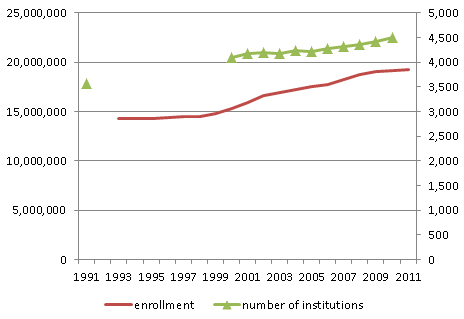
But look at the growth of postsecondary student enrollment from 1991-2011 versus the total number of colleges and universities. (Data from the Institute for Education Sciences; my graphs):

college_enrollment2

Some new institutions have been launched since 1999, but for the most part, the additional students are being squeezed onto existing campuses. For instance, the University of Central Florida was born in the 1960s, during the last burst of new college foundations, but its enrollment has grown from 1,948 in 1968 to 59,767 in 2012. The problem with that method of accommodating growing numbers of students is that it blocks innovation. Existing colleges are locked into their priorities and structures. We have also seen the rapid growth of for-profit colleges, like the University of Phoenix, which are included in the trends shown above. They innovate, but in ways that make me highly suspicious. Until we see the birth of a substantial number of new nonprofit or state institutions, I will be pessimistic about innovation in the sector as a whole.

educating voters in a time of political polarization

This post is cross-posted from the Democracy Fund blog. It’s one in a series of posts about our evaluations of initiatives funded by the Democracy Fund.

During the 2012 campaign season, the Democracy Fund’s grantees experimented with a wide range of strategies to educate and engage the public. Some produced videos and other educational content to directly inform the views of voters. Others worked with journalists to improve the information that the public receives through local and national media. In all cases, CIRCLE’s evaluations found that the public’s polarization made it significantly more difficult for these efforts to achieve their goals; polarized individuals often resisted the messages and opportunities offered to them.

Americans perceive the nation as deeply divided along political lines. In February 2013, according to the Bipartisan Policy Center, 76 percent of registered voters said that American politics had become more divisive lately and 74 percent believed that this trend was harmful. Academics disagree somewhat about the degree of polarization and whether it has become worse over time, but few doubt that political polarization can exacerbate fear and distrust, prevent people from understanding alternative perspectives and considering challenges to their own views, and reduce the chances of finding common ground.

The challenges of engaging polarized citizens emerged clearly in CIRCLE’s evaluations. For example, Flackcheck.org produced parody videos that taught viewers to reject deceptive campaign advertisements. In testing whether these videos were effective, we showed representative samples of Americans real campaign advertisements that we considered misleading. One example, “Obamaville,” produced by Rick Santorum’s campaign, displayed President Obama’s face alternating with that of Iranian President Mahmoud Ahmadinejad on a television screen in a post-apocalyptic setting:
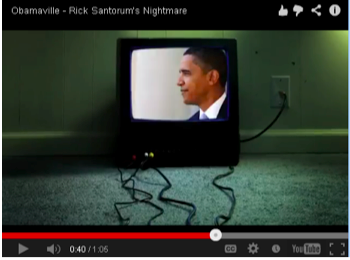
More than 80% of Democrats but fewer than 20% of Republicans considered this video “invalid and very unfair.” Among the Republican viewers, some made comments like this:

  • “It does make him look like a threat…He is a threat to the United States and the well being of the people and welfare of our country…”

  • “Tells the truth about Obama”

  • “TO SHOW VERY CLEARLY WHAT OBAMA IS DOING AND TAKING THIS BEAUTIFUL COUNTRY! BELIEVE IN OBAMAVILLE”

We showed a different sample of respondents a MoveOn advertisement entitled “Tricky Mitt,” in which Mitt Romney’s image faded into Richard Nixon’s:
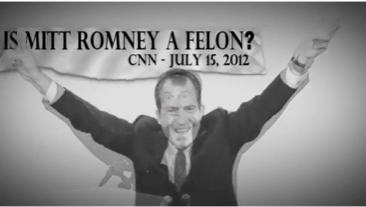
More than 70% of Republicans and less than 10% of Democrats considered that video “invalid and very unfair.” Some Democrats made critical comments about “Tricky Mitt” (e.g., “Accusatory, urges the viewer to associate guilt with Romney, not reflective of what I expect from politicians”), but many were positive about the video, saying things like this:

  • “Excellent”
  • “Entertaining and points out the crookedness of Romney”
  • “Giving us information that we didn’t know about. All true”
  • “I think it exposed the truth about Romney of what kind of person he really is.”

Essentially, people approved of ads that supported their own partisan position and criticized or invalidated ads that threatened their preexisting beliefs, although both ads we tested were deceptive.

We also evaluated Bloggingheads.TV videos, which showed pundits of opposite political persuasion taking part in civil discussions about controversial issues. We asked people who watched various videos a scale of questions that measured their openness to the other side. An example of a question in this scale was “I have revised my thinking on the issue.” Regardless of which video they watched, the strong partisans were always less open to deliberation.

Strongly polarized statements also emerged in many of the open-ended questions that CIRCLE asked of Democracy Fund grantees. For example, we asked a representative sample whether they ever shared political videos. Out of 195 respondents who chose to explain why they did so, 24% mentioned anti-Obama goals, often adding very strongly worded comments against the president. (“Obama confessing to being a Muslim”; “A black heavy set lady going on about Obama care, and that we should go ahead and work to pay for her insurance”; “Michelle Obama whispering to B.O., ‘all this over a flag!’”; “I come from a military family and I am extremely offended by the both of them. I have never seen a more un-American couple in the White House!”). Another 17% percent mentioned anti-Romney videos, often the Mother Jones video about the “47%.”

Some of the Democracy Fund grantees did not directly influence average citizens, but rather worked to support professionals in newspapers or broadcast stations. In general, these journalists, editors, and station managers seemed less prone to partisanship than average citizens. However, some reporters expressed skepticism about the neutrality of Flackcheck.org and wondered whether it had a partisan agenda. “I am suspicious of so-called non-partisan fact checkers,” one said. A broadcast station-manager, asked how he or she would react to being told that a given ad was misleading, said, “It would be difficult to determine the true nature of the intent [behind the criticism] or that the third party was indeed unbiased.”

These responses suggest that an atmosphere of polarization and distrust may create challenges even for organizations that work with nonpartisan professionals. Going forward, the Democracy Fund and its grantees may consider a range of possible strategies, such as:

  1. Focusing at least some attention on youth and young adults, since young people tend to be less committed to partisan and ideological views and still open to and interested in alternatives.

  2. Finding ways to get people of different ideological persuasions into sustained contact with each other, since simply knowing fellow citizens with different views makes it more difficult to stereotype and demonize them. Actually collaborating with diverse people on some kind of shared goal can be especially helpful.

  3. Experimenting with new messages and formats that educate polarized adults more effectively.
 

trust in science, by party, over time

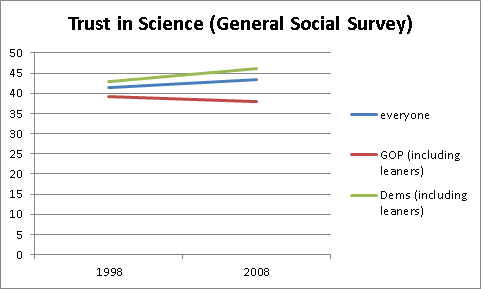
scienceThe General Social Survey has twice asked national samples of adult Americans, “[Do] we trust too much in science and not enough in religious faith?” The graph shows the proportion of people who disagree, i.e., who support the amount of trust we place in science compared to religion. I show results for 1998 and 2008, for everyone and by party.

As might be expected, the party lines diverge, with Republicans becoming less favorable to science when the question is asked this way. To flip the question around, 36% of Republicans said in 2008 that we trusted in science too much, up from 33.5% in 1998. That does not mean that individuals changed their minds; more likely, the composition of the people who called themselves Republicans changed.

But what jumps out at me is actually the relatively high degree of consensus. The partisan difference (as of 2008) was not vast. The population had become more trustful of science, with the exception of Republicans–but the shift for them was small. A plurality of Republicans still shared the view that trust for science was appropriate.

By the way, I report these numbers without a strong implied value-judgment, since I have my own ambivalent feelings about trust in science, especially when it spills over to questions of ethics and justice.

(see also “Is all Truth Scientific Truth?” and “Building Alternative Intellectual Establishments.“)