new research on youth and nonviolence

While the student anti-gun student movement attracts national attention, two new publications have arrived in my inbox that address youth engagement in nonviolent social movements. Both depict youth as peacemakers rather than victims or perpetrators of violence, but both require significant caveats.

Taylor et al. provide a useful literature review with mixed findings. In some studies, exposure to political violence and abuse during childhood predicts more empathy and more civic engagement–even in some of the worst situations in the world. That suggests that youth can be peacemakers rather than victims of violence. In other studies, the relationships are negative.

Using a longitudinal dataset from Northern Ireland, the authors find (if I understand their complex statistics correctly) that kids who have seen more sectarian violence and discrimination by age 10 are more empathetic and more engaged in their communities, but that prolonged exposure to such violence reduces engagement. Empathy and engagement are positively correlated, but engagement falls for everyone during the teen years.

Dahlum finds that “Campaigns with a high degree of involvement by students and educated protesters are more likely to be nonviolent” and “Campaigns with a high degree of involvement by students and educated protesters are more likely to succeed”–but the latter is only true because students and educated protesters are more likely to opt for nonviolent strategies, which are more successful than violence. (See Why Civil Resistance Works.)

A casual look at Dahlum’s article, which is entitled “Students in the Streets,” might suggest that this is a study of youth. She is actually focused on people of all ages who have a lot of education. That is basically a proxy for social advantage. For example, she mentions a movement in Bangladesh that was led by “students, doctors, lawyers, [and] intellectuals,” among others. That is not a description of an age group but of a social class.

Dahlum combines students with graduates (of any age). If we view them separately, students have these characteristics:

  1. They tilt toward the young. Even in very poor countries, many (and often most) 7-year-olds are students. But nowhere are most 75-year-olds in school. Not only are students experiencing childhood, adolescence, or young adulthood as developmental stages, but they represent the newest generation in any society. (See this post on age versus generational effects.)
  2. They tilt toward the upper socio-economic tiers, because education is an expense and a path to income and power. This tilt varies by country and by age. Seven-year-olds in Sweden are students regardless of their social class. But at age 20, only the elite in many countries are still in school.
  3. Being a student is an occupation, a way of life. It may facilitate social activism because schools and colleges concentrate large groups of peers in places where they can be mobilized (or mobilize themselves); because they often are better protected against retaliation than many workers are; and because institutions devoted to learning are good places to spread news and ideas. (See also: why do students sometimes lead social change?)

Therefore, students often play disproportionately important roles in social movements. But that is only partly a matter of age and generation. Social class and occupation are also relevant.
Sources: Dahlum, S. 2018. Students in the Streets: Education and Nonviolent Protest, Comparative Political Studies, April 2, 2018 (online); Taylor, L., Merrilees, C. E., Baird, R., Goeke-Morey, M. C., Shirlow, P., & Cummings, M. (2018). Impact of Political Conflict on Trajectories of Adolescent Prosocial Behavior: Implications for Civic Engagement. Developmental Psychology (online).

youth voting on All Things Considered

Excerpts from “All Things Considered” (March 29): Barbara Howard  interviewing my colleague and our CIRCLE director, Kei Kawashima-Ginsberg:

BH: It seems like with these rallies last weekend, there was a real crackling in the air. People registering kids right there at the rallies. And you can register now when you’re 17, coming up into the midterms. Is there a chance that the interest will wane? There’s some months between now and November.

KG: That’s correct. Registering young people is, of course, very important, but it’s often not enough. There are many ways we can keep young people engaged, though. One of them is to really make sure that they can feel like they can do something at their local community. Some of the ways in which to do that is [to] make sure young people are motivating their own friends and families, uncles and aunts, and even grandparents. Also, they can work at polling places in some states, including, I believe, Massachusetts, where young people can be [a] really active part of the process even before they’re actually eligible to vote.

BH: But young people do tend to turn out in much smaller numbers than older voters.

KG: That’s correct. Traditionally, they’ve turned out at the lower numbers; it is especially the case in midterm elections. Last midterm election we measured youth turnout was 2014, and nationwide only 20 percent of under 30s actually turned out.

BH: Do you think this time it’s different, having seen the rallies last weekend?

KG: There are certainly great indicators of hope. One is that there’s of course been a lot of enthusiasm and passion from young people, and it’s for the movement that’s started by and led by young people. So they’re certainly taking the lead and really putting a stake in the ground to say, we’re not going to wait for a political leader to come to us and talk about the issues that’s important to them, but we’re going to tell them what’s important to us, and they’re going to put that on their agenda. So it’s certainly promising. We’re also seeing other polling that there is a lot of young people saying we’re enthusiastic about coming out to vote in November, and also the suggestion that they actually may be signing up with political parties, especially the Democratic Party, more than they did before.

I’d also note the clear connection between this social movement’s agenda and voting. The youth who are working for gun control are on the same side as the majority of all voters; it’s just elected officials who block the legislation they want. The solution is to vote new politicians in. Voting is more fraught and complicated for radical social movements that challenge mainstream public opinion or that lack allies in electoral politics (or both). Thus I would predict a bigger electoral impact from the gun control movement than from other recent social movements.

the emperor’s new wall

Donald Trump says that his border wall is being built; yesterday, he even tweeted pictures of it. Today he added, “We started building our wall, I’m so proud of it. We started. We have $1.6 billion. You saw the pictures yesterday. I said what a thing of beauty.”

The budget he signed into law provides $341 million “to replace approximately 40 miles of existing primary pedestrian and vehicle border fencing along the southwest border using previously deployed and operationally effective designs, such as currently deployed steel bollard designs, that prioritize agent safety; and to add gates to existing barriers.”

But the President can have what he wants: a tweet about his own success. Almost 100,000 people clicked to like it. They could feel the #MAGA. Meanwhile, we don’t have to pay for a wall. It has no environmental impacts. Pronghorn antelope may still roam back and forth at will. I assume our neighbors in Mexico realize the wall is not actually taking physical form in the universe that we inhabit as corporeal creatures.

So everyone wins. Could this be the model for solving other problems in the Trump years?

from I to we: an outline of a theory

These are the main ideas that I’ve defended (or plan to develop) in my theoretical scholarship. They are organized from micro to macro and from ethics to politics. As always, I put this draft online to welcome critical feedback.

  1. Each individual holds a changing set of opinions about moral and political matters. These ideas are connected by various kinds of logical relationships (e.g., inference, causation, or resemblance). Thus each person’s moral opinions at a given moment can be modeled as a network composed of ideas, plus links. In a conference paper, Nick Beauchamp, Sarah Shugars and I have derived network diagrams for 100 individuals and provide evidence that these are valid models of their reasoning about healthcare, abortion, and child-rearing. This approach challenges theories that depict moral reasoning as implicit, unconscious, and unreflective.
  2. A culture, religion, or ideology is best modeled as a cluster of roughly similar idea-networks held by many individuals. Human beings are not divided into groups that are defined by foundational beliefs that imply all their other beliefs. Rather each person holds a unique and often flat and loose network of ideas that overlaps in part with others’ networks. This model avoids radical cultural relativism, as I already argued in my Nietzsche book (1995).
  3. This model of culture also challenges John Rawls’ argument for liberalism as tolerance and neutrality. Rawls presumes that most citizens hold incompatible but highly organized and consistent “comprehensive doctrines.” As a result, they must largely leave one another alone to live according to their various conceptions of the good. If, instead, we understand worldviews as loose and dynamic idea-networks, we find support for a liberalism of mutual interaction instead of distant toleration.
  4. We are not morally responsible for the ideas that we happen to learn as we grow up. That is a matter of luck. But we are responsible for interacting with other people who hold different opinions from ours. Such dialogues can be modeled as the interactions of people who hold different idea-networks. As they disclose and revise ideas and make connections, the discussants produce a shared network. In a paper now being revised and resubmitted, David Williamson Shaffer, Brendan Eagan, and I model Tufts students’ discussions of controversial issues as dynamic idea-networks.
  5. A person can organize her beliefs in ways that either enable or block dialogue. For instance, an individual whose network is centralized around one nonnegotiable idea cannot deliberate; neither can a person whose ideas are disconnected. Thus discursive virtues can be defined in network terms, deliberations can be evaluated using network metrics, and we can strive to organize our own ideas in ways that facilitate discussion.
  6. If people talk, it implies that they were willing to sacrifice time and attention to a conversation. If they have something significant to talk about, they must hold a good in common that they can control or influence. Thus we cannot have the kinds of discussions that improve our own values unless we are organized into functional groups. But creating and sustaining groups requires more than talk. Groups also need rules and practices that coordinate individuals’ action, as well as relationships marked by trust, loyalty, and other interpersonal virtues. In short, civic life depends on a combination of deliberation, collaboration (solving collective action problems), and relationships.
  7. To enable deliberation, collaboration, and relationships requires favorable institutions, such as appropriate legal rights, widespread education in these virtues, and a robust civil society composed of associations that offer opportunities for self-governance. Since these institutions are inadequate in the USA, we need reform.
  8. To change constitutional rights, school systems, and other large institutions, political actors must employ leverage. They must move strangers and impersonal organizations at a distance. Making effective use of leverage is an ethical obligation but also a threat to the relational values implied by points 1-7 (above), which are prized by certain political theorists, such as John Dewey and Hannah Arendt. We must understand how to use impersonal leverage at large scales without undermining or displacing relational politics.

the 2018 Youth Electoral Significance Index (YESI)

From CIRCLE today:

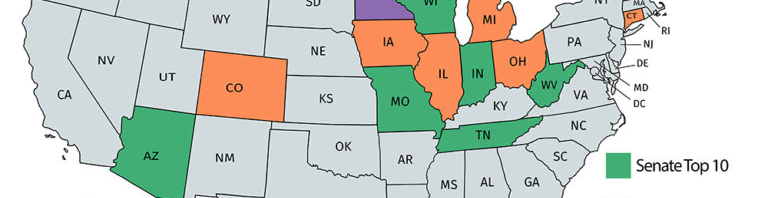
CIRCLE’s updated Youth Electoral Significance Index (YESI) is a valuable tool for any individual, campaign, organization, or institution that seeks to increase youth political engagement. Earlier this month, we highlighted the top 10 congressional districts where young people might have an especially high electoral influence. Today we are releasing the top 10 senate and gubernatorial races where young people have the potential to do the same. The YESI can help stakeholders identify places where additional efforts and resources to turn out the youth vote could be decisive. It can also be a tool for equity and broadening engagement, if efforts focus on reaching those not yet engaged in the top-ranked locations.

Please click to Explore the Interactive Index  or Read the Full Report and Methodology