seeking a religious congregation for a research study

I am seeking a congregation (of any religion, denomination, tradition, size, and location) for a research study. My interest is in testing a new method that I have been developing with colleagues that could apply to any community. I would give the congregation’s leadership–or its full membership–easy-to-understand findings about shared values and areas of disagreement within their congregation that should have practical value for planning events and programs.

Please consider whether this project might interest a congregation to which you belong or one that you know. Inquiries are welcome. More details follow:

I would ask the clergy or other leader(s) of the congregation to encourage members to take anonymous online surveys. The minimum would be two: a short survey with open-ended responses followed by a multiple-choice survey a week or two later that is based on the first one. I would be interested in repeating the multiple-choice survey months later to understand change, although that’s optional. If it’s practical, I would also like to visit and observe informally to get a feel for the community.

I would publish a scholarly study that would refer to the congregation anonymously (e.g., “a Protestant church in the Northeastern USA”). I would also provide the congregation with concise findings in PowerPoint format and would be happy to discuss them. No money would change hands. The congregation would own the PowerPoint and would not be obliged to publish or share it in any way. No individuals would be obligated to take the surveys, and I would expect only some people to do so. No identifiable information about individuals would be shared either within or beyond the congregation.

I could provide more detail about the method, but in brief, we don’t simply ask people their opinions about values, beliefs, and norms. Instead, we ask them how their personal opinions relate to each other. For instance, do they value A because they value B? Do they think that A causes B? From those responses, we generate network diagrams of the beliefs of each respondent and of the community as a whole. In this study, the questions would focus on religion and the congregation as a community, not on politics (unless respondents happen to bring up political matters).

Typically, each person’s responses are unique—a nice illustration of the uniqueness of human beings and how much we lose when we assign people to categories. Yet we typically see clusters of agreement and disagreement that can otherwise be overlooked. Understanding these patterns should provide ideas for visitors, readings, events, discussion groups (etc.) that would be valuable for the specific congregation.
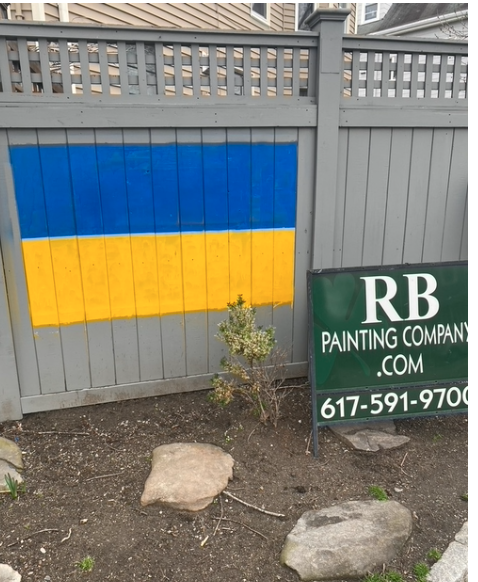
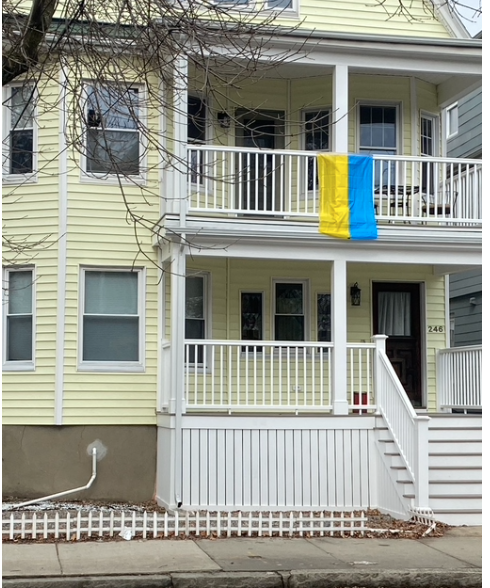
how I misjudged our moment

Early in 2021, I thought …

  • Jan. 6 would cause a significant proportion of elected Republicans to turn against Trump and to support at least modest investigations and reforms.

I now think that a combination of partisan self-interest and genuine support for Trump among some GOP politicians has prevented any serious reckoning. Also, for most Americans, this whole issue is not salient; only strong partisans on either side follow it. For instance, right now, the broadcast networks are barely covering the breaking news about Trump’s behavior after the election. In the absence of public attention, there is no incentive for Republican politicians to antagonize Trump, nor even for most Democrats to try to fix the problem.

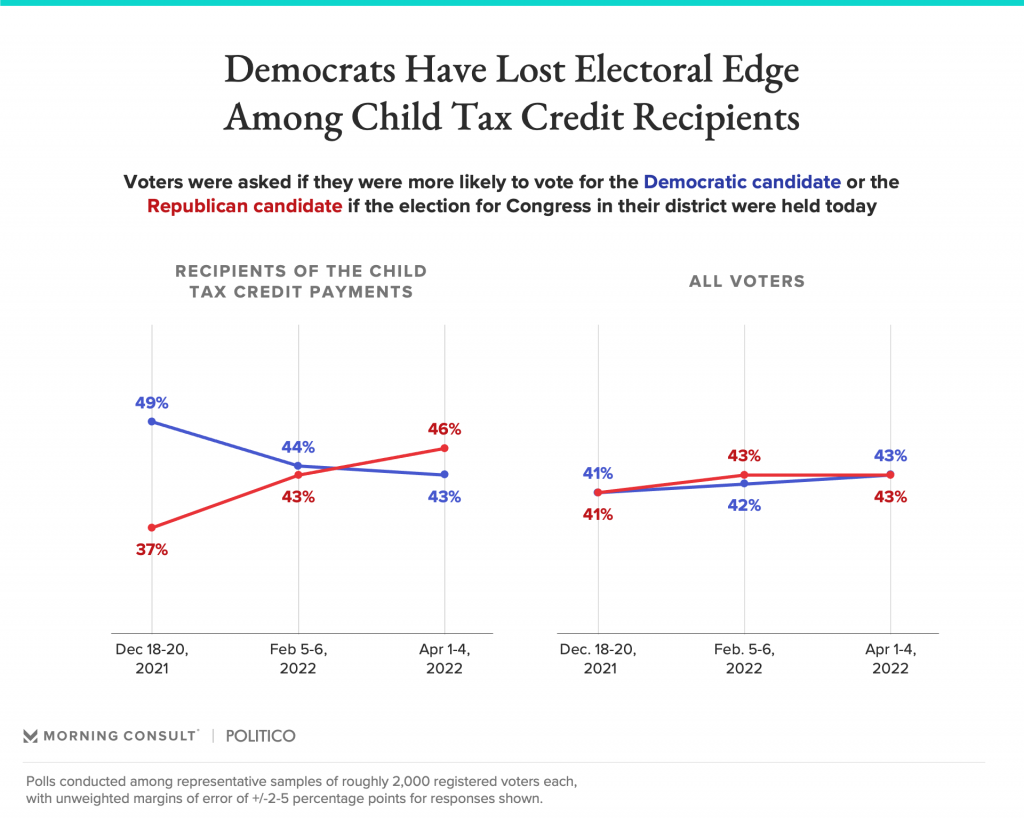
That would be good for Democrats and for the general idea that the government can be helpful. However, there is no sign that the funds were popular. It is possible that a core assumption of left-of-center politics is wrong: people don’t want this kind of help. But I suspect inflation simply ate it up, and voters blame the Biden administration for higher prices. The median household will spend about $4,500 more this year than last year to buy the same basket of goods, while the stimulus offered $1,400 per individual.

Speaking of inflation, I have no expertise on such matters, but I presumed the commentators were correct who blamed COVID-19 for temporarily disrupting supply and causing price spikes. Now it seems at least plausible that inflation is a major problem that will not abate without a recession.

  • Relatively strict public health measures, including remote schooling, would effectively counter the pandemic.

Most importantly, such measures would save lives while allowing the economy to reopen safely. Meanwhile, they would pay dividends for the blue-state governors (including moderate Republicans) who closed schools and required masks, while embarrassing the most science-skeptical governors. However, Texas has had 2.9 cumulative deaths per thousand people from COVID-19 (basically at the national average); Florida has had 3.2; New York, 3.5; and New Jersey, 3.7. It is not clear which policies “worked” or how to weigh the significant costs against the possible benefits of policies like school closures. There is certainly no reason to think that governors like DeSantis will pay a political price (regardless of whether they should).

I never counted on a major social reform bill like Build Back Better to pass, since I doubted the Democrats had enough votes. I did harbor some hopes for the bill, based on the idea that the Trump fiasco, the COVID stimulus, and success in containing the pandemic would give Democrats momentum. Clearly, the opposite has happened. Although I strongly disagree with Democrats like Sen. Mark Kelly who are now running away from the bill, the psychology is clear enough. Recent events have undermined morale.

We have also experienced the exogenous shocks of Delta and Omicron plus Russia’s invasion of Ukraine (and Western sanctions). Selected experts predicted each of these events, but none was widely anticipated. Now the elections in Hungary and Serbia and the polling trend in France (where Le Pen is within the margin of error of Macron) add grounds for alarm.

There is plenty of work for all of us to do–assisting people affected by current crises and preventing future ones by educating and organizing. But I am not sure there is much anyone can do to change the immediate trajectory of global events. I can only hope that I will prove as mistakenly pessimistic in 2022 as I was naively optimistic a year ago.

Joe Hill: A Musical

This just needs dialogue, lyrics, and original music (presumably folk). It’s based on a bit of history plus plenty of invention.

Act 1, Scene 1: Silver King Mine, Utah (1914)

Striking miners sing of their suffering and despair. They are buoyed to see Joe Hill, a Swedish immigrant and union organizer, arrive. He leads them in a chorus of his song, “There is Power in the Union,” which raises their spirits. Hilda Erickson, age 20, a fellow Swede, approaches him and expresses her admiration for his courage.

Act 1, Scene 2: the same

Joe pulls fellow workers Sven Andersson and John G. Morrison aside to discuss what to do when hired guns come to break the strike. Morrison suggests they blow up the only bridge to the mine so that the goons can’t bring their heavy weapons with them. Andersson says he knows where they can steal some dynamite.

Act 1, Scene 3: Hilda’s family home, a humble homestead near Park City.

Joe arrives with flowers and asks Hilda out on a date the next weekend. After he leaves, she sings ambivalently. Maybe Joe would come to love her in time, but he seems to love the movement more–and death more than all.

Act 1: Scene 4: The sheriff’s office

The local sheriff meets with Morrison, who turns out to be a former police officer and now an undercover deputy. Morrison tells him that the Wobblies are planning acts of terror using dynamite. The sheriff orders Morrison to let them steal the explosives and then arrest them on the spot. Morrison sings of his anger that communist foreigners would try to subvert his community.

Act 2: Scene 1: Hilda’s home

Otto Appelquist, another Swedish immigrant, knocks on Hilda’s door, also bearing flowers. He sings of the life they could have together as his store thrives in the growing American West, the land of dreams. This song turns into a duet, with Hilda confessing the appeal of his vision even as she also admires Joe. She agrees to go on a date with Otto.

Act 2: Scene 2: A warehouse by night

Andersson and Morrison steal dynamite. Once Andersson has it in his hands, Morrison draws a pistol and tells him he’s under arrest. Andersson draws and fires, killing Morrison. Standing over the dead body, Andersson sings of his fear and announces that he will flee town immediately.

Act 2: Scene 3: Outside Hilda’s home, the same night.

Appelquist drops Hilda off at her door and sings of his love for her as he walks away. Joe Hill suddenly appears and demands that Appelquist leave Hilda alone. They argue heatedly. Joe picks up a shovel and brandishes it threateningly. Appelquist draws a pistol and shoots Joe in the chest; Joe staggers away.

Act 2: Scene 4: The same

Appelquist returns to Hilda and confesses in shame what he has done. She sings of her frustration with all violent, possessive men. She hopes that Joe survives and chooses not to turn Otto into the police.

Act 2: Scene 4: The sheriff’s office

The sheriff receives word by telephone that his deputy, John Morrison, has been killed. The phone rings again to let him know that the anarchist Joe Hill has staggered into a doctor’s office with a bullet wound to his lungs. He sings of his rage at Hill and expresses bitter satisfaction that the radical will now die for murder.

Act 3: Scene 1: The Utah Territorial Penitentiary, Salt Lake City

Orrin Hilton, a slick city lawyer, urges Joe to tell the jury who really shot him. Joe says he would never snitch, and besides, he doesn’t want to take the stand in his own trial. He sings that he will serve the revolution best as a martyr. What is one man’s life worth when millions starve with rags on their backs?

Act 3: Scene 2: A field outside of town

Otto admits that he is no hero, but he sings eloquent memories of the old country, Sweden, in summertime. Can’t they ever enjoy wild strawberries again? Meanwhile, Hilda sings a lament for Joe and commits to living a decent life with Otto.

Act 3: Scene 3: The Utah Territorial Penitentiary

Joe reads his last letter to “Big Bill” Haywood (“Don’t mourn–organize”) and sings his final testament: “My will is easy to decide / For there is nothing to divide. …” Men come and take him to be shot. As the commander counts, “Ready, aim …” Hill shouts, “Fire — go on and fire!” A ghostly chorus of workers sings Hill’s “The Preacher and the Slave” while Hilda and Otto watch, hand-in-hand. 

Miro, Aidez l’Espagne

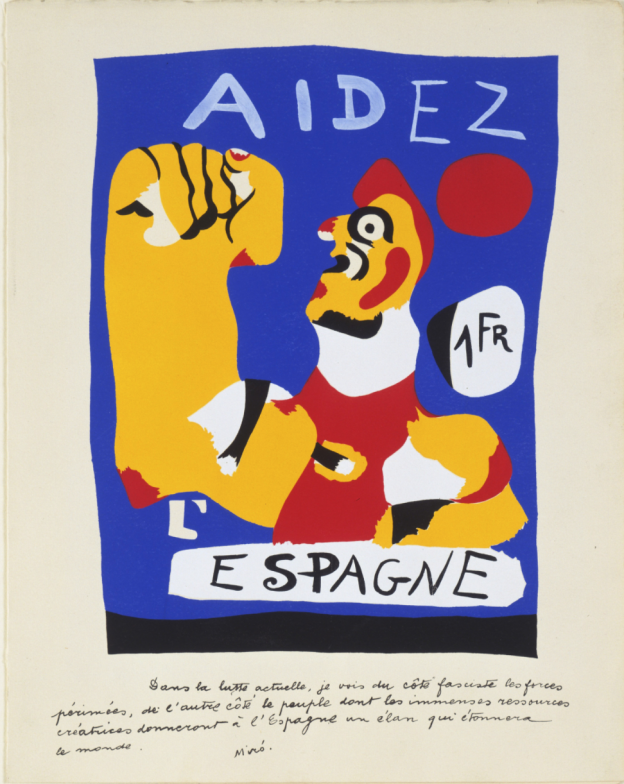
We are fortunate to live near the Harvard Art Museums, and while visiting recently, I pulled open a drawer and saw one object inside: Joan Miro’s 1937 design for a fundraising stamp entitled “Help Spain” (Aidez L’Espagne). Miro’s handwritten text says, “In the current struggle, I see expired forces on the fascist side; on the other side, the people whose immense creative resources will give Spain a momentum that will astonish the world” (my translation).

Two years after this print was made, the Spanish fascists had won. For that reason, the image caught me short. I had to remind myself: sometimes the people do win; sometimes the creative forces prevail.