Category Archives: deliberation

the International Summer School on Religion and Public Life

Adam Seligman is a major social theorist. For the past decade, he and colleagues have been organizing an annual International Summer School on Religion and Public Life. They convene educators, clergy, NGO leaders, and others from diverse religious traditions in particular places that are challenging sites for thinking about religious differences. Upcoming examples are in Rwanda/Uganda and the Balkans. The goal is not to intervene in the places where they meet, but to influence the participants, who convene there from around the world.

One could generally categorize this effort as a form of interfaith dialogue, but I think the distinctive features are: 1) very strong intellectual components, including serious consideration of theological issues; 2) a general stance that religious identities are central and not easily compatible with each other; 3) and an interest in challenging and provoking people while also trying to build a community. By the way, secular people–including atheists–participate; they just don’t predominate.

I’ve been working in the field of dialogue and deliberation (“D&D”) in the US for 25 years and have board memberships or working ties with organizations like the Kettering Foundation and National Issues Forums, Everyday Democracy, AmericaSPEAKS, the Deliberative Democracy Consortium, the Public Conversations Project, and the Sustained Dialogue Campus Network. I recommend that my colleagues in those organizations follow the International Summer School on Religion and Public Life as a distinctive and challenging model.

civic responses to Newtown

Bursting into a school to kill children and teachers is evil. It is also the antithesis of civil society and threatens the trust and peace that are necessary for civic life. A true solution is not easy to envision. None of the reforms that has a significant chance of enactment would reliably prevent such tragedies, even if legislation might help at the margins. A real solution would require action on many fronts, by many people. Addressing a brutal threat together is civic work that can help repair the torn fabric. And several different kinds of civic response are available.

One approach is grassroots mobilization in favor of some particular reform, such as gun control legislation. I don’t think serious reforms can pass without mass protest and advocacy. This approach would be divisive, but as long as it is peaceful, there is nothing “un-civic” about divisive politics. Debate and competition are good for democracy. In my view, the most serious limitation of mass mobilization is that no reform package that has been proposed so far would really meet the expectations of the activated citizens. Banning assault weapons would be constitutional and might prevent some violence, but it would hardly block all school shootings. More access to counseling might help some kids, but  apparently no impressive prevention strategy is available today for suicidal teenagers.

A second approach is to deliberate about the issues that Newtown has put on the national agenda. By definition, a deliberation is open to all people and all views. Thus a deliberative response would welcome both gun opponents and gun supporters. It would not aim at perfect consensus but might generate mutual trust, good new ideas, and perhaps enough political will to enact them.

The Deliberative Democracy Consortium and the National School Public Relations Association have “developed a guide for discussion and action on school safety and other issues raised by the events in Newtown.” The guide can be downloaded from the DDC’s resources page. It provides excellent advice about how to organize a deliberation based in a school and suggests four contrasting positions for citizens to discuss. (Each one comes with some supporting arguments and evidence.) They are: “strengthen school security procedures,” “take a closer look at how school systems deal with mental health issues,” “focus on guns, gun safety, and gun violence,” and “focus on approaches that address the emotional development of young people.”

Note that “naming and framing” an issue like this is difficult and important work. Kevin Drum wrote a post entitled, “If You Want to Regulate Guns, Talk About Guns. Period.” The President, however, tried to broaden the topic to children’s safety (which is much worse in inner-city neighborhoods than in suburban schools, but for different reasons). Even though Drum and Obama are on the same general side politically, they named this issue differently. There is no single correct name, but the DDC’s guide would give many people points of entry.

The DDC ‘s guide would work best for highly decentralized, community-based deliberations. Participants could commit to change their own behavior and perhaps influence policies in their schools and towns. If, however, they preferred large-scale political reforms or mass cultural change, they might feel frustrated by not being able to take effective action. Thus there is a case for some kind of large-scale national deliberation in response to Newtown. But reaching large scale would raise the political stakes and would encourage some people to try to derail the whole process. I can envision citizens showing up to deliberative events with unconcealed assault weapons, meaning to demonstrate their civil rights but scaring other citizens into silence. This doesn’t mean that national deliberations are impossible, but they would have to be carefully planned and led by a credibly neutral group.

A third approach is to strengthen civil society to reduce violence. I have blogged several times already about Robert Sampson’s Great American City: Chicago and the Enduring Neighborhood Effect. Sampson finds that “collective efficacy”–having a reasonable expectation that neighbors will act to address local problems–powerfully predicts whether neighborhoods thrive or decline. In turn, the strength of nonprofit groups and the number of well-connected leaders powerfully affects the level of collective efficacy.

The New York Times‘ Benedict Carey used Sampson’s analysis to write a good article on Monday about the Chatham neighborhood in Chicago. Racially segregated, economically challenged, and threatened by occasional random violence from outside the community, Chatham still has so much collective efficacy that it can usually hold crime at bay. Carey writes, “Chatham has more than a hundred block groups, citizen volunteers who monitor the tidiness of neighborhood lawns, garbage, and noise, as well as organize events.” When an off-duty Chicago police officer, Iraq War veteran, and civic leader named Thomas Wortham IV was shot to death, “residents of Chatham didn’t wait long to act.” They arranged public events that were intended to reinforce collective efficacy and organized crime watches and other practical efforts to suppress crime. They were so effective that essentially no crimes were reported in the vicinity for months after Officer Wortham’s tragic murder. (This example comes straight from Sampson’s book but is retold in the Times.)

How to help more American communities become like Chatham is not an easy question, but it could mean making policies more favorable to civic involvement, changing the culture of local governments and other formal institutions to promote active citizenship, reorienting civic education to teach civic action, and possibly enacting economic reforms that strengthen the kinds of local nonprofits that, according to Sampson and others, boost collective efficacy.

I do not prefer any of the three approaches. Indeed, they are compatible and could be mutually supportive. The same people and organizations cannot lead all three, because leading an advocacy campaign would destroy one’s neutrality as the organizer of a deliberation. But all these efforts (and more) can happen at once. The vision and effort they would require would itself be an appropriate civic response to Newtown.
a national discussion on safety

The New York Times has published an “Invitation to a Dialogue” by our friend Harry Boyte. Harry writes:

In response to the killings in Connecticut (“Looking for America,” column, Dec. 15), Gail Collins calls for breaking the silence about gun laws. But the discussion needs to address more than guns and extra bullet capacity.

The spreading pattern of violence grows from many sources, not simply guns. These include television news coverage, video games and movies, as well as family and community dynamics.

Public policy on guns can play a role. But mitigating the devaluation of human life will require a much more powerful civic response. Families, schools, colleges, congregations, businesses, consumer groups and others need to work together to challenge and change the culture of violence, reaching well beyond debates about the Second Amendment.

For instance, parents and teachers can develop early warning strategies; local journalists can spotlight programs that work for disaffected young adults; and young people themselves can organize peer-to-peer anti-bullying and anti-violence campaigns.

We need a broad citizen movement if we are to reweave the social fabric.

Readers are invited to respond today in order to for their comments to be considered for publication on Sunday. E-mail: letters@nytimes.com.

I’ll offer a few comments about what would make for a good discussion:

1) Everything should be on the table, certainly including gun control. That issue must not be suppressed because of the Second Amendment, the power of the gun lobby, or the fact that the President has been accused of wanting to take away people’s guns when actually he had no intention of addressing that issue. On the other hand, we shouldn’t ignore the very spotty empirical evidence for the benefits of the various gun control provisions that are being serious considered. Symbolic legislative victories do us no credit. For example, to reinstate the old federal assault weapon ban seems irrelevant, since Connecticut already had the same policy via state law, and the gun used in Newtown was legal.

2) We should define the problem broadly and with analytic clarity, not being driven by Newtown or any other notorious case alone. Huge numbers of young Americans are killed by guns every year. Policies and community actions that would reduce the overall homicide rate may be irrelevant to the still-rare cases of mass murder/suicide.

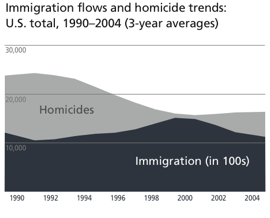
Online, you can find many comparisons of the numbers of children killed in Newtown and in Chicago this year. In Chicago, the 2012 toll is said to be 58, although I can’t confirm that from official statistics. In any case, 290 school-age children were shot in Chicago in 2009, and that is completely unacceptable. As I’ve written before, “If the fundamental responsibility of a government is protect citizens’ lives, then such violence puts the very legitimacy of the regime in question, to say nothing of the human tragedy that each gunshot represents.” But teen homicide rates have generally been falling, and although Chicago draws appropriate attention because of its recent spike, New York City has seen  declining numbers of homicides for 20 years. A productive discussion would not assume the premise that violence is rapidly increasing, because that can lead to irrelevant solutions. By the way, plausible explanations for the general decrease in violent crime include lead-paint abatement and immigration:

3) As Harry argues, we should think about much more than governmental policies and the kinds of causes that governments can address. I suspect that two reasons for the rash of mass school shootings are the general glorification of violence and the obsessive media attention devoted to tragedies in schools. The government cannot regulate the news and entertainment media (in relevant ways), but we citizens can choose which media to consume and produce. Citizens’ movements have influenced prevailing attitudes towards race, gender, sexual orientation, disabilities, littering, and drunk-driving, among other matters. The glorification of violence in our culture–whether that is increasing or declining–is an example of a problem that we must address without much help from the state.

Meanwhile, pervasive community-level changes are being made without getting a lot of attention. Elementary schools now drill students on how to respond to violent attacks; schools’ security systems and policies are being redesigned. Are these changes wise? Are the best strategies being used? Do we talk about these threats in appropriate ways?

4) How to define the topic or set the frame of the discussion is a difficult question, as anyone knows who has organized deliberative events. Watch the president take a question on gun control and try to place that issue in the larger context of children’s welfare and safety. To be sure, he has political reasons to try to make that shift–he has done a lot for children’s health but little about gun violence. Nevertheless, he may be right that child welfare rather than school shootings or gun control is the best frame.

religious freedom and non-discrimination at a private university

What should a university do when a religious student group applies internal rules that are discriminatory? For example, theologically conservative Jewish, Catholic, Protestant, Orthodox Christian, and Muslim groups may want to discriminate against gay students or may maintain that clerical roles are only open to men and expect their lay student leaders to endorse those views.

Tufts seeks to protect members of religious groups, women, and gay students against discrimination. When religious associations discriminate, that creates a dilemma. Indeed, the Tufts student government recently withdrew recognition from the Tufts Christian Fellowship on the grounds of discrimination against gays. On appeal, the Committee on Student Life (predominantly professors) ruled that the student government had enforced existing policy appropriately, but that the rules should be changed to accommodate religious freedom. The resulting decision deserves to be read in full, because it is fairly subtle and complex. In summary, it has these features:

(1) It distinguishes between membership and leadership. Tufts Hillel is required to admit Catholic members, but it could (in theory) choose to reserve its officer roles for observant Jews.

(2) It requires religious groups to state explicitly that they dissent from aspects of Tufts non-discrimination policy. For example, if they discriminate against gays, they have to say so. That may harm their overall reputation, but it’s fair enough because they should be accountable for their views. By the way, this policy opens a valuable opportunity to discuss what counts as discrimination. The Tufts Christian Fellowship requires chastity, presumably for all students regardless of sexual orientation. But it is discriminatory if straight students can hold hands when gay students cannot. The transparency policy requires them to make those judgments publicly and to pay the price in public opinion.

(3) It permits discriminatory policies within religious groups only if they are consistent with “doctrine”; and the chaplain’s office must review whether a doctrine really supports any given discrimination. It will be interesting to see how the professionals in the chaplain’s office make those judgments. One consequence will be to put a whole denomination in the hot seat if its representatives on campus assert that its doctrine is in conflict with Tufts anti-discrimination policy.

(4) It encourages pluralism. Tufts has a non-duplication policy: the university won’t recognize, for example, two evangelical Protestant student groups unless they differ in some meaningful way. Given the transparency policy, it is now possible for evangelicals who are pro-equality to create a rival group to the one that has taken a discriminatory stance.

I don’t believe that a university is simply a free speech zone that must give equal recognition and support to all views just because they are freely expressed. A university is primarily in the business of favoring excellent speech and disfavoring bad speech. Some religious speech that is discriminatory should be disfavored. For instance, many denominations were at one time openly racist. If they stuck to those views, a private university would be right to deny them official certification.

So why is it OK to express discriminatory positions about gays and women? I don’t think this is morally acceptable, but the question is what to do about it when the world’s biggest faiths remain widely committed to such discrimination. If a predominantly secular university like Tufts responds by decertifying religious groups that follow their own mainstream doctrines, then I think we will lose religious students and the opportunity to interact with them. The purpose of many religious student associations is to convince and persuade–to make converts or at least strengthen the faith of their own adherents. But conversion runs two ways. If religious students study at a place like Tufts, they are likely to liberalize their views of homosexuality and gender roles. If we chase them away, we lose that opportunity.

Overall, I think the new policy is sophisticated and wise. That’s easy for me to say as a straight man. No one is adopting formal positions that disparage my identity. So I recognize that I may be too tolerant of intolerance against other people. But I think the argument for deliberative accountability and pluralism is pretty strong, and it has the best chance of producing more equitable views in the long run.

(See also: On religion in public debates and specifically in middle school classrooms; and A theory of free speech on campus)

Democracy in Motion

(Dayton, OH) I strongly recommend Democracy in Motion: Evaluating the Practice and Impact of Deliberative Civic Engagement (Oxford University Press, 2012), edited by Tina Nabatchi, John Gastil, G. Michael Weiksner, and Matt Leighninger.

The authors address most of the basic questions for the field of deliberative democracy, including “Who Deliberates?, “How People Communicate During Deliberative Events,” “Does Deliberation Make Better Citizens?” and the impact of deliberation on communities and on policy.

The idea for this volume was cooked up–appropriately–in a deliberative meeting of scholars and practitioners that I participated in. One of the priorities that the whole group selected was to write a multi-authored book covering the fundamental issues of the field. It is exciting to see that this collaboratively-developed idea is now an Oxford University Press book. It really is the “state-of-the art” and offers, in my opinion, the most comprehensive coverage of many basic topics. For instance, I’ve noted that there isn’t much research on how people actually reason in public settings (what kinds of arguments they offer and respond to), but Laura W. Black has a very helpful chapter on just that topic.