Category Archives: notes on poems

Pied Beauty, illustrated

Glory be to God for dappled things
Screen Shot 2014-06-08 at 11.08.37 AM
For skies of couple-colour as a brinded cow;
Screen Shot 2014-06-07 at 1.41.43 PM Screen Shot 2014-06-07 at 1.45.34 PM
For rose-moles all in stipple upon trout that swim;
Screen Shot 2014-06-07 at 1.53.04 PM
Fresh-firecoal chestnut-falls; finches’ wings;
Screen Shot 2014-06-07 at 1.55.37 PMScreen Shot 2014-06-07 at 1.56.50 PMScreen Shot 2014-06-07 at 2.03.24 PM

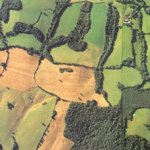
Landscape plotted and pieced – fold, fallow, and plough;

Screen Shot 2014-06-07 at 2.09.40 PMScreen Shot 2014-06-07 at 2.11.53 PM
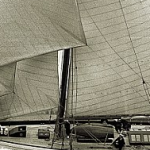
And áll trádes, their gear and tackle and trim.

Screen Shot 2014-06-07 at 2.15.22 PMScreen Shot 2014-06-07 at 2.17.32 PM

All things counter, original, spare, strange;
Whatever is fickle, freckled (who knows how?)
With swift, slow; sweet, sour; adazzle, dim;
He fathers-forth whose beauty is past change:
Praise him.

Gerard Manley Hopkins praises God, Who is uniform and immutable, for His grace in creating a category of things that are variegated and changeable. His little sonnet–it’s exactly 3/4 the length and breadth of a regular sonnet–is written in the tradition of a Psalm. Compare, for instance, “Sing unto the Lord with thanksgiving; sing praise upon the harp unto our God: / Who covereth the heaven with clouds, who prepareth rain for the earth, who maketh grass to grow upon the mountains.”

I am the opposite of Hopkins in many respects. (He was devout, depressed, gay, and highly gifted.) But lyric poetry is not for showing us ourselves; it’s a key to someone else’s mind. I cannot share Hopkins theology, but I can thank and praise him for appreciating a category of objects that–whether vast or tiny, whether human-made or natural–share the feature of being “dappled.”

(See also “Notes on Gerard Manley Hopkins’ Spring and Fall” and my own “For Gerard Manley Hopkins.”)

three endings for Christabel

I think Coleridge was bad at plot. He claimed he forgot the whole story of “Kubla Khan” when a visitor interrupted him, so he could share only the exotic setting.  But Stevie Smith doubts it:

He was weeping and wailing: I am finished, finished,
I shall never write another word of it,
When along comes the Person from Porlock
And takes the blame for it.

Like “Kubla Khan,” “Christabel” is deliciously atmospheric. By the end of Part II, the eponymous heroine is under the spell of the vampiric Geraldine and seems to be doomed. Unfortunately, Coleridge gives up right there. We can appreciate the fragmentary and deeply ambiguous result–yet I suspect Coleridge would have finished “Christabel” if he had thought of a satisfying ending. So here are three possibilities:

1. Geraldine is not a vampire after all. She really was left barefoot under the oak tree by five warriors on white horses. Christabel learns this when she is off moping in the wood (wondering how ere she has sinned), and the five knights come back and kidnap her. They tie her on their white palfrey and ride as fleet as the wind to Tryermaine, the castle of Lord Roland de Vaux. Finding Christabel barefoot under one of his oak trees, Lord Roland sallies forth to punish her abductors. He meets Christabel’s father, Sir Leoline, on a parallel mission to avenge Geraldine. The two estranged friends reconcile and go questing together with their girls in tow. Seeing them together, the five knights appear. They turn out to be the other guys from the old college jousting team. The whole stunt was just a way of getting Roland and Leoline to be friends again. Everyone has a good laugh and Christabel and Geraldine go out with the two cutest knights.

2. Christabel has had a night of mind-blowing sex with Geraldine. She wants more of that–but not with Geraldine, who is high-maintenance and has eyes like a snake. After a lot of histrionic acting, Christabel tells her father that Geraldine is an evil witch. Sir Roland banishes the young woman just to cut down on the drama in his castle (for he “seldom sleepeth well”). Free of that obligation, Christabel hooks up instead with the bard Bracy’s daughter, Kaylee.

3. Geraldine has made up all the spooky stuff to freak out Christabel: the fainting spell at the threshold, the fake tat across her bosom and half her side, the weird stares. Just as Geraldine plans, Christabel runs away to a nunnery to save her soul. That leaves Geraldine free to seduce Sir Leoline, who has been alone since Christabel’s mom died in childbirth. The old baron is weak in health and soon passes. Geraldine inherits the castle and turns it into the most profitable heritage tourism destination resort between Bratha Head and Wyndermere.

W.H. Auden’s long journey

Articles entitled “The Secret X,” are usually exposés of X’s secret crimes and shames. But Edward Mendelson’s article “The Secret Auden” (New York Review, March 20) catalogs the many discreet acts of kindness, sensitivity, and self-sacrifice of W.H Auden. Auden sounds like one of the nicest famous people who ever lived–sleeping outside the door of an old woman’s apartment to help her with night terrors, befriending awkward teenagers at literary parties, helping convicts with their poetry.

What does this have to do with the man’s writing? Auden went on a long inward moral journey. After his early celebrity as a left-wing poet, he was suspicious of his own motives and the causes they had attached him to. His relentless self-criticism was not barren, self-destructive, or cynical; it gave him material for his best writing.

Mendelson offers an example. Isaiah Berlin was “Auden’s lifelong friend,” and on the surface it would appear that the two men held similar views: resistant to ideology and tolerant of  human beings in all their crooked particularity. In his essay on Turgenev, Berlin wrote: “The dilemma of morally sensitive, honest, and intellectually responsible men at a time of acute polarization of opinion has, since [Turgenev’s] time, grown acute and world-wide.” Mendelson summarizes Auden’s response:

Whatever Berlin intended, a sentence like this encourages readers to count themselves among the sensitive, honest, and responsible, with the inevitable effect of blinding themselves to their own insensitivities, dishonesties, and irresponsibilities, and to the evils committed by a group, party, or nation that they support. Their “dilemma” is softened by the comforting thought of their merits.

This is an example of how far Auden’s journey had taken him: from ideology to the anti-ideological liberalism of Isaiah Berlin, and then beyond that to a stance of deep self-criticism in which even anti-ideology is an ideology. As Mendelson notes, Auden dedicated “The Lakes” (1952) to Berlin. This poem is about preferring homely lakes to the great ocean, and enjoying their diversity and particularity. Berlin might agree, but Auden inserts a warning (not quoted here by Mendelson): “Liking one’s Nature, as lake-lovers do, benign / Goes with a wish for savage dogs and man-traps.”

At a high-theoretical level, Auden explored the many ways in which we are tempted to adopt self-aggrandizing ideas. In his poems, Auden depicted those clashing ideas with irony and humor. And in his private life, he tried to act kindly and lovingly toward all. It seems he actually lived the life he (over-generously) attributed to Sigmund Freud:

Of course they called on God, but he went his way
down among the lost people like Dante, down
to the stinking fosse where the injured
lead the ugly life of the rejected,

and showed us what evil is, not, as we thought,
deeds that must be punished, but our lack of faith,
our dishonest mood of denial,
the concupiscence of the oppressor.

(See also: In “Defense of Isaiah Berlin,” Six Types of Freedom,” “The Generational Politics of Turgenev,” “mapping a moral network: Auden in 1939,” “notes on Auden’s September 1, 1939,” “on the moral dangers of cliché,” and “morality in psychotherapy.”)

Robert Pinsky, Impossible to Tell

Imagine a group of people taking turns making clever remarks, echoing and developing each others’ cues. To play the game well is to extend the discussion for another round in a pleasurable way.

For instance, they might be middle-aged Jewish men trading Jewish jokes, like the one

About two rabbis, one of them tall, one short,
One day while walking along the street together …

Or they might be “Basho and his friends,” drinking saki one 17th-century night and improvising long chains of the linked haikus called rengas:

Threading a long night through the rules and channels
Of their collaborative linking-poem
Scored in their teacher’s heart: live, rigid, fluid
Like passages etched in a microscopic circuit.

Or all the stories might flow from a single speaker who has a desperate need, like Scheherazade, not to stop entertaining. And that person might not be an Arabian princess but rather a small boy in a sad apartment, whose mother

… tells the child she’s going to kill herself.
She broods, she rages. Hoping to distract her,
The child cuts capers, he sings, he does imitations
Of different people in the building, he jokes,
He feels if he keeps her alive until the father
Gets home from work, they’ll be okay till morning.

In “Impossible to Tell,” Robert Pinsky weaves these and other stories about story-telling together to create one jazz-like poem. He improvises on the title, which recurs three times in markedly different contexts. Parts of the poem are jokes that made me actually laugh. Parts are like haikus in their fresh descriptions of everyday reality: “In summer, gasoline rainbow in the gutter.” (Note the 7-syllable phrase.) And parts are very sad, like the death of Pinsky’s friend Elliot Gilbert, as seen by his family.

As for the child who tells jokes to keep his mother from suicide,

… maybe he became
The author of these lines, a one-man renga
The one for whom it seems to be impossible
To tell a story straight.

notes on Seamus Heaney’s Singing School

(en route to Tarrytown, NY) The son of a Catholic farmer in Ulster, with an education and an extraordinary gift for language, Seamus Heaney knew oppression and he knew art. Oppression came in many forms and layers–the Unionists and British representing only two of the oppressors–and it demanded active, bodily resistance: joining his people in labor, suffering, or even violence. The art meant moving away from all that in several respects: away from physical objects into words, away from the laboring poor into the middle class or even the global elite, away from Ulster to places like Spain and Oxford, and away from his Irish roots into English literature.

Heaney’s “Singing School” explores this profound tension by means of six short autobiographical scenes from his own education. At the risk of distorting the poem, I’d suggest that each scene presents different oppressors and teachers.

First, the epigraphs are quotations from two of Heaney’s teachers, great poets who wrote in the oppressors’ English language. Wordsworth was an Englishman but a liberal revolutionary. He invented a style of elegaic memoir (in natural-sounding formal verse) that made Heaney’s work possible. Yeats was originally a Protestant Irishman, one of the oppressors, and the quoted passage recalls his childhood hatred of Heaney’s people. But Yeats became a nationalist bard, and he provides the poem’s title:

Nor is there singing school but studying
Monuments of its own magnificence;
And therefore I have sailed the seas and come
To the holy city of Byzantium.

Stanza 1: The oppressors are the teachers at St Columb’s College (Catholic priests) and the police. Heaney’s teachers are the modern Irish poets Seamus Deane and Patrick Kavanagh, and surely, James Joyce, whose Portrait of the Artist infuses the stanza.

Stanza 2: The oppressor is the constable, hence the British government. The teacher is Heaney’s silent father, teaching not to sing but to work with one’s hands and keep truths hidden.

Stanza 3: The oppressor is the Orangeman marching through Belfast (but showing weakness as he struggles with his drum). The teacher is the crowd, teaching the rhythms of hatred.

Stanza 4: The oppressor is the Royal Ulster Constabulary and the British government. But Heaney’s problem is that he is no longer directly oppressed. His career has liberated him to live in Madrid, much as Joyce lived in Paris and Trieste. (“Rivering” is another Joycean echo). Heaney’s teachers, as he struggles with guilt and exile, are Joyce, Lorca, and Goya.

Stanza 5: The main teacher is Heaney’s mentor, the short-story-writer Michael McLaverty, who invokes Katherine Mansfield and “poor Hopkins”–referring to the English poet exiled unhappily to Ireland. In this stanza, oppression recedes as McLaverty encourages Heaney to improve the world by describing it. He has permission to be a poet.

Stanza 6: I think nature is the main teacher here–and also Ovid, whose “Tristia” were songs of exile. Yeats is again an inspiration. The stone hurled by Republican revolutionaries that recurs through “Easter 1916” may be the stone in Heaney’s poem:

Imagining a hero
On some muddy compound,
His gift like a clingstone
Whirled for the desperate.

The oppressor is still political–Heaney has escaped from a “massacre”–but political oppression has become more abstract and general now that Heaney lives in Wicklow (in the Irish Republic). Not only a Catholic from Ulster but almost any thoughtful person could feel “I am neither internee nor informer.”