Category Archives: fine arts

The Cliff-Top Monastery by A.B. Jackson

If you want a 20-line respite from the fascinating train wreck of American politics (on which my eyes are riveted, like everyone else’s), I recommend A.B. Jackson’s “The Cliff-Top Monasteryin the May issue of Poetry Magazine. A whole short story unfolds in five stanzas. At first, the characters seem to be on a cruise in the modern Aegean, jumping off a yacht, perhaps, to “doggy-swim ashore / and surf the scree slopes in buoyant uproar.” But it would have been wise to notice the epigraph: “The Voyage of Saint Brendan.” These men must be medieval Irish monks on a northern sea. The story quickly turns holy–and then spooky.

As far as I can tell, Jackson’s sources are chapters XII and XV of the Voyage of St. Brendan (written down ca. 900), which relate the saint’s discovery of the Island of St. Ailbe and his return there after numerous adventures. (The raven, however, is spliced in from other Brendan legends.) The original text is fairly didactic, encompassing sermons or lectures by the abbot of the Cliff-Top Monastery. Jackson has extracted the spooky (pagan?) core of the story and made the island a place to flee in haste.

(See also the scholar and his dogSeamus Heaney’s Beowulf. )

Mozart illustrates the importance of “bids” in romantic relationships

The psychologist John Gottman discovered a fundamental condition of successful romantic relationships (which is consistent with my experience of 21 happy years of marriage). Partners frequently make “bids” for positive attention. Emily Esfahani Smith illustrates with an example: “the husband is a bird enthusiast and notices a goldfinch fly across the yard. He might say to his wife, ‘Look at that beautiful bird outside!’ He’s not just commenting on the bird here: he’s requesting a response from his wife—a sign of interest or support—hoping they’ll connect, however momentarily, over the bird.” Couples who stay together respond positively to each others’ bids an average of 86% of the time. Couples who end up divorcing respond only 33% of the time.

The opening scene of the Marriage of Figaro is set in the room that Figaro and Susanna expect to occupy after their wedding the next day. They are alone together. Figaro is busy measuring the space for the bed that they will share. He sings a foursquare, masculine theme that has been identified as a march. Simultaneously but separately, Susanna is admiring herself in a new hat and telling herself how happy it makes her. Singing in her own ornamented and undulating gavotte, she asks Figaro to pay attention for a moment: “look a little, my dear Figaro.” He keeps on counting, and she keeps on asking: their two themes now playing in counterpoint. She gets more insistent as her light gavotte turns forceful: “look a little / will you look already at my hat!” At that point, Figaro notices her bid. He switches to her melody and meter to reply, “Yes, my heart, it is very pretty. It really seems  to have been made for me. Ah, next morning at our wedding …” Susanna answers in counterpoint, “How sweet is my tender groom,” as Figaro keeps singing about the “beautiful little hat.” Their melodic lines join as they sing the same lyrics about their wedding.

If you interpret the duet as a competition or struggle of wills, then Susanna wins. Daniel Heartz (1987) writes:

Susanna makes Figaro sing her tune to her rhythm, while complimenting her on her hat. With this little drama in music, which almost needs no text, Mozart has succeeded in foreshadowing the entire opera in the first number. By the end of Act 4 Figaro will have been taught a lesson by Susanna, and learnt to sing her tune for good, we hope, with regard to matters of trust and mutual respect between them. The conflict of march and gavotte, of military masculinity with the feminine grace of one of the most gallant court dances, will [recur in later scenes as well].”

But I’d prefer to see the scene as win/win. Each partner makes a bid and each replies. As soon as the duet concludes, Susanna asks in recitative, “What are you so busy measuring, little Figaro?” Statistics predict that these two will have a happy marriage.

source: Heartz, Daniel (1987). “Constructing Le nozze di Figaro.” Journal of the Royal Musical Association 112.1, 77-98. For a more detailed analysis of the duettino, see Stephen Rumph, Mozart and Enlightenment Semiotics, University of California Press 2011. And see why romantic relationships do not function like markets.

Derek Walcott becomes the volcano

(Orlando, FL) I’ve settled on a poem with which to express homage to the late Derek Walcott: his “Volcano” (1976)

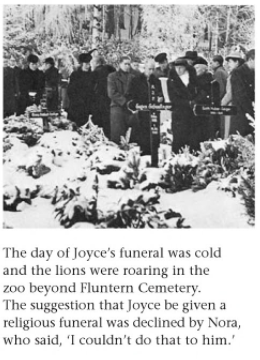
Joyce was afraid of thunder
but lions roared at his funeral
from the Zurich zoo.
Was it Trieste or Zurich?
No matter. These are legends, as much
as the death of Joyce is a legend,
or the strong rumour that Conrad
is dead, and that Victory is ironic.
On the edge of the night-horizon
from this beach house on the cliffs
there are now, till dawn,
two glares from the miles-out-
at-sea derricks; they are like
the glow of the cigar
and the glow of the volcano
at Victory‘s end.
One could abandon writing
for the slow-burning signals
of the great, to be, instead,
their ideal reader, ruminative,
voracious, making the love of masterpieces
superior to attempting
to repeat or outdo them,
and be the greatest reader in the world.
At least it requires awe,
which has been lost to our time;
so many people have seen everything,
so many people can predict,
so many refuse to enter the silence
of victory, the indolence
that burns at the core,
so many are no more than
erect ash, like the cigar,
so many take thunder for granted.
How common is the lightning,
how lost the leviathans
we no longer look for!
There were giants in those days.
In those days they made good cigars.
I must read more carefully.

Two of “the great” are named in this poem: Joyce and Conrad. Joyce is a foil for Walcott: an exiled former subject of the British Empire who wrote Ulysses, to which Walcott, from a different Atlantic island, replied with Omeros. It turns out that lions did roar at Joyce’s funeral, and one can risk the pathetic fallacy that they roared for the master’s passing.

I don’t know Conrad’s novel Victoria, but Wikipedia suggests why Walcott might like it (as long as it can be read as “ironic”). Apparently, it describes yet another colonial island-outpost, this one in the Pacific, from European and subaltern perspectives–offering that double vision that fascinates Walcott. And according to Walcott, it ends with two lights shining on the ocean horizon, one a cigar and one a volcano. Seeing a similar pair of lights on the sea off his Caribbean home, Walcott imagines them as messages from Conrad, who is only “rumored” to be dead because his words still speak.

Walcott, the future Nobelist, has every right to place himself in these men’s company. He strives to write great works, to make his own mark. The poem relates a moment, however, when he considers whether it might be better to devote himself to reading: in fact, to become the “ideal reader.” That is a ruminative life, more modest, quieter, although Walcott’s character still compels him to be the “greatest reader in the world.”

“Volcano” adopts a rhetoric of decline. “Awe … has been lost in our time”; “so many take thunder for granted.” But I think the narrator pokes a little fun at himself for that mood when he says, “In those days they made good cigars.” It’s not really that culture has declined and all the great ones have passed. That’s simply what a person feels when he or she pledges, “I must read more carefully.”

With Walcott gone now, I’d like to think of him as a light from far offshore, sending his slow-burning signals for a long time to come. Best to enjoy them, not try to outdo them, because they really don’t make writers like Derek Walcott any more.

on inhabiting earth with inaccessibly beautiful things

I unfortunately know no Chinese. The sounds, resonances, allusions, and calligraphy of traditional Chinese poetry can reach me only through paraphrase or as abstract patterns, each character looking not much different from the next. However, Perry Link writes,

Should we compare poetry across civilizations? If we do, classical Chinese poetry wins easily. The contest is almost unfair, because, as my students of Chinese language eventually come to see, the fundaments of language are different.

Indo-European languages, with their requirements that tense, number, gender, and part of speech be specified, and with the mandatory word inflections that the specifications entail, and with the extra syllables that the inflections add, just can’t achieve the same purity—a sense of terseness and expanse at the same time—that tenseless, numberless, voiceless, uninflected, and uninflectible Chinese characters can achieve. In a contest, one person has a butterfly net and the other a window screen.

I thought of this passage during a recent, brief visit to the Sackler Gallery in Washington, which is showing “Painting with Words: Gentleman Artists of the Ming Dynasty.” The highlights are vast, wall-sized hanging scrolls that display poems in the original authors’ calligraphy. The setting is abstract, modern, respectfully dark. In the background, a recording of a classical Chinese zither plays. The English translations by a Sackler curator, Stephen D. Allee, produce what I would call good poetry. The language is moving and sometimes surprising. For instance:

My friends are scattered few and far apart and the rain just drizzles on.
Fragrance fades from the incense burner and the teacups have toppled over;
I composed a poem on plum blossoms, but I’m sorry it is not well done.

I trust that these English lines convey the sense of the end of a poem by Wen Zhengming (composed ca. 1500), but they bear only a distant relationship to the scroll he painted and the sounds that his intended audience would hear as they read it. It’s strange to think that I will never be able to experience a deeply valuable art form–in Link’s estimation, the best tradition of poetry in the world–even though I can stand in the same room with it.

(See also: nostalgia for now and Ito Jakuchu at the National Gallery)

Walter de la Mare, Fare Well

Derek Walcott says that he always “cherished” the poem “Fare Well” by Walter de la Mare “because of its melody and its plaintiveness.” I think Walcott proceeds to recite it from memory rather than read it, because his spoken rendition differs in very minor respects from the printed versions that I have found online (“or” instead of “nor”, “dost” instead of “wouldst”). Walcott’s recommendation is enough for me, so I offer de la Mare’s text below:

Fare Well

When I lie where shades of darkness
Shall no more assail mine eyes,
Nor the rain make lamentation
When the wind sighs;
How will fare the world whose wonder
Was the very proof of me?
Memory fades, must the remembered
Perishing be?

Oh, when this my dust surrenders
Hand, foot, lip, to dust again,
May these loved and loving faces
Please other men!
May the rusting harvest hedgerow
Still the Traveller’s Joy entwine,
And as happy children gather
Posies once mine.

Look thy last on all things lovely,
Every hour. Let no night
Seal thy sense in deathly slumber
Till to delight
Thou have paid thy utmost blessing;
Since that all things thou wouldst praise
Beauty took from those who loved them
In other days.

It’s quite straightforward, but I’ll add a few notes.

  • The “melody” that Walcott admires could be parsed as six rhyming couplets (AA, BB, CC) with 15 syllables before each rhyming word, arranged in in a pattern of trochee, trochee, trochee, spondee [line break], trochee, trochee, anapest [line break], trochee, spondee. It could be easily set to music.
  • De la Mare introduces some surprises. You would think that once you’re dead and buried, what you’ll miss is light. The narrator says instead that you will no longer see “shades of darkness,” which is true enough. A.E. Hausman Housman read the poem in a version with a misprint: “rustling” instead of “rusting harvest hedgerow.” Housman knew right away that the original must have read “rusting,” because the sound of wind in leaves is a cliché and unrelated to the poem’s theme, whereas “rusting” evokes autumnal colors and an imminent fall.
  •  “Wonder” is “the proof of” the narrator. Does “proof” mean a test that the narrator faced, or evidence that the narrator lived?
  • I take it the “thou” addressed in the third stanza is a reader after the narrator has died. We are to appreciate the beauty of the world as if it were about to pass and remember that those who have passed appreciated it before us.