Category Archives: Uncategorized

news from the deliberation world

(Hyannis, MA for a staff retreat) Here are some bulletins from the National Coalition on Dialogue & Deliberation (NCDD) and the Deliberative Democracy Consortium:

NCDD’s Beginner’s Guide
The NCDD’s Resource Center offers “2,600 resources on dialogue & deliberation.” As they note, that volume can be “a bit overwhelming.” Thus they offer a new Beginner’s Guide.

NCDD’s  “Participatory Practices” compendium
This site is a portal to “descriptions of more than 150 tools and methods used for dialogue and deliberation.”

DDC’s “Planning for Stronger Local Democracy” workshop, July 19
Sign up for this preconference session before the “Frontiers of Democracy” conference, which I’m co-organizing. The presentations, panels, small-group discussion, and a home movie will help participants think through: the strengths and weaknesses of how public participation happens in their community; the key questions they need to ask about the history and patterns of engagement; the building blocks they might consider in their planning for stronger local democracy; and what a number of national associations are doing to inspire, learn about, and support local democracy-strengthening work. Among the people who will be sharing their insights and updates at the workshop will be: Carolyne Abdullah, Everyday Democracy; Kristen Cambell, National Conference on Citizenship; Mike Huggins, National Civic League; Eric Gordon, Engagement Game Lab; Linda Nguyen, Alliance for Children and Families; and Wendy Willis, Policy Consensus Initiative.

John Gaventa, OBE
Our colleague John Gaventa, now at the Coady International Institute in Nova Scotia and a former Tisch Research Prize winner (among has many other awards) has been named by Queen Elizabeth to the Order of the British Empire. By the way, John will be speaking to the “Frontiers” conference by remote video.

where is the wisdom in our information?

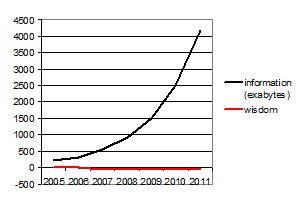
The efficiency and power with which we quantify and analyze society has increased astonishingly in less than a lifetime. But our ability to explain, predict, let alone improve society has hardly grown at all.

Around the time when I was born (1967), you collected information about people by talking to them, writing what they said on paper, and then possibly transferring the records to punched cards. You statistically analyzed the data by hand, or, if you were lucky enough to have access to a computer, by running the cards through a program that took many hours just to generate descriptive statistics, such as means. You published results for other people to read, but you could only analyze raw data that you had physical access to. You had to think carefully about every hypothesis and query, because calculation was laborious. Statistical techniques were relatively limited, and more elaborate techniques would have been too hard to execute.

Since then, the following changes have occurred:

  • Information is easily digitized and widely shared, so people around the world can analyze any single dataset.
  • Data are collected electronically, so there is no need for manual data-entry.
  • Statistical techniques have become far more sophisticated, so we can now understand how A relates to B holding many other variables constant, even if data are nested, corrupt, or oddly sampled.
  • Because statistical analysis is now conducted quickly and easily by computers and computational power has expanded exponentially, we can test as many hypotheses as we want.
  • Instead of taking representative samples, we can now sometimes sweep up all the data. For example, some states have longitudinal records on every child in their schools. Facebook knows every user’s friends and timeline.
  • Individual records are being tagged consistently, so that one can search for answers to the same question on multiple surveys. ICPSR is leading the way toward tagging surveys with metadata. For instance, searching the ICPSR database for survey questions about parents volunteering in schools, one finds 338 results from different surveys. That instantly produces a kind of “meta-dataset” that can be analyzed.
  • Qualitative information is also being coded and tagged: not just transcripts but audio and video files that retain tone of voice, body-language, accent. At some point, qualitative datasets will be archived and meta-tagged in the same way as surveys, so that we can combine the depth of interviews with the breadth of multiple-choice instruments.

And yet … do we understand society much better than we did in 1967? Borrowing from a previous post about the exponential increase in the quantity of information exchanged, I’d suggest that these are the trends:

Perhaps we already knew the important truths in 1967: for example, that if you fail to invest in kids, their lives will turn out worse. Perhaps in those days, we understood better how to take political action so that policies would change in the ways that social science recommended. In other words, maybe we can describe society better today but have less influence on it.

Maybe we are lost in trivial or even spurious results. If you test 100 hypotheses, 5% of false ones will look true by sheer chance, so you will generate five falsehoods.

Sometimes I wonder if we have created a Borgesian nightmare, an increasingly detailed map of the world at 1:1 scale, which is not a guide to reality but just a second world to get lost in.

community engagement and economic well-being

I am in Chicago for meetings at the National Conference on Volunteering and Service and then the Spencer Foundation. The last time I was here, it was to speak at the Chicago Donors Forum conference on community engagement. The Forum’s report on the conference is well done. The best parts are quotes from other speakers, such as Agustin Flores, age 19, who stole the show with a great talk about the life-changing experience of challenging Mayor Rahm Emanuel over student transportation fares. But I’m quoted, too:

“Community engagement is just as important as education, criminal justice, or urban development, because we cannot tell what to teach, what should be illegal, or how to develop a community without engaging people.” …

“There are no panaceas, no silver bullets; and community engagement doesn’t work for all purposes,” said Peter Levine. “But there are great examples of impact.” Perhaps the most powerful example in these hard economic times is how active community involvement and political engagement lead directly to greater economic success, fending off unemployment and creating conditions for the acquisition of jobs—in the city, the region, and the state.

“We found a correlation between social capital or civic health in states and major metropolitan areas and their resilience against unemployment, once various economic factors were controlled,” Levine said. He outlined the chain of benefits communities derive from active engagement:

“Participation in civil society can develop skills, confidence, and habits that make individuals employable and strengthen the networks that help them to find jobs.”

“Middle school and high school students who participate in service-learning during class or who serve in school government succeed much better academically than peers with similar backgrounds. Many individuals owe their employment to fellow members of social or civic groups or have learned their most marketable skills in national and volunteer service.”

“Trust is a powerful predictor of economic success because people who trust are more likely to enter contracts and business partnerships, and because confidence in others is a precondition for investing and hiring.”

“Communities and political jurisdictions with stronger civil societies are more likely to be governed well. Active and organized citizens can demand and promote good governance and serve as partners to government in addressing public problems.”

“Community engagement can encourage people to feel attached to their communities, increasing the odds they will invest, spend, and hire there. A related hypothesis holds that the strength of local civic infrastructure, such as the availability of civically committed religious congregations, and the availability of local associations and informal venues such as barber shops, boosts attachment and investment in a community, which in turn increases civic engagement and local economic investment.”

“I am a community engagement guy,” said Levine, expressing confidence that subsequent studies will find that community engagement translates into gains in health and environmental protection as well as economics. “I have studied and practiced that my whole career. I happen to believe that a full and flourishing human life requires community engagement.”

exciting changes at AmericaSPEAKS and the National Institute of Civil Discourse

(On a train, finishing a Boston>Newark>Philadelphia>DC>Philadelphia>Newark>Boston circuit) As a board member of AmericaSPEAKS, I am delighted that our founder and president, Carolyn Lukensmeyer, has a great new opportunity to be Executive Director of the National Institute of Civil Discourse, and the excellent former Chief Operating Officer of AmericaSPEAKS, Steve Brigham, is stepping up to lead the organization. This is a twofer, as far as I am concerned: great new leadership at two important institutions, with Carolyn still playing an important role at AmericaSPEAKS. As she writes,

Today too many of our public meetings, and certainly the images that mass media presents us with of ourselves, are exactly the opposite of [a] respectful exchange and exploration of views.  Americans find themselves in structures and processes that support the angry expression of their opinions, with the intention of drowning out anyone who thinks differently than they do.  This is how we behave when demagoguery is all we hear and our leaders make incivility seem acceptable.

But getting people together to discuss issues is possible and it yields satisfied and empowered people as well as wise solutions. That is the role (in different ways) of both AmericaSPEAKS and the National Institute of Civil Discourse, which was founded in response to the Gabby Gifford’s shooting and now has an ambitious national leadership role. Onward!

Elinor Ostrom, 1933-2012

I was very sad to read this morning that Elinor Ostrom has died. Lin ran the Workshop in Political Theory and Policy Analysis at Indiana University, where she was also Distinguished Professor and Arthur F. Bentley Professor of Political Science in the College of Arts and Sciences and professor in the School of Public and Environmental Affairs.

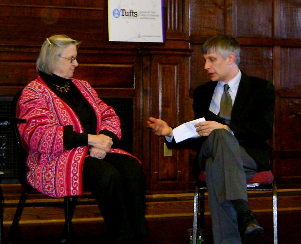
Lin won the 2009, Nobel Prize in Economic Sciences and was chosen in 2012 for Time magazine’s annual list of the 100 most influential people in the world. She was a MacArthur “Genius” award winner, former president of the American Political Science Association, and recipient of our own Tisch College research prize, which she is receiving here:

I find I have blogged about her or her work 23 times already. For example:

Lin started as a graduate student of Vincent Ostrom, who survives her. She was a woman, an untenured “trailing spouse” in the one-college town of Bloomington, and she studied unfashionable topics, like local governance. Her perspective ran counter to dominant trends in modernity, especially the idea that centralization brings efficiency. She had profound respect for ordinary people’s wisdom, but that didn’t turn into pious enthusiasm. Instead, she tested hypotheses about collective action with the utmost rigor, using laboratory experiments, data from field work on several continents, and rational-choice models. The result was a glorious achievement that will long outlive her–but we’ll miss the warm and and kind human being.