Category Archives: Uncategorized

suing for better civics

(DCA) Robert Pondiscio for the Fordham Institute:

Many of us who view ourselves as civic-education advocates spend lots of time writing earnest op-eds and columns, attending conferences, and speaking on panels … Collectively, we have spilled gallons of ink urging states, school districts, and teachers to return public education to its roots.

Well, to hell with all that jawboning, says Michael Rebell, in effect. He’s going to force the issue by making a federal case out of it. Literally.

An attorney and Columbia professor, Rebell has been quietly working with a group of law school students to prepare a federal lawsuit to be filed next month, arguing that our public schools are not adequately preparing children for citizenship. ….

Before you write this off as a quixotic quest or mere law school exercise, know that Rebell isn’t just some lawyer, or even some professor. In 1993, he led the landmark Campaign for Fiscal Equity lawsuit against the State of New York and won …

I would add that Rebell’s new book, Flunking Democracy: Schools, Courts, and Civic Participation (University of Chicago Press, 2018) is a thoughtful, well-informed, and judicious overview of civics–valuable even if you aren’t interested in the lawsuit. The book also helpfully explains what would happen if the plaintiffs won. They wouldn’t ask courts to set education policy but to require a deliberative process (involving elected officials and others) that would make progress on civics.

from modest civic reforms to a making a stand for democracy

This summer, I’ve had the chance to lead discussions among 20 scholars and activists who gathered for two weeks at Tufts, to chair the Frontiers of Democracy conference for about 130 educators and organizers (mostly Americans), to work with social studies teachers in Utah and in Ukraine, and to participate in the 4th annual European Summer Institute for scholars and activists from Armenia, Azerbaijan, Belarus, Georgia, Germany, Kazakhstan, Kirghistan, Russia, Tajikistan, and Ukraine. I got to meet more than 200 new people, almost all of whom would say that their vocation is to support democracy.

These conversations provoke reflection on my part, a quarter century after I started in the “democracy business” at Common Cause and then at the University of Maryland’s School of Public Policy. It strikes me that our agenda must be very different today from during the Bush I and Clinton years, when I was in my 20s and early 30s. I’ve perhaps been too slow to adjust to the change (the Obama years made me complacent), but it’s not too late.

In the late 1900s, the formal systems of parliamentary democracy seemed secure in countries like the US, and triumphant globally. Autocrats were old guys who couldn’t deliver prosperity, achieve popularity, or anticipate the social movements that toppled them.

However, politics and government were unpopular in the US. We weren’t using public institutions to tackle complex and profound problems, such as de-industrialization, racial injustice, or environmental crises. Maybe that was because the neoliberal center-left–leaders like Clinton and Blair–had simply given up. Or maybe it was because citizens had come to mistrust public institutions for good reasons, and the tools and processes of government were inadequate to the challenges of the day.

Meanwhile, everyday civic life had eroded. Robert Putnam suggested this erosion in “Bowling Alone” (1995); succeeding events have unfortunately vindicated him. Traditionally, formal politics in the US rested on a foundation of associations that brought people out of their private spheres and taught them values and skills relevant to national government. Those associations had shrunk and fractured.

Many of us thought that we should try to “deepen” democracy by adding to the formal processes of our political system better opportunities for citizens to discuss and collaborate. That would repair some of the gaps among citizens and between citizens and the state and would enable civil society to tackle intractable problems. This was the premise of the National Commission on Civic Renewal, of which I was deputy director (1997-8), and of my 2000 book, The New Progressive Era: Toward a Fair and Deliberative Democracy.

Flash forward to 2018, and we observe a very different situation. The autocrats and oligarchs are now the innovators, delivering prosperity and popularity in countries like China. Freedom House argues that democracy has been in retreat for a dozen years. As influential as the book version of Bowling Alone was in 2000 is this year’s How Democracies Die by Steven Levitsky and Daniel Ziblatt.
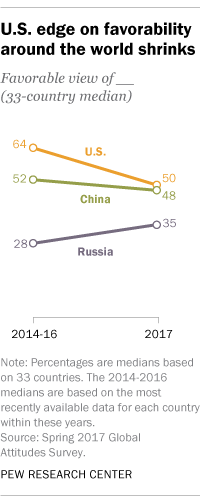
Then, one of the concerns was US arrogance and ideological imperialism, as we sent legions of advisers to places like the former Soviet Union and discussed the End of History thesis. We “spiked the football” in the end-zone of the Cold War. Now China offers the model that has rising global appeal: sophisticated technocratic authoritarianism, a corporate-dominated market economy, and assertive nationalism. The US follows that global trend but in a version that inspires almost no one beyond our borders.

Many people don’t merely disapprove of the performance of their respective democratic governments; they explicitly disparage democracy. Whereas every Republican president from TR to George W. Bush (except perhaps Taft) presented himself as a champion of democracy (by that name), now only one of the major American parties consistently endorses democracy as an ideal.

Americans are not merely disengaged and a little mistrustful of one another; we increasingly hate each other.

In the modern world, we observe events not directly, but through media of communications. Those media have been massively transformed since the late 1900s. One third fewer people are employed at journalists today, metropolitan daily newspapers have virtually collapsed, and the global media environment is dominated by openly ideological broadcast companies and caustic social media.

We’ve made some progress on some social issues (health insurance, for instance), but other issues have reached the boiling point. Policing, for example, was racially unjust in the 1990s. People then demanded the execution of innocent young Black men and defended their stance by saying, “maybe hate is what we need if we’re gonna get something done.” But now the person who uttered that particular phrase is the President of the United States and has the explicit support of more than 4 in 10 Americans.

I am increasingly skeptical that our main need is to deepen democracy–to add forums, programs, or policies that grant citizens more valuable roles in our formal systems. I doubt that strategy would block Brexit or Trump or the purge of the Supreme Court in Poland. Deepening democracy might work for addressing a mild sense of alienation from routine governance, but not for holding back autocracy.

If mishandled, this strategy can even help to delegitimize institutions that deserve support.  Caroline W. Lee argues that organized deliberations can co-opt resistance. Cristina Lafont worries that deliberative fora can delegitimize regular democratic processes, such as elections, by making them look so inferior that they don’t deserve protection. China is implementing local deliberative processes at a large scale, perhaps to blunt criticism and improve satisfaction with its regime.

I think the new wave of strategies must have these features:

  1. Democracy must be championed by candidates, parties, and movements that aim to govern, not by specialized nonprofits in the democracy field. We can’t be satisfied with procedural innovations around the edges. Governments must demonstrate that they can get better outcomes by using democratic methods. That means that the same people must offer procedural reforms, democratic values, and substantive policies, and they must deliver results while they hold power.
  2. Democratic reforms must shift the balance of power. That means that democracy can’t be viewed as politically neutral or nonpartisan. Some people must gain influence at others’ expense, to even the balance.
  3. Our strategies must address formal processes and rights guaranteed by constitutions–not add-ons.
  4. We should make more use of direct action and contentious social movement tactics.
  5. Arguments for democracy must be enthusiastic assertions of human dignity, fairness and equity, decency and non-corruption. They can’t be technocratic, legalistic, or procedural arguments, nor can they be hedged with qualifications. Human beings (everywhere) simply have a birthright to be treated as owners of their societies.

In many countries, the torch can be carried by new parties with explicitly democratic values and policy agendas. Pedemos (left) and Ciudadanos (center-right) both fit that bill in Spain.

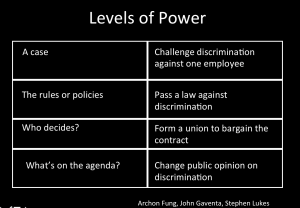
In the US, the most important struggles involve our existing parties. The Democrats must win in 2018 and 2020, must then govern competently, must articulate a persuasive vision of an inclusive democracy, and must shift from making social policy reforms (like Obamacare) to changing who has power through electoral and labor-law reforms. They must address the third level of power.
Meanwhile, conservatives must capture the Republican Party for a genuinely conservative agenda of decentralization, constitutionalism, and skepticism about government. This may sound like “concern trolling“: a liberal pretending to care about the GOP to score points against it. But I genuinely believe that the struggle of true conservatives for their party is one of the most important frontiers in the US today.

See also: people trust authoritarian governments mostwhy autocrats are winningwhat does it mean to say democracy is in retreat?; and why the deliberative democracy framework doesn’t quite work for me.

a range of federalism options for Israel-Palestine

In the Washington Post today, Daniel Hollander notes that there is another possible option for Israel/Palestine beyond one state or two states: “a federalist, multistate solution.” I think this direction should be considered, if for no reason than “inventing options” is generally a good idea when parties are at loggerheads. Expanding the menu of choices is sometimes a way to “get to yes.”

In that spirit, I would note that a federal entity is not one idea but can take many forms. Americans may immediately think of our federal republic, which has certain basic similarities to those of Germany, India, and Brazil, among other examples. But those familiar characteristics can be altered to fit the circumstances.

In our federal system:

  1. The polity that really matters to people is the national one. Yes, some people may care more about Texas than the USA (or more about Bavaria than Germany) but theirs is a marginal view. Most people experience their political citizenship fundamentally in the federal republic, with other social identities (such as race) coming into play in various ways. Membership in a state-level entity is secondary.
  2. All the states are very similar. Nebraska has a unicameral legislature. Bavaria has the Christian Social Union party instead of the Christian Democrats, much as Minnesota has the Democratic-Farmer-Labor Party instead of the Democrats. Mississippi has made different social policy choices from Hawaii’s. But the states’ constitutional designs and even policies are much more similar than different. That is not only because of top-down directives from the national capital. It is also a result of having one national debate and one set of national interest groups and movements that produce congruence (or isomorphism) across the states.
  3. Fundamental questions of a constitutional nature are mostly settled at the national level. That includes most of the basic civil and political rights and matters like the relationship between religion and politics.
  4. The states are territorial. Individuals are legally permitted to move across state borders, and many actually do. Citizenship at the state level results automatically from residency, as long as you have national citizenship. Thus a citizen of New York is simply an American who resides in the State of New York.
  5. Goods and investments also move rapidly and frequently across state lines. There is one market.

None of these features is definitive of a “multistate federal system.” I can envision a multi-state arrangement in the Israel/Palestine area with features like these:

  1. Membership in the smaller state is much more important to most people than their relationship with the federal umbrella entity. In fact, many people on all sides may demonstrate–at most–a grudging acceptance of the umbrella entity, while still identifying strongly as Israelis, Palestinians, or in other ways.
  2. The various states may be quite dissimilar. One state might, for example, “establish” Judaism while another might establish Sunni Islam or favor Islam and Christianity. One state might be governed by the Knesset with its current system of proportional voting while another state adopts a presidential system. I write “might” because I don’t know which specific choices would emerge, but the states would be permitted to form different kinds of regimes, within broad limits.
  3. State citizenship might not be territorial. Perhaps anyone who identifies as Jewish remains a citizen of Israel, and whether that person is allowed to live in certain zones within Israel/Palestine is a matter of negotiated policy. You don’t become Israeli by moving to Tel Aviv, or Palestinian by moving to Ramallah, but you retain your state citizenship wherever you live. There is a precedent in the Ottoman millet system, but this version can be more democratic.
  4. The federal umbrella guarantees certain rights, but they are much more limited than the rights enumerated by the US Constitution or even the EU. The separate states retain a lot of flexibility about freedom of religion, economic rights, etc.

Certainly, these options leave extremely difficult issues to be resolved. How many states? With what jurisdictions? How are conflicts among the states, between the states and the federal entity, or among citizens of different states resolved? Can some of the states be non-democratic? What does the federal entity do, and how is it governed? What rights are guaranteed to all, and can they be changed? Who can live where? Is there any redistribution among the states? What is the umbrella entity even called (in Arabic, in Hebrew, in English)?

I could offer my own opinions on these matters, but that’s irrelevant. The question is whether any reasonably decent compromise could attract sufficient breadth of support to fly. The odds are no doubt against that, but then the status quo seems not only unjust but also unsustainable. (I wrote most of this before today’s vote in the Knesset, which just underlines the previous sentence.)

how not to talk about The People

Maria Bartiromo (Fox News): As the commander-in-chief, as the president of this great country, what can you do to bring us together?

Donald Trump: Our people are so incredible. …  Do you know, there’s probably never been a base in the history of politics in this country like my base. I hope the other side realizes that they better just take it easy.

As Jonathan Chait notes, Trump equates “us,” the people of America, with “the people who voted for him.”

This is the rhetorical move that Jan-Werner Müller, in his globally influential book (2016), uses as the definition of “populism.” Populists “claim that they and they alone represent the people. All other political competitors are essentially illegitimate, and anyone who does not support them is not properly part of the people. … Elites are immoral, whereas the people are a moral, homogeneous entity whose will cannot err.”

Müller has previously quoted Trump–“the only important thing is the unification of the people – because the other people don’t mean anything”–as evidence that the current president is a populist, in this bad sense of the word.

I agree that the slippage between Trump’s supporters and “the people” is a very bad sign. However, it is not straightforward to define populism (meaning a problematic phenomenon) in this way. Trump says many things and is inconsistent in his appeal to “the people.” Meanwhile, a wide variety of political actors also depict the public as a homogeneous entity that is on their side.

Some of them define “the people” in racial or ethno-national terms. That tendency seems more accurately described as racism or xenophobia than as populism, especially if anti-racists like Venezuela’s Hugo Chávez count as populists (as Müller would suggest).

And sometimes it is the strongest champions of democratic institutions who use rhetoric that looks populist according to Müller’s definition. For instance, Jimmy Carter presented himself as an ordinary American (a peanut farmer and a Christian, not a Washington politician) who could best reflect the values shared by all Americans (Johnstone 1978). Carter invoked a unitary public and promised to connect directly to the people, unmediated by interests and organizations. His Inaugural Address could be coded as populist rhetoric, in Müller’s sense of the word. Yet Carter was committed to constitutional limits, respected his critics and the opposition, and made the promotion of democratic freedoms a centerpiece of his agenda.

Thus it is not clear that searching for Müller-style populist language will identify actors who are hostile to democratic institutions and processes. There is an upsurge of repression around the world—and it is not limited to racists and xenophobes—but there is a better word for it than “populism.” That word is “authoritarianism.”

For the purposes of empirical research, I would dispense with “populism” in the Müller sense and look instead for authoritarianism and racism as distinct but sometimes overlapping phenomena that are ascendant in our time.

Müller is, however, right that there are pitfalls to invoking a unitary public that is on one’s side–or defining one’s side as “the people.” This is an excuse for trampling on rights, whether your opponents are demographic minorities and immigrants (the right-wing variant), or corporations and the rich (the left-wing version), or extremists (the centrist version). It’s always better to recognize the legitimacy of the actual human beings who disagree with you and who vote for the other side.

Citations: Jan-Werner Müller, What Is Populism? (Philadelphia; Universoty of Pennsylvania Press, 2016), p. 101; Christopher Lyle Johnstone, “Electing Ourselves in 1976: Jimmy Carter and The American Faith,” Western Journal of Speech Communication, vol. 42  Issue 4, *Fall 1978), p. 241-249. See also Trump at the confluence of populism, chauvinism, and celebrityfighting Trump’s populism with pluralist populismseparating populism from anti-intellectualism and two kinds of populism.

Democrats have a good chance of controlling at least one House of Congress in 2019

Political prognostication is a fool’s game and arguably a distraction from the important work of citizens, which is to influence–not to forecast–the future.

But I can’t resist.

Recent projections give the Democrats anywhere from a 39% to a 58% (or even 63%) chance of winning the House. One reputable model gives the Democrats a 30% chance of winning the Senate. Those two results are not truly independent, since both will be affected by the national situation in November. But they are substantially independent, as illustrated by the claim that an 8 percentage-point swing toward the Democrats would give them 44 more House seats and four fewer Senate seats. If we assume that the two elections are independent events, then Democrats have between a 43% and 70% chance of capturing at least one house of Congress.

The wildcard is how the national situation will change between now and late October. If there’s a terrorist attack on the US, it will probably help the president’s party. The nomination battle could boost Republicans by giving religious conservatives a reason to turn out and by putting red-state Democratic Senators in a tough spot. Another four months of economic growth might help the GOP a bit, as would a report from the Special Counsel that comes nowhere close to associating Trump with crimes.

But I think upcoming news is more likely to assist the Democrats. Trump and his party have already captured whatever political benefit they’re going to gain from the economy, and there’s a significant potential for economic turbulence ahead. The Mueller investigation has lost public support without yielding a damaging public report, but his report is coming. Since 67% of Americans want to preserve Roe v Wade, a nomination that places that decision in jeopardy could mobilize more people against Trump than for him. The North Korea summit was a political success for the president: he hyped a genuine crisis to the maximum and then declared it resolved, which convinced a bunch of Americans. But that domestic political gain is fragile, since the threat was not actually resolved. We can also expect massive Obamacare premium increases, ugly battles in Congress, plenty of awkward votes for Republican incumbents, a possibly damaging Special Counsel report, lawsuits and depositions against the president, and unpredictable controversies revolving around him.

Overall, I’d put the chances that the Democrats control at least one house of Congress above 70%. That estimate is compatible with any actual result in November, so there’s no way I can be proven wrong. Meanwhile, stop reading forecasts and get back to work!