Q&A on the IRS tax exemption controversy

Q. What is the main scandal?

Tax-exempt 501(c)4s, organized to promote “social welfare,” spent $254,279,733 to influence the 2012 election, despite an IRS regulation that “The promotion of social welfare does not include direct or indirect participation or intervention in political campaigns on behalf of or in opposition to any candidate for public office.”

Q. Was it OK for IRS to search for the words “patriot” and “tea party” in 501(c)4 applications?

Absolutely not. The IRS and all federal agencies must be extremely careful about bias and even the appearance of bias. The predictable consequence was a political firestorm that will weaken regulation. The IRS staff also used a bad methodology because they missed the American Action Network, which spent $30.6 million on elections, and the American Crossroads GPS which spent $71 million. Both had 501(c)4 status. And they missed liberal groups which have also abused the 501(c)4 loophole.

Q. Are the Republicans going after the IRS to protect undisclosed private money in elections?

I don’t know. Norm Ornstein says they are. I would guess it’s a mix of motives–sincere anger and fear of the government, partisan advantage (because the Tea Party can be made to look like victims and Obama can be associated with Nixon), and a preemptive strike against campaign finance reform.

Q. Were any groups victimized?

Not really. They were free to operate while their applications were pending. They were even allowed to wait until after the election to file with the IRS. They may have been worried that their applications would ultimately be denied. If that was a worry, they could have registered instead as tax-exempt Section 527 organizations. But then they would have had to disclose their donors.

Q. Why didn’t House Republicans publicize the problem in March 2012?

Marc Tracy raised this question. I think I can answer it. The story had to break in the media in a way that put the “Tea Party” search term at the center. If the House GOP had raised the issue, especially during an election, the press would have treated it as a campaign finance story. Reporters would have asked questions about whether the 501(c)4 applications really had merit–what were these groups doing in the election? I don’t know whether House Republicans intentionally waited, but they certainly have more reason to emphasize the story now than a year ago.

Q. What will happen?

It will drag for many months. Public opinion will be polarized, and very few minds will be changed. There will be scattered stories that tie political officials to the IRS, and other scattered stories that reveal genuine abuses by Tea Party 501(c)4s. Different people will read the two kinds of articles. General trust in government may erode by a couple of points. Any legislation that emerges will be harmful–loosening the disclosure rules. But House legislation will die in the Senate.
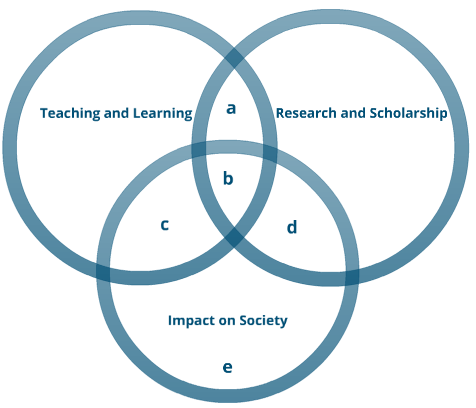
the place of social impact in a university

social_impactTufts University has undertaken a strategic planning process, and one important development is a proposed revision of the traditional triad of teaching, research, and service. In the new scheme, “service” would be replaced with “Impact on Society.”

I served on a strategic planning committee devoted to “Impact on Society.” As someone who has advocated service and civic engagement since the 1980s, I welcome the turn to impact, because service is too often an afterthought and fundamentally un-serious. In practice, it means committee work or local volunteering that is disconnected from the academic mission of the university. Service never really counts for much in decisions about admissions and grading, hiring and promotion, or funding. Impact, in contrast, raises serious questions: What have you done for society? How much did it cost? Was the impact welcome? Was it good or bad?

Although I welcome the turn to impact, it does raise difficult questions that are now being debated on our campus. Here is just a sample:

  1. Isn’t everything we do “impact?” For example, don’t we have impact on society through all of our teaching and research? Put another way: what belongs in segment “e” of the Venn diagram above? Perhaps only clinical medical services and such policies as opening the gym to neighbors belong in “e.” In that case, the triad doesn’t really work, and we should return to calling teaching and research the core activities of the university, expecting both to have social impact along with other kinds of benefits (purely intellectual, aesthetic, spiritual, etc.). This suggests that the addition of “impact” is not very significant. Maybe it is just public relations, a way of claiming that our core activities have public value.
  2. On the other hand, does this triad imply that every department, every student, and every scholar must always be concerned about impact? What happened to the intrinsic purposes of research and the idea that universities ought to be shielded from utilitarian and pragmatic considerations? Is the “impact” circle in the diagram above too big? Does it threaten to swallow too much of teaching and research, to their detriment?
  3. Where do the humanities fit in the diagram above? This question especially interests me because my humanist colleagues seem most concerned about the turn to “Impact,” and also because I have written and thought a lot about reviving the humanities. It seems to me one might adopt any of these views: (a) The humanities belong in the parts of the Venn diagram not covered by “Impact on Society,” and should be protected as such. (b) The humanities have impact, especially on public deliberations about values, and their impact should be valued and expanded. Or (c) The university should maximize its impact, and that means less investment in English and musicology and more in public health and engineering. I reject (c), but (a) and (b) both have attractions even though they are mutually inconsistent. By the way, in listening to the debates about “impact,” I am struck by the great remove from which most non-humanists view the humanities. They tend to equate the humanities with the arts and creative disciplines, when humanists see themselves as analytical, theory-driven, empirical scholars.
  4. How does impact relate to engagement? Impact is unidirectional. The university has impact on society when Tufts scientists discover a cure for a disease. Engagement is reciprocal or bidirectional. Two people are engaged when they intend to marry one another. Two gears are engaged when they are locked together. Tufts engages with a community when there is some kind of exchange of ideas and mutual influence–ideally, when both sides change for the better. Will “impact” submerge “engagement?” Should all our impact take the form of engagement? Or should we have various kinds of impact, of which engagement is a subset?
  5. How is “Impact on Society” to be measured and assessed? It’s common enough to have bad impact, so we must decide which effects are excellent, acceptable, neutral, and bad. Normative evaluation is difficult because values inevitably conflict. Sometimes, colleagues invoke “social justice” as a goal, and I think they mean equity of material welfare. But we should also consider liberty, excellence, innovation, security, peace, growth and development, tradition, solidarity, sustainability (etc.). Any valid conception of social justice is a controversial amalgam of these competing values. Further, everyone claims to resist simplistic, one-sized-fits-all metrics. But if there’s any value to strategic planning, then one must be able to compare disparate activities on some kind of common scale. After all, a marginal dollar must be spent either on Tufts’ amazing Project Perseus or on “the technological reinvention of silk.” The same dollar cannot be spent on both. So how can we assess diverse activities with due attention to competing moral goals and still yield metrics that inform decisions?
  6. At what level should impact on society be expected, measured, assessed, and rewarded? Should each student and professor be asked about her or his impact? Should each department or school have a portfolio of activities, only some of which are meant to have direct social impact? Or should we be thinking about the whole university’s net impact?
  7. How should decisions about impact be made? The default is for the university to continue doing what it has always done except for some marginal changes: maybe the president and provost direct extra endowment funds to new purposes, and somewhat different criteria are used to select applicants for open faculty positions. Universities are extraordinarily resistant to more radical changes and rarely debate–let alone make–fundamental choices. That is good insofar as it protects against faddish ideas. We are still teaching philosophy after two thousand years even though people have periodically declared it dead–because they can’t practically get rid of the philosophy department. But if deeper changes are desirable, how can we make them wisely and effectively?

Stanley Cavell: morality as one way of living well

I have been dipping into the works of Stanley Cavell for 20 years, but my recent reading of Tony Laden’s Reasoning: A Social Picture and my re-reading of Cavell’s The Claim of Reason have given me, I think, an inkling of Cavell’s whole view. He is a dense and difficult author, and I found it rewarding to type the quotes embedded in this post because each word, emphasis, and parenthesis rewards consideration–and you miss a lot if you read too fast.

A standard view of morality might treat it as (ideally) a comprehensive guide to good judgment and good action. It should cover everything that is good or bad, from minor questions to the relations among governments. In fact, everything that we do should be subject to moral evaluation. Morality should be internally coherent, or correspond to some kind of moral truth, or both. If there is actually no moral truth, then morality is not what it purports to be and is really just a set of conventions, biological urges, or subjective opinions.

Cavell instead views morality– “mere morality”–as a particular way of engaging other people at a human scale:

Continue reading

school discipline in a democracy

I recommend an important paper by Aaron Kupchik and Thomas J. Catlaw entitled “Discipline and Participation: The Long-Term Effects of Suspension and School Security on the Political and Civic Engagement of Youth.” This is the context that concerns the authors:

Since the early 1990s there have been sweeping changes in school discipline policies and practices. Schools across the U.S. have tightened their security practices and increased the punishments they give to students …. It is now common to find armed police officers, drug-sniffing dogs, surveillance cameras, and zero-tolerance policies in all types of schools and all areas of the U.S. Existing research documents several problems with these new school discipline and security practices, including: the increasing marginalization of poor students and youth of color …, unnecessary denial of future educational opportunities due to suspension and expulsion …, and increases in the numbers of students who are formally prosecuted in the juvenile and criminal justice systems (known as the “school-to-prison pipeline”)  …. This body of research consistently finds large discrepancies in punishment rates between white youth and youth of color, where African American and Hispanic American students are far more likely than whites to be punished, even when controlling for self-reported rates of misbehavior.

The authors cite our work on how schools that serve low-income and minority students suppress civic engagement. They then use a federal longitudinal dataset to test the effects of school suspensions on voting once people reach early adulthood. They find a pronounced suppressive impact, which they explain as follows:

Following prior research, we speculate that the observed negative effect of suspension is because suspension short-circuits dialogue and student involvement; it removes a student from the school rather than responding constructively and therapeutically to problematic behavior. Research on suspension finds that it is administered in ways that alienate students from the school and from the school’s authority structure, leading them to view school staff as unfair, arbitrary, and uncaring.

It is possible that the most important reforms we could make to enhance civic engagement would not involve exciting new programs of civic education, but rather repealing widespread policies that suppress the political engagement of our least advantaged students.

a philosophy of civic renewal

In lieu of a blog post by me, here is a profile of me by my colleague Luke Phelan. It is also a brief summary of the more philosophical and theoretical aspects of my forthcoming book–and an excuse to share the book’s cover. …

“Strategy is as intellectually challenging as empirical research and moral argument, but it’s much less studied, taught, and integrated,” said Peter Levine, Tisch College director of research and director of CIRCLE.

Levine lays out his vision for the importance of strategy in his book, We Are the Ones We Have Been Waiting For: The Promise of Civic Renewal in America, forthcoming from the Oxford University Press.  He spoke about his ideas at the Philosophy & Civic Engagement symposium.  The symposium was organized to celebrate Levine’s recent appointment as the Lincoln-Filene Professor of Citizenship and Public Service and his secondary appointment as a research professor in the School of Arts & Sciences philosophy department.

“Broadly, civic engagement is in decline,” said Levine.  “We’ve lost the structures that recruit, educate, and permit people to engage effectively as citizens.”

However, Levine says we also live in a period of remarkable civic innovation.

“There are at least one million Americans at work right now on sophisticated and locally effective forms of civic engagement,” he said. “People are motivated to work together on public problems, but policies frustrate the best kinds of engagement.  What’s needed are strategies to change those policies.”

Philosophy, particularly moral philosophy, has a special role in shaping those strategies and defining good citizenship.

“Moral concepts are indispensable,” said Levine.  “Test scores are a good example.  Research might show that smaller class sizes raise test scores, but it can’t tell you if those tests measure something valuable, or if the cost to hire more teachers and build more classrooms is worth paying, or if the state has the right to raise the necessary revenues.  Those are value judgments, and civic engagement makes our value judgments wiser.”

Levine argues that the fundamental reason for the kinds of civic engagement that Tisch College promotes and that CIRCLE studies is to strengthen Americans’ moral reasoning and our capacity to solve social problems.

“Civil society functions best when many kinds of people bring their experiences into a common conversation, and then take what they’ve learned back to their work, in an iterative cycle,” he said.  “If individuals constantly rely on the same small number of foundational beliefs, it quickly becomes impossible for them to converse or engage. It’s easier to talk to someone with many interests, commitments, and ideas, because each of those is a point of contact, like an organic molecule with lots of surfaces where other molecules can bond.”

Rather than understanding moral reasoning as a linear sequence of steps, Levine envisions it as a network that connects nodes of concrete data and abstract values in webs of associations and configurations, tied together by implications and influences.

For example, you may have a node that “love is good.” However, love can be wrong or can lead to tragedy, as in Romeo and Juliet. Levine argues that our minds are flexible enough to manage the complex meanings and associations that come with value-heavy terms like “love.”  We have the capacity to route around conflicting assumptions.

“A strong network does not rest on a single node,” he said.  “Its many pathways allow many routes from one node to the next.  Yet, in real functioning networks, all the nodes do not bear equal importance: the most vital 20% carry 80% of the traffic.  That’s true for the Internet, the brain, and, I think, civil society.  A moral mind works like a robust network.”

Levine thinks that this network model of the moral mind captures both how deeply interconnected we are, and how social our processes of reasoning are.

“Each person’s network is at least slightly different from everyone else’s,” he said, “but any two networks share at least some of the same nodes.  So we can think of the whole community as one elaborate interpersonal moral network, full of tension as well as consensus.  Civic engagement is a process of enriching and enhancing that shared network.”

For Levine, civic engagement is most valuable when deliberation (talking and learning about public matters) is connected to work and making things, particularly collaborative efforts that produce things of public value.  Talking and working together forges relationships that he calls “scarce but renewable sources of energy and power.”

We Are the Ones We Have Been Waiting For assembles evidence that this kind of engagement, although waning in America, actually solves social problems. The book concludes with strategies for civic renewal.