Teaching Honest History: a conversation with Randi Weingarten and Marcia Chatelain

AFT President Randi Weingarten invited Georgetown historian Marcia Chatelain and me to discuss controversies about American history and race in public schools on her podcast. I enjoyed the whole conversation and learned a lot.

You can listen here.

At one point, we discussed the idea of “teaching both sides.” I said that many issues do not have two sides. One view may be correct, or there may be many valid perspectives. I worry that looking for exactly two sides on every issue reinforces partisan polarization. Nevertheless, I see value in identifying issues that have two worthy sides and delving into them. I said that I choose school choice as a signature issue in my public policy course because there are valid arguments on both sides, and it is an opportunity to think about deep value conflicts.

Marcia Chatelain proposed that we really should teach both–or all–sides. Students should study the whole range of opinion. I volunteered that perhaps students should read John C. Calhoun’s defenses of slavery, and she agreed. White supremacy and slavery are parts of history.

I liked her argument and concurred with it. In retrospect, I’d only add that the best way to deal with controversy may vary by discipline. History encompasses all the opinions that people have held, and an important step in historical interpretation involves suspending one’s own judgment to understand what people–even very bad people–were trying to say. Philosophy (and the study of public policy) are inquiries into what is right. In those disciplines, it is more appropriate to be selective and evaluative. At the same time, history is crucial background for reasoning well about ethical and political issues. Anyone who is trying to decide what we should do now ought to know what Calhoun argued, because his deeply and widely held views remain part of our reality. In this sense, history and ethical/political reasoning are complementary, but they do imply different skills–and different educational choices.

See also: “Just teach the facts”; discussing school choice; school choice is a question of values not data; 50 Core American Documents; two dimensions of debate about civics; NAEd Report on Educating for Civic Reasoning and Discourse, etc.

professionals as grizzled veterans or as reflective learners

In stressful, front-line professions–such as teaching, military service, nursing, or policing–you may encounter the idea of a “professional” as someone who has done the job in one of its harder forms for a long time. People who merely study or teach the topic, or those who have had brief or sheltered experience on the job, are not true professionals.

An alternative sense of a “professional” is someone who has reflected deeply on the role from a variety of perspectives. For instance, reading and talking about the history and sociology of schools may contribute to a teacher’s professional development.

Of course, there are other senses of professionalism apart from these two. I like the idea of “democratic professionalism” developed by Albert Dzur and others: a professional as someone who works with citizens who hold other jobs and roles to strengthen democracy together. There is also a trustee ideal, in which the professional safeguards public values in return for the right to provide certain services.

But those are ideals. In almost any actual professional setting, you can find grizzled veterans telling the newbies how it’s really done, plus formal academic requirements and assessments. These two ways of thinking about professionalism constantly compete for legitimacy, while more idealistic conceptions remain somewhat hidden or marginal.

If veterancy and academic study are the main options, then I’d advocate for a mix of the two. Experience is valuable. It can impart practical wisdom drawn from numerous concrete examples (phronesis). People who have spent years in a job often (not always) deserve respect for their service. Thus there are benefits to hiring veteran professionals as teachers and professors, employing them as mentors, placing students in practical internships, etc.

Yet professionals should also hold a critical stance toward their own role and learn from the concepts and tools of other disciplines. For instance, a teacher is better off understanding the sociology of schools even if the authors of sociology articles would make bad K-12 teachers. Their value does not derive from direct personal experience. Phronesis is useful, but so are other forms of knowledge, including theory and empirical data.

In pretentious settings, such as highly selective college and universities, it can be necessary to fight for the legitimacy of experience and to make space for veteran practitioners. However, in places like police stations and some K-12 schools, it can be hard to make space for critique. Whether teaching professionals in an academic way will improve their practice is an empirical question; the answer will probably vary depending on who teaches what, to whom, and how. There is no guarantee it will work. However, if a profession is going to improve, then at least some people who hold the job must draw insights from outside their field, including from scholarship.

See also: separating populism from anti-intellectualism; Public Work and Democratic Professionalism; Democracy in schools: Albert Dzur talks with principal Donnan Stoicovy; a way forward for high culture.

what would happen to race in a just world?

What is Race? Four Philosophical Views (2019)* presents a debate among four sophisticated, current philosophers of race. All the authors are committed anti-racists who are eloquent about the evil histories of the use of race. They would take similar views on most political controversies involving race. All would reject what Kwame Anthony Appiah (quoted in Quayshawn Spencer’s chapter) called “racialism”: “the view that humans naturally divide into a small number of groups called ‘races’ in such a way that the members of each race share certain fundamental, inheritable, physical, moral, intellectual, and cultural characteristics with one another that they do not share with members of any other race.” They would all say that “racialism” is false and evil. Yet they disagree about metaphysical and methodological issues that arise when we ask what kind of a thing a race is, if it’s anything at all.

Their arguments are subtle and hard to summarize, but an example offers a way into the debate. Imagine a future state in which racial injustice is over. All implicit and explicit biases are gone. All structural inequities linked to race have been solved. All appropriate reparations have been fully paid. You can imagine this happening after many decades or centuries of political action in our real world, or as a result of a thought-experiment: aliens from another planet or divine forces have repaired things on earth. What then should happen to the word and the idea of race?

I think Sally Haslanger would say that race would then cease to exist, because it means subordination. To be a little more precise: the meaning of a social construct is the historical tradition of how it has been used in a society. Race has been used in several ways; it has multiple meanings. But one major way is as the basis for privilege and subordination in the USA. Emphasizing that aspect of the word is the right thing to do now because it “highlight[s]—in the relevant cases—how our racializing practices and identities contribute to injustice.” Once racial subordination is solved, there is no good reason to try to change the meaning of the word “race” and continue to use it. People will have races until justice prevails; after that, they will no longer have races. It can be valuable to preserve cultures, religions, and other groupings, but they should be voluntary and specific. Races don’t work like that and would no longer have any justification after the world is just. “I find problematic the idea that a just world is one in which cultural groups can restrict their membership on racial grounds. I embrace, instead, a model of multiple coexisting cultures that are mutable, flexible, and creatively tolerant around issues of ancestry and appearance.”

Chike Jeffers argues that although racial categories originated as a result of white supremacy, racial identities have developed valuable cultural significance for people of color—notably, people who identify as Black (as he does).  “Everyday talk about black people, for example, is best understood as referring to a real group to which one can belong, even if such talk often involves false assumptions.” He envisions a world in which Blackness is preserved and developed even though white supremacy has been defeated. He argues that this is logically possible and also desirable. “Race as a social construction could live on past the death of racism, in my view, given that racial groups could continue to exist as cultural groups. … The continued existence of racial diversity as cultural diversity after the end of racism is therefore, in my view, something good. … [A]s someone of sub-Saharan African descent, I personally desire the indefinite persistence of black people as a cultural group.” (He argues, too, that pan-African solidarity reflects real cultural similarities across the continent before European imperialism and racism; it is not completely reactive.)

Quayshawn Spencer argues that the races currently counted by the US government refer to “human continental populations”:  Africans, Eurasians, East Asians, Oceanians, and Native Americans. Races define distinctions that are useful empirically (mainly for medicine) although they could not possibly justify inequality. A “biologically real entity is an epistemically useful and justified entity in a well-ordered research program in biology.” Race meets this criterion. Thus “a Black person is a person with genomic ancestry from the African population. That’s it. … Furthermore, the degree to which a person is Black is equal to the proportion of her alleles that originated from the African population.” This would continue to be true under just conditions, although then all the associations between racial categories and health issues that result today from injustice would be gone.

Joshua Glasgow says that this situation would prove that race had always been false, and people had simply been racialized in a way that would no longer happen if the world became just. “Even if tomorrow all groups currently recognized as racial had equal power and participated equally in eating the world’s foods, dancing its forms of dance, playing its kinds of music, and so on—even in such a world, I do not think we’d say that on the ordinary concept of race Hillary Clinton somehow loses her whiteness or that Jeremy Lin stops being Asian because of those points of equality.” Therefore, the ordinary concept of race points to something independent of oppression and of culture, and as such, it is a wrong and false idea that should be rejected now. We should recognize and even emphasize racialized oppression but not concede the reality of race.

*Glasgow, Joshua; Haslanger, Sally; Jeffers, Chike; and Spencer, Quayshawn, What Is Race? Four Philosophical Views (Oxford University Press, 2019). See also: why social scientists should pay attention to metaphysics; how philosophy is supposed to work; is social science too anthropocentric?; social criticism as reading social forms;

civility as equality

Nowadays, the word “civility” is often used to mean politeness or adherence to locally recognized norms that divide appropriate speech from inappropriate speech. You might, for example, be “uncivil” if you are too loud or too angry. Such norms can be helpful, but they risk suppressing authentic and justifiable emotions.

The word has a different origin, closely related to “citizen.” In republican political thought, it it can mean equal standing to participate in politics, rather like the classical Greek word isonomia (roughly: the right to look any fellow citizen in the eye and say what you think). Almost the opposite of etiquette, it connotes a kind of plain, direct, and honest speech.

As Renaissance Florence developed a full-blown ideology of republicanism, the city embraced norms, rules, and customs that were meant to convey the equal standing of all citizen men and to discourage distinctions of caste or power based on military might. Just as one example, no man raised his hat to another Florentine. Professional soldiers were led by paid foreigners, never by Florentines, and these mercenaries had to swear loyalty to the republic’s councilors. The plutocrat banker Cosimo de Medici was wise enough to honor republican norms and manipulated the city’s policies quietly through his networks, without seeking offices or titles or any special personal treatment.

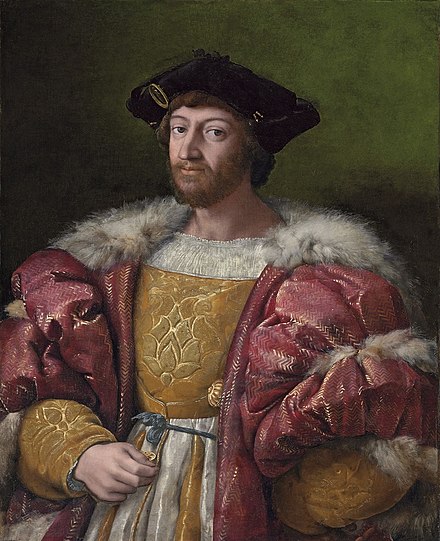
The republic finally ended for good when Lorenzo di Piero de’ Medici, an heir of Cosimo’s vast fortune, got himself installed as a monarchical ruler and brutally suppressed dissent. A Florentine chronicler, Giovanni Cambi, noted that Lorenzo had been raised in monarchical Rome, where he had learned to expect deference. Lorenzo was surrounded by retainers who called him “padrone” and doffed their hats to him. This was evidence that he knew nothing of “civility”:

Guiliano de Medici, blood brother of Pope Leo X, who had ruled the city of Florence, was living in Rome, and deprived of the city government altogether. He awarded that government to his nephew Lorenzo. Because this Lorenzo had been a child when his father was expelled from Florence, when he returned to Florence he did not know a single citizen, and he was not used to civility (civilta), and instead he aspired to arms and to dominate; and he succeeded in that; for although most citizens were displeased, nevertheless in their ambitiousness and avarice, they pretended to rejoice.

Istorie di Giovanni Cambi cittadino fiorentino, p. 67 (my trans.)

We might assume that doffing hats and using titles exemplifies civility–for better or worse. But the opposite was true in Renaissance Italy. Courtly politeness was a symptom of domination, incompatible with civic virtue and “civility.”

[I am drawing on Richard C. Trexler, Public Life in Renaissance Florence, 1991. See also: civility: not too much, not too little; what to do about the guy behind the desk; civic republicanism in medieval Italy: the Lucignano council frescoes; what does the word civic mean?]

what to do about the guy behind the desk

A guy sits at a desk, resolving people’s requests and issuing orders. Most people who encounter him think he’s making their lives worse. What do you assume is going on?

  • Maybe it’s capitalism and the profit-motive. The guy is probably corporate, and if he works for the government, that shows that it’s a “neoliberal state” (captured by capital.)
  • Maybe it’s state-backed coercion: a denial of free choice. The guy is probably a state bureaucrat. If he works in the private sector, he still reflects the power of the government, which flows from the mouth of the gun. If free individuals were left alone, they wouldn’t come into a room like this.
  • Maybe it’s colonialism. Rooms with desks arrived with Europeans and replaced other (presumably better) ways of relating that were indigenous and traditional. Even if the guy behind the desk descends from indigenous people, his behavior is colonial.
  • Maybe it’s patriarchy. I intentionally called him a “guy” to suggest that his behavior might be gendered.
  • Maybe it’s a bureaucracy in Weber’s sense, a technology for coordinating specialized labor, which is much more productive than unspecialized labor. It is an unavoidable price of progress.

There can surely be truth to each of these theories, but it interests me how many different kinds of people sit behind desks giving out orders: corporate executives, civil servants, military officers, monsignors, mullahs, associate deans, chiefs of pediatrics, union shop stewards, Soviet commissars, Confucian officials ….

A desk sounds somewhat culturally specific, but with a change of furniture, one might imagine the same behavior from a Sumerian temple scribe, an Aztec huecalpixque (regional tribute manager), an iyase from the Kingdom of Benin, or a Tibetan abbot. Considering the globe as whole, the person behind the desk is probably not white, and quite often, not a man.

I would avoid the kind of root-cause analysis that asks which underlying bad phenomenon explains all such cases. For one thing, that style often implies the possibility of an innocent condition, one without profits, rulers, settlers, or guns. But revolutionary and post-colonial systems often put new people behind the same desks. The myth of innocence can be a cover for new forms of tyranny. Besides–and I realize this is almost unprovable–I think that problems such as limited resources, conflicting interests, and cognitive biases are built into human interaction and cannot be wished away.

I would also avoid a blanket denunciation of everyone who sits at a desk making unpopular decisions. Maybe this is a hard-working, underpaid, front-line public servant, just doing her best.

Here’s a way of thinking about the problem without root-cause analysis. Human beings have a wide range of techniques for organizing complex interactions in the face of endemic problems like scarcity, conflict, and cognitive limitations. These techniques are the ingredients from which we make our social recipes. Examples include officials making discretionary decisions–that person behind the desk–but also secret-ballot votes, lotteries, auctions, exchanges, gifts, public deliberative assemblies, randomly-selected panels, turn-taking, adherence to precedent or original documents, obedience to unseen powers, inheritance, chance (e.g,., flipping a coin), blind peer review, randomized experiments, popularity scores, endurance challenges, romantic partnerships, kinship relations, teacher/pupil pairings, and many more. I have omitted the really awful forms and, of course, failed to list the many tools that have yet to be invented.

We can combine these forms in many ways. Before we assess the guy behind the desk, we should understand which other ingredients are involved in the whole recipe. Maybe he was randomly selected for a short term of service. Maybe he was appointed enthusiastically by a popular assembly. These facts would change our assessment.

The situation might involve domination: arbitrary control over another. That is the case if the guy behind the desk can choose at will and doesn’t have to give reasons or face an appeal. The situation might involve oppression, if the guy belongs to a social group that regularly treats a different group in ways that reduce their human flourishing. But it might involve only one of those things, or neither. The person behind the desk might belong to the same social group as those in front of it and might have no scope for arbitrary decisions.

Yet we shouldn’t be quick to accept a situation that–per the original story–makes most people unhappy. Many actual systems are very bad, and for very bad reasons. They emerged from conquest, subjugation, and cruelty. They manifest both domination and oppression. These systems now enjoy enormous status quo advantages. Organizing to replace them is very hard, especially in the face of powerful incumbents and elaborate justifications. They may inspire fear and awe. For an individual, compliance may be completely rational.

We must challenge domination and oppression and cook up better social recipes. The reason is not to combat capitalism, statism or colonialism, but to free people from oppression and from domination. That requires building better structures, which is as important as disrupting the bad ones. And it means addressing the endemic challenges of flawed creatures who are in (partial) conflict under conditions of scarcity.

See also: both detailed institutional analysis and holistic critique; Complexities of Civic Life; citizens against dominationavoiding arbitrary command; civic education and the science of association;  a template for analyzing an institutionthe legacy of Elinor Ostrom and the Bloomington School; avoiding a sharp distinction between the state and the private sphere; etc.