Category Archives: elections

tell it straight? the advantages and dangers of parody

This is the fourth in a series of blog posts by CIRCLE, which evaluated several initiatives funded by the Democracy Fund to inform and engage voters during the 2012 election. Our posts discuss issues of general interest that emerged from the specific evaluations. Join CIRCLE for an ongoing discussion of the posts using the hashtag #ChangeTheDialogue, as well as a live chat on Tuesday, June 25th at 2pm ET/1pm CT/11am PT.

Parody is powerful. Scholarly papers by Young Mie Kim and John Vishak, Dannagal Goldthwaite Young, Amy Becker, Michael Xenos, Xiaoxia Cao, and others have found that late-night comedy influences viewers’ political belief and attitudes. Presumably, parody works by motivating viewers to pay attention (when they might tune out less amusing material) and by provoking strong emotions, such as disdain for the person being parodied. In turn, those basic emotional framings strongly affect how people collect and interpret factual information. A parody can also spread “virally” if people enjoy it and choose to share it. The popularity of shows like the Colbert Report demonstrates the appeal of satire.

The challenge is that some people do not get the joke. For example, Flackcheck produced a parody video entitled “Could Lincoln be Elected Today?” that purported to be a television ad from the 1864 election. Its purpose was to teach viewers to shun deceptive advertising from real, modern campaigns.

Other experiments seem to suggest that these parodies were just as effective at informing viewers as more traditional fact check articles found at places like Factcheck.org.

However, we found that substantial numbers of people did not understand the parodic purpose of this video. Two-thirds (67.4%) of all respondents thought that it was reminiscent of real campaign ads shown today. That was the intention of the parody, and two-thirds “got” it-but the remaining one third did not.

Three quarters (76.2%) thought that the Lincoln video was deceptive in that it would have been unfair to compare President Lincoln to Benedict Arnold, as the video did. Again, that means that most of the respondents understood and agreed with the premise of the video. But about one quarter did not.

A few thought that Lincoln is overrated; they were pleased that the video would reduce his popularity, which they took to be its intent. About two percent of the respondents saw a partisan purpose to the video, e.g., “Well done video. An obviously very pro Obama video,” or “This video was obviously made by left wing nuts.”

Some other responses:

“It was disrespectful to our 16th President. Negative ads should be banned from all government elections”

“I think it was stupid and who ever used it, or if it was used, should never hold an office in this country and the public should have been outraged.”

“Anyone who believed this video was and is a traitor to the USA.”

Overall, we can conclude that most people understood the video, but there was substantial “leakage” in the form of people who missed its parodic intent, thought that it was fair to compare Lincoln to Benedict Arnold, were furious at it, or otherwise drew the wrong message from it.

Anyone working to educate the public about politics in a nonpartisan way faces a choice. Very straightforward messages may come across as boring or preachy and may not be viewed willingly, let alone shared. Funny messages spread further, but a significant proportion of the recipients miss the point–and they may be the very people who would most benefit from a deeper insight into politics and public affairs.

This post is cross-posted on the Democracy Fund blog. Stay tuned for more analysis in the upcoming weeks. The previous entries in the series can be accessed at:

  1. Educating Voters in a Time of Political Polarization
  2. Supporting a Beleaguered News Industry
  3. How to Reach a Large Scale with High Quality Messages

educating voters in a time of political polarization

This post is cross-posted from the Democracy Fund blog. It’s one in a series of posts about our evaluations of initiatives funded by the Democracy Fund.

During the 2012 campaign season, the Democracy Fund’s grantees experimented with a wide range of strategies to educate and engage the public. Some produced videos and other educational content to directly inform the views of voters. Others worked with journalists to improve the information that the public receives through local and national media. In all cases, CIRCLE’s evaluations found that the public’s polarization made it significantly more difficult for these efforts to achieve their goals; polarized individuals often resisted the messages and opportunities offered to them.

Americans perceive the nation as deeply divided along political lines. In February 2013, according to the Bipartisan Policy Center, 76 percent of registered voters said that American politics had become more divisive lately and 74 percent believed that this trend was harmful. Academics disagree somewhat about the degree of polarization and whether it has become worse over time, but few doubt that political polarization can exacerbate fear and distrust, prevent people from understanding alternative perspectives and considering challenges to their own views, and reduce the chances of finding common ground.

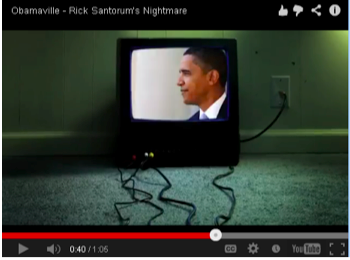
The challenges of engaging polarized citizens emerged clearly in CIRCLE’s evaluations. For example, Flackcheck.org produced parody videos that taught viewers to reject deceptive campaign advertisements. In testing whether these videos were effective, we showed representative samples of Americans real campaign advertisements that we considered misleading. One example, “Obamaville,” produced by Rick Santorum’s campaign, displayed President Obama’s face alternating with that of Iranian President Mahmoud Ahmadinejad on a television screen in a post-apocalyptic setting:

More than 80% of Democrats but fewer than 20% of Republicans considered this video “invalid and very unfair.” Among the Republican viewers, some made comments like this:

  • “It does make him look like a threat…He is a threat to the United States and the well being of the people and welfare of our country…”

  • “Tells the truth about Obama”

  • “TO SHOW VERY CLEARLY WHAT OBAMA IS DOING AND TAKING THIS BEAUTIFUL COUNTRY! BELIEVE IN OBAMAVILLE”

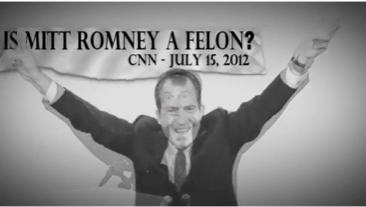
We showed a different sample of respondents a MoveOn advertisement entitled “Tricky Mitt,” in which Mitt Romney’s image faded into Richard Nixon’s:

More than 70% of Republicans and less than 10% of Democrats considered that video “invalid and very unfair.” Some Democrats made critical comments about “Tricky Mitt” (e.g., “Accusatory, urges the viewer to associate guilt with Romney, not reflective of what I expect from politicians”), but many were positive about the video, saying things like this:

  • “Excellent”
  • “Entertaining and points out the crookedness of Romney”
  • “Giving us information that we didn’t know about. All true”
  • “I think it exposed the truth about Romney of what kind of person he really is.”

Essentially, people approved of ads that supported their own partisan position and criticized or invalidated ads that threatened their preexisting beliefs, although both ads we tested were deceptive.

We also evaluated Bloggingheads.TV videos, which showed pundits of opposite political persuasion taking part in civil discussions about controversial issues. We asked people who watched various videos a scale of questions that measured their openness to the other side. An example of a question in this scale was “I have revised my thinking on the issue.” Regardless of which video they watched, the strong partisans were always less open to deliberation.

Strongly polarized statements also emerged in many of the open-ended questions that CIRCLE asked of Democracy Fund grantees. For example, we asked a representative sample whether they ever shared political videos. Out of 195 respondents who chose to explain why they did so, 24% mentioned anti-Obama goals, often adding very strongly worded comments against the president. (“Obama confessing to being a Muslim”; “A black heavy set lady going on about Obama care, and that we should go ahead and work to pay for her insurance”; “Michelle Obama whispering to B.O., ‘all this over a flag!’”; “I come from a military family and I am extremely offended by the both of them. I have never seen a more un-American couple in the White House!”). Another 17% percent mentioned anti-Romney videos, often the Mother Jones video about the “47%.”

Some of the Democracy Fund grantees did not directly influence average citizens, but rather worked to support professionals in newspapers or broadcast stations. In general, these journalists, editors, and station managers seemed less prone to partisanship than average citizens. However, some reporters expressed skepticism about the neutrality of Flackcheck.org and wondered whether it had a partisan agenda. “I am suspicious of so-called non-partisan fact checkers,” one said. A broadcast station-manager, asked how he or she would react to being told that a given ad was misleading, said, “It would be difficult to determine the true nature of the intent [behind the criticism] or that the third party was indeed unbiased.”

These responses suggest that an atmosphere of polarization and distrust may create challenges even for organizations that work with nonpartisan professionals. Going forward, the Democracy Fund and its grantees may consider a range of possible strategies, such as:

  1. Focusing at least some attention on youth and young adults, since young people tend to be less committed to partisan and ideological views and still open to and interested in alternatives.

  2. Finding ways to get people of different ideological persuasions into sustained contact with each other, since simply knowing fellow citizens with different views makes it more difficult to stereotype and demonize them. Actually collaborating with diverse people on some kind of shared goal can be especially helpful.

  3. Experimenting with new messages and formats that educate polarized adults more effectively.


learning from the Democracy Fund’s early grants

(cross-posted from www.democracyfund.org) Last year, the Democracy Fund made a series of inaugural grants during the 2012 election that experimented with different approaches to informing voters, exposing them to alternative points of view, and reducing the influence of deceptive political communications. CIRCLE was asked to evaluate these projects in order to learn more about their reach and influence.  The evaluations were conducted by me and the rest of the CIRCLE team.

Two experiments involved disseminating videos online in order to change viewers’ responses to misleading or divisive political rhetoric:

  •     Flackcheck.org produced video parodies of deceptive campaign ads in order to immunize the public from the deceptions.
  •     Bloggingheads.tv produced videos featuring civil disagreement with the goal of increasing viewers’ respect for people with different points of view.

Two experiments involved convening selected citizens for some kind of discussion or interaction with peers:

  •     “Face the Facts” experimented with a variety of different methods for educating and engaging people about key facts, ranging from info-graphics to Google Hangouts. (This experiment was evaluated by Prof. John Gastil and Dave Brinker of Penn State University, on a subcontract from CIRCLE)
  •     The Healthy Democracy Fund’s “Citizens Initiative Reviews” asked small groups of citizens to make recommendations about pending ballot initiatives in Oregon and disseminated their recommendations to voters through the state’s official voter guide. (evaluated by John Gastil)

Three experiments involved helping or influencing professional journalists or media outlets to produce news that would serve the public better:

  •     Flackcheck’s “Stand by Your Ad” campaign urged broadcasters to reject deceptive campaign ads and encouraged local stations to run “ad watches”.
  •     The Columbia Journalism Review’s “Swing States Project” attempted to improve the quality of local media coverage of the election by commissioning local media critics to critique coverage.
  •     The Center for Public Integrity’s “Consider the Source” provided in-depth reporting on campaign finance issues.

In a series of blog posts over the coming weeks, we will share some of the findings that emerged from these evaluations. We will not focus on which particular interventions were effective, but rather on broad themes that are relevant for anyone who seeks to improve the quality of public engagement during a political campaign. The topics of our blog posts will be:

1. Educating Voters in a Time of Political Polarization

2. Supporting a Beleaguered News Industry

3. How to Reach a Large Scale with High-Quality Messages

4. Tell it Straight? The Advantages and Dangers of Parody
5. Educating the Public When People Don’t Trust Each Other

6. The Oregon Citizens Initiative Review

Stay tuned for the first of these six posts which will be coming soon. You can also join CIRCLE for an ongoing discussion of the posts using the hashtag #ChangeTheDialogue, as well as a live chat on Tuesday, June 25th at 2pm ET/1pm CT/11am PT.


Q&A on the IRS tax exemption controversy

Q. What is the main scandal?

Tax-exempt 501(c)4s, organized to promote “social welfare,” spent $254,279,733 to influence the 2012 election, despite an IRS regulation that “The promotion of social welfare does not include direct or indirect participation or intervention in political campaigns on behalf of or in opposition to any candidate for public office.”

Q. Was it OK for IRS to search for the words “patriot” and “tea party” in 501(c)4 applications?

Absolutely not. The IRS and all federal agencies must be extremely careful about bias and even the appearance of bias. The predictable consequence was a political firestorm that will weaken regulation. The IRS staff also used a bad methodology because they missed the American Action Network, which spent $30.6 million on elections, and the American Crossroads GPS which spent $71 million. Both had 501(c)4 status. And they missed liberal groups which have also abused the 501(c)4 loophole.

Q. Are the Republicans going after the IRS to protect undisclosed private money in elections?

I don’t know. Norm Ornstein says they are. I would guess it’s a mix of motives–sincere anger and fear of the government, partisan advantage (because the Tea Party can be made to look like victims and Obama can be associated with Nixon), and a preemptive strike against campaign finance reform.

Q. Were any groups victimized?

Not really. They were free to operate while their applications were pending. They were even allowed to wait until after the election to file with the IRS. They may have been worried that their applications would ultimately be denied. If that was a worry, they could have registered instead as tax-exempt Section 527 organizations. But then they would have had to disclose their donors.

Q. Why didn’t House Republicans publicize the problem in March 2012?

Marc Tracy raised this question. I think I can answer it. The story had to break in the media in a way that put the “Tea Party” search term at the center. If the House GOP had raised the issue, especially during an election, the press would have treated it as a campaign finance story. Reporters would have asked questions about whether the 501(c)4 applications really had merit–what were these groups doing in the election? I don’t know whether House Republicans intentionally waited, but they certainly have more reason to emphasize the story now than a year ago.

Q. What will happen?

It will drag for many months. Public opinion will be polarized, and very few minds will be changed. There will be scattered stories that tie political officials to the IRS, and other scattered stories that reveal genuine abuses by Tea Party 501(c)4s. Different people will read the two kinds of articles. General trust in government may erode by a couple of points. Any legislation that emerges will be harmful–loosening the disclosure rules. But House legislation will die in the Senate.

let’s hear from the Tea Party 501(c)4s

Newt Gingrich tells NPR, “a [House] subcommittee … should invite every single tea party, conservative, patriot group that was messed over by the IRS — every single one of them — to come in and testify, so that they build this deadening record of how many different people were having their rights abused by this administration.”

That would be interesting, wouldn’t it? It would show that the IRS used partisan search terms to identify organizations for scrutiny, which is deeply problematic. It would also reveal what all these applicants for tax-exempt status were really up to. We know they sought 501(c)4 status, which, under the Internal Revenue Code, is reserved for “civic leagues or organizations not organized for profit but operated exclusively for the promotion of social welfare.” Under IRS regulations, “The promotion of social welfare does not include direct or indirect participation or intervention in political campaigns on behalf of or in opposition to any candidate for public office.” So it would be very interesting to ask representatives of the Tea Party groups, under oath, whether they directly or indirectly participated in or intervened in any political campaigns. For example, it would be interesting to ask that question of former Senator Norm Coleman, head of American Action Network, a 501(c)4 that spent $30.6 million on elections, and of Karl Rove, head of American Crossroads GPS, also a 501(c)4, which spent $71 million. If they acknowledged that they were involved in elections (!), it would be interesting to follow up with a question about how they answered this question on their 501(c)4 application forms, which they signed “under the penalties of perjury”:

Has the organization spent or does it plan to spend any money attempting to influence the selection, nomination, election, or appointment of any person to any Federal, state, or local public office or to an office in a political organizations? If “Yes,” explain in detail and list the amounts spent or to be spent in each case.

I fully acknowledge that the IRS regulations governing tax-exempt status are a tattered cloth, and left-leaning groups also take full advantage of the many holes. If I chaired the House Committee on Oversight & Government Reform, I would call progressive groups as well as Tea Partiers to testify. But if the Republicans in charge of the Committee want to call only the ostensible victims of IRS political bias, let’s indeed hear from Mssrs. Rove, Coleman, et al. about their “social welfare” activities.

In all, tax-exempt 501(c)4s spent $254,279,733 to influence the 2012 election. Members of Congress who were actually interested in oversight and legislation would be eager to find out how and why they did this, where they got their money, and how they presented themselves to the IRS as organizations that did not participate in or influence elections.