Category Archives: Trump

a constitutional crisis is not the end of history

In Forbes yesterday, Meg Little Reilly paraphrases and quotes me:

American students are generally taught that the U.S. Constitution is unbreakable — which has been true, thus far—but this narrative reinforces the notion that if the Constitution were to fall, so too would the nation. For many Americans, everything that comes after political unrest is a “blank page,” according to [Peter] Levine. It’s a paradoxically fragile characterization of a country.

But this isn’t how civilizations or humans respond to political chaos. In reality, an existential challenge to the U.S. Constitution would trigger the next chapter, not the end. Preparing students with this more comprehensive understanding of human history could be constructive in November and long into the future.

Reilly also quotes my friend Emma Humphries from iCivics, who says, “Teachers are going to be a safe and steady presence for their students” in the aftermath of next week’s election, regardless of who wins and whether the outcome is resolved immediately.

I’d elaborate my comment as follows: Love it or hate it, the US Constitution is the oldest in the world. It suffered a catastrophic crisis in 1860, but the people who sought to preserve it won the ensuing Civil War. Although explicit amendments and subtler reinterpretations have changed the Constitution significantly, its stability has been evident. As a result, Americans are taught to assume that the document will always govern us–for the rest of our lives. We learn to equate the Constitution with the nation, as if it had constituted us as a people. Given this civic religion, a constitutional rupture sounds like the end of our history.

The prospect of a possible second Trump administration (which is, of course, very far from guaranteed) is causing people to mutter phrases like “Game over,” as if there would be no future for the republic if Trump wins and overrides constitutional limits.

I do fear a constitutional rupture or a period of deep constitutional instability, especially if the cause is an authoritarian presidency (no matter how competent). We could be much worse off than we are now, and the rest of the world is at risk as well. I do not want our system to break down.

However, it is an idiosyncratic US trait to view the Constitution as both fixed and fragile and to equate that document with the people and the nation. France has had five republics, two monarchies, two empires, a nascent commune, and a Quisling dictatorship during the period that our Constitution has stood.

French history is not enviable. More people were executed during the suppression of the Commune in 1871 than during the Terror of 1793-4, to name just two cruel episodes. Yet the French nation and people have demonstrated deep continuities, even when their formal system has changed.

Between the Second and Third Republics, Napoleon III ruled as a quasi-dictator. This was a betrayal of democratic rights and values, yet the republic in a deeper sense persisted. French history continued, and the French continued to influence their own state–as well, tragically, as the subjected peoples of their colonies. When Napoleon III won his rigged 1851 referendum, I doubt that many French people thought that the game was over. In fact, there were three more republics to come. And their history is far more typical than ours.

We Americans must be ready in case we have to use vocabulary and concepts that are familiar around the world: coups and auto-coups, oligarchs and juntas, Bonapartism, unrest and disorder, state media and oppositional media, states of emergency, security forces (and security-force defections), popular fronts, civil service strikes, general strikes, electoral boycotts, mass civil resistance, and constitutional restorations and re-foundings.

I devoutly that hope we experience none of these things, but if we do, it will be up to us to determine how they turn out. In that sense, the republic will still be ours, whether we can keep it consistently or not.

See also: the relevance of American civil religion to K-12 education; constitutional pietyhow to respond, revisited.

nonviolence at the frontiers of democracy

Last Thursday to Saturday was the Frontiers of Democracy conference, the thirteenth of these annual gatherings at Tisch College. Our theme was nonviolence, because I believe that we are entering a new phase of political violence, with a real possibility that the presidency will be an instigator in 2025. I argue that we must develop skills, strategies, coalitions, organizations, and plans for large-scale, broad-based nonviolent resistance.

Rev. James M. Lawson Jr., had died the previous week at age 95. I’ll re-share a video of an interview that I was privileged to conduct with him and Ken Wong in 2022. His name will be a blessing.

This interview reinforces some points that I would emphasize today.

  • Nonviolence is not the absence of violence–not a decision to refrain from using violent methods. It is a powerful alternative, with a record of success. One of our panelists at Frontiers was Maria Stephan, who has worked with Erica Chenoweth to show that nonviolent civil resistance movements often win.
  • Protest is not the essence of nonviolent resistance. Protest actions can be helpful for announcing the presence of an organized movement, but most of a movement’s impact comes from boycotts, strikes, get-out-the-vote, popular education, work inside institutions, and so on. In the interview, Rev. Lawson says, “The march may the weakest tactic, not the strongest.”
  • Americans have by no means forgotten nonviolent strategies. It is interesting that neither proponents nor critics of Black Lives Matter are prone to label it a nonviolent movement, but it has been that. I don’t only mean that the vast majority of BLM actions have been nonviolent but also that BLM leaders have trained and planned for nonviolence. In fact, BLM has been the largest nonviolent movement in US history and has been associated with a lower amount of collateral violence than the classic Civil Rights Movement. (Then again, it is impossible to prevent all violence, which is an unreasonable expectation.) BLM is just one of several recent or current nonviolent movements.

I would add some points that may not be as explicit in that interview.

First, nonviolence is the only way that most people are willing to engage, particularly in a society that offers some civil and political rights and where political violence is below epidemic levels. The only way to build really broad-based movements (at least outside of dictatorships and civil wars) is to be nonviolent.

Second, at large scales, nonviolence requires organization. One thing we learned from the #Resistance in 2016 is that Americans have good skills for expressing their views and finding allies, but underdeveloped skills for building large and accountable organizations and coalitions.

Particularly if Donald Trump wins in November, the opposition will have no obvious leader. There is a lot of talent in the Democratic Party, but it will not be clear who carries the party’s mantle. Besides, many active opponents of the Trump Administration will not be committed Democrats. Much of the opposition will arise in civil society, in faith communities, perhaps in labor, in media and culture, on the far left, among some conservatives, and perhaps among some businesses. Only some opponents will appreciate the Democratic Party or want to use strategies that involve legislation and elections. Leaders will arise in various sectors and constituencies, and they may or may not cohere.

The role of apex leaders is easily exaggerated. Usually, they are symbols rather than actual causes of change (or of stability). Still, people like you and me will have to decide what to do in the absence of a widely recognized leader, unless one surprises us by emerging quickly. That situation creates specific kinds of challenges for coordinating large-scale action. Who will invite representatives of the aligned small organizations in a given state to a statewide convention? How will that convention make decisions? If there is a big march in Washington, who will determine the speaker list? How can you influence those decision-makers?

If Trump wins, I forecast bitter recriminations and divisions among people who are against him. Regular Democrats will be furious that radicals and others voted for third-party candidates, stayed home or (at best) failed to make the case for the Democratic ticket. Many others will be equally angry at the Democratic Party, for a variety of reasons.

Debate and ideological diversity are good. But intense intramural hostility could be problematic, especially if it soaks up energy or encourages factions to compete for attention by doing things that also alienate key constituencies.

I just finished reading Jonathan Healey’s The Blazing World: A New History of Revolutionary England (recommended) and David Cannadine’s Victorious Century: The United Kingdom, 1800-1906 (medium-good). Gross generalizations from any chapters of history are risky, but I would venture these claims:

  • Large public majorities have a decent chance of getting their way, even when the political system is highly unequal.
  • Elite minorities have a good chance of dominating, if they control the levers of power.
  • Activated minorities that lack power may attract attention and leave their mark on history, but they will fail unless they grow into majorities.

If Trump wins, he will represent a minority with his hands of the levers of power. Such a faction can be defeated by a broad majority (particularly since this leader is undisciplined, lazy, and chaotic). But to build a majority requires a specific set of skills and values, including a genuine desire to listen across differences, a willingness to choose winnable battles, and a nuts-and-bolts understanding of nonviolent organizing.

Now is a good time to study, train, and plan.

See also nonviolence in a time of political unrest; BLM protests and backlash; the value of diversity and discussion within social movements; preparing for a possible Trump victory.

Biden’s democracy agenda is limited but Trump is against democracy

Tisch College Dean Dayna Cunningham and I have a piece in The Conversation today. We begin:

President Joe Biden argues that “democracy is on the ballot” in the 2024 election.

We believe there are potential threats to U.S. democracy posed by the choices voters make in this election. But the benefits of American democracy have for centuries been unequally available, and any discussion of the current threats needs to happen against that background. …

For us, Biden’s talk of democracy is a useful starting point for a broader conversation about U.S. democracy and the 2024 election. …

preparing for a possible Trump victory

I make no predictions about the 2024 election. It is still far away, and all kinds of dramatic shifts could occur between now and then. But there is a clear chance that Donald Trump will win. One of several paths to that outcome leads through a recession during the next six months.

I am also reluctant to predict what Trump will do if elected; I suspect he doesn’t know himself. But we should take seriously the possibility that he would do what he has been talking about lately, including directly ordering the prosecution of political opponents, invoking the Insurrection Act, building mass camps for immigrants, purging the civil service, and even attacking Mexico.

I disagree with Hillary Clinton that these events “would be the end of our country as we know it.” On the contrary, they would mark the beginning of a new phase with highly uncertain outcomes. Much would depend on how opponents respond. Now is the time to prepare for this contingency.

Trump would have significant support, including a popular base. Certain organizations and institutions would take his side, perhaps including at least one house of Congress.

But he would also face mass resistance from segments of the population and from important organizations and institutions–notably, from some state and local governments. He would quickly encounter roadblocks, which would frustrate him and his supporters. Some of his efforts might go forward, at least temporarily, which would enrage his opponents.

The result would be intense conflict, not only in Congress and courts but also potentially on the streets. I don’t think a literal civil war is likely, if only because the US military and security services would refuse to be drawn in, and it’s extraordinarily difficult to create an army from scratch. But it is common around the world to see periods of political conflict, typically labeled “unrest,” “instability,” or “disorder.” We might expect:

  • constant debates about whether various institutions should make statements about recent incidents, with repercussions for members of these institutions who disagree;
  • frequent crises that are permitted by existing laws, such as government shutdowns and even a debt default;
  • politically motivated pardons, amnesties, and blocked prosecutions;
  • prominent dismissals and resignations;
  • bans and purges of ideological minorities within institutions such as universities, corporations, and publications;
  • overt refusals to follow constitutionally permissible directives (e.g., state governors might resist federal mandates);
  • temporary closures of schools and colleges that are political hotbeds;
  • attempts to declare martial law and states of emergency at various levels;
  • arrests of questionable legality;
  • illegal orders that are either accepted or refused;
  • Increasingly flagrant displays of weapons;
  • paramilitary and revolutionary organizations, with training programs, uniforms, insignias and the like;
  • large and frequent protests, some of which may involve clashes with counter-protesters or the police;
  • frequent threats of violence;
  • politically motivated assaults and homicides of various kinds (not only assassinations, but also quasi-accidental deaths).

I’d expect similarities to periods like the Years of Lead in Italy or The Troubles in Northern Ireland–among many other examples. In fact, we may already have entered a period like that.

I would anticipate passionate and fraught disagreements within the potential resistance to Trump. For example:

  • Should the objective be to restore and protect the constitutional system as it has been, or was that system already flawed (and responsible for the present crisis) so that it needs to be changed? If it requires change, how basic and radical must that be?
  • Is the Democratic Party a worthy vehicle of resistance, or even the main opposition, or is it part of the problem? This debate will be especially fraught if it looks as if Biden would have won without third party presidential candidates in 2024.
  • How broad should the coalition be? It’s easy to say “As broad as possible,” but the hard questions arise when activists must consider whether to defer causes that they consider important in order to collaborate with people who are ideologically dissimilar. For instance, imagine that it is possible to draw businesses into a pro-democracy movement, but at the cost of delaying strong action on climate. Many people would balk at that tradeoff. But what if strong federal environmental action seems impossible, anyway? Would it then be worth submerging environmental goals to expand the pro-democracy movement?
  • What means are appropriate–or necessary–to combat authoritarian tendencies and street-level violence?

I think the response should be massively nonviolent, and we should eschew concrete, physical violence even in the face of institutionalized injustice. Nonviolent direct action is a powerful strategy with a strong record of success. It is particularly likely to draw broad participation and to yield a stable democracy as its outcome.*

There may be times when violence is appropriate: George Washington, Abraham Lincoln, and Franklin Roosevelt all commanded armies that fought for freedom. And sometimes it is a mistake to criticize acts of violence even if you wouldn’t endorse them. In response to the Detroit riots of 1967, Dr. Martin Luther King Jr. walked a careful line. He said that crimes committed during the riots were “deplorable” but also “derivative.” He explained, “If the soul is left in darkness, sins will be committed. The guilty one is not he who commits the sin, but he who causes the darkness.” Nevertheless, King continued to defend nonviolence because he believed that it was the most powerful option, with the greatest chance of creating a better society. That argument will be even stronger under conditions of social unrest and escalating, tit-for-tat violence. Apart from anything else, as Bayard Rustin argued, political success requires the support of a substantial majority, and violence alienates people.

Nonviolence takes skill, discipline, and values, all of which that can be taught and practiced in advance of a crisis. Now is the time for practice and training.

I am discussing a threat that comes from the extreme right. This threat is not symmetrical. However, intimidation and violence may be reciprocated, and ugly behavior may spread across the spectrum; this common pattern must be resisted.

It will be crucial to promote dialogue and listening. People will need ways to exit extremist movements and be reintegrated. And we need to hear about legitimate grievances from all quarters so that they can be addressed.

Anyone who is knowingly involved in violating civil rights should ultimately be held accountable. But tens of millions of people will vote for each major party’s nominee in the 2024 election, and voters on both sides are members of our national community. As the risk of violent conflict rises, so does the need for empathy and curiosity across partisan differences.

*See also: the case for (and against) nonviolence; Why Civil Resistance Works; tools for the #resistance; timely quotes from Bayard Rustin (1965)

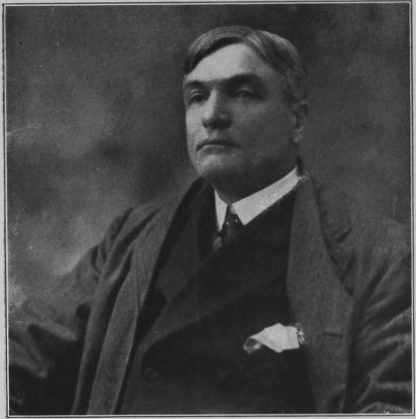
the only man who pardoned himself out of prison

If—very hypothetically—Donald J. Trump were to be convicted and even incarcerated, but also elected president in 2024, could he pardon himself? Since a president’s pardoning power is unlimited, the constitutional question might turn on whether the act of pardoning can be reflexive. Is it a correct use of the word “pardon” to say that someone pardoned himself?

The caption with above photo reads: “The only Man on Record who is known to have Pardoned himself out of Prison. He began life as a School Teacher, Clerk in a Law Office, full fledged Lawyer and Treasurer of a Political organization in New England, with whose funds he decamped. He has been in Prison a dozen times under as many aliases, where he has spent twenty-five years. When he pardoned himself out of prison he was in Nashville, Tenn. under the name of Henry B. Davis. He is now supposed to be dead.”

Leaving aside the Trumpian capitalization in this passage, the man who called himself Henry B. Davis did not actually pardon himself. He confessed that he “forged a petition bearing upward of 150 signatures, writing differing in each, the names of the leading citizens of Tipton, Tenn., the county in which I was sentenced. I then forged a letter bearing the signature of the firm of attorneys that defended me, one of whom was a friend of the Governor … I then forged another letter purporting to have been written by the aforesaid attorney to John Tipton, representative in the Legislature in Nashville, in which he was asked to see Governor Buchanan, and to urge him to pardon Henry B. Davis (my alias). All this was done in March, 1891. On the third day of April, 1891, the pardon reached the warden at Tracy City.”

In any case, this was not the only person to have pardoned himself. A Google search led me to a book by my friend Cynthia Levinson and Sanford Levinson, Fault Lines in the Constitution, which mentions the case of Isaac Stephens. While governor of the Territory of Washington, Stephens was convicted and fined for abusing his power. He was fighting a terrible war against Native people but was fined for offenses against white settlers. He actually pardoned himself and got away with it, although just six years later he died heroically on the Union side of the Civil War.

Neither example is very honorable, and I haven’t been able to find other cases of successful self-pardoning … so far.

Sources: John Josiah Munro, The New York Tombs, Inside and Out!: Scenes and Reminiscences Coming Down to the Present.–A Story Stranger Than Fiction, with an Historic Account of America’s Most Famous Prison (1909) and Cynthia Levinson and Sanford Levinson, Fault Lines in the Constitution: The Framers, Their Fights, and the Flaws that Affect Us Today.