Category Archives: Uncategorized

Massachusetts tax shortfall: up to $750 million this fiscal year

Declining tax revenues will likely cost our state about $500-$750 million during the current fiscal year, which ends on June 30. Over the next five quarters, the loss may reach $3 billion. I believe the total budget for the state is $43 billion, so that would be a 7% reduction–at a time of intense need.

The scale of this problem may not surprise anyone, but it’s important to be able to quantify it as a basis for smart policy. These estimates come from a new brief entitled “Estimating the Shortfall in Massachusetts Tax Revenues,” from the new Center for State Policy Analysis (cSPA) at Tufts University’s Jonathan M. Tisch College of Civic Life, where I work.
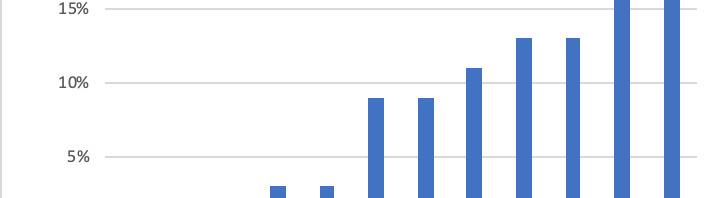
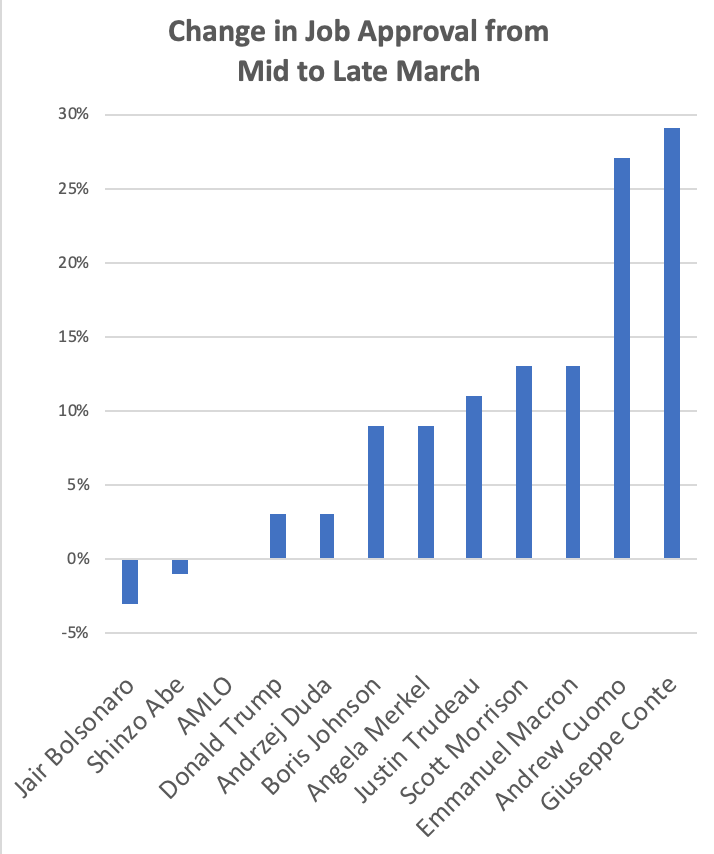
Trump’s polling bump in perspective

I’ve collected polls of France’s Emmanuel Macron (but this site shows less improvement for him); Italy’s Giuseppe Conte; New York’s Andrew Cuomo; Poland’s Andrzej Duda; and the UK’s Boris Johnson (the Tories now have their best support in the history of British polling). For Australia, Brazil, Canada, Germany, and Mexico, I am using Morning Consult polls from here. I take Trump’s approval rating from FiveThirtyEight. Countries with strong parliaments and weak executive branch leaders typically do not poll their national leaders often.

The graph below shows how various national populations rate their own leaders’ handling of the pandemic. (It is from the Canadian Broadcasting Corporation, hence the three Canadian leaders.) Note that Macron is rated worse than Trump on handling the virus but still gets a bigger bounce in approval polls.

a Green recovery

“We have a responsibility to recover better” than after the financial crisis in 2008, UN secretary general António Guterres warned. “We have a framework for action – the 2030 Agenda for Sustainable Development and the Paris Agreement on Climate Change. We must keep our promises for people and planet,” he added.

On this topic, I would yield to people who understand economics and the environment better than I do. I also recognize obstacles to making sure the recovery benefits the environment. (Will we have a recovery at all within a reasonable amount of time? Will the political elites in any important country allocate resources well?) But it seems worth discussing principles, because a decent outcome will depend on public pressure. We should decide what to demand.

I would propose four principles:

  1. The fiscal stimulus should be large and carbon-negative. Governments can and should spend heavily, because borrowing costs are extraordinarily low and social needs are critical. Once the pandemic ends, to the maximum extent possible, unemployed people should be paid to build and install renewable energy sources, to improve the power grid, to enhance public transportation (which will face a crisis of confidence in response to the pandemic), to restore natural resources, and to change agriculture.
  2. Bailouts should be carbon-neutral. I am not callous about people whose livelihoods depend on mining or drilling for carbon. But nowhere is it written that oil, gas, and coal companies deserve public subsidies, especially given the massive negative externalities of their industries. There is an immense amount of carbon underground and enormous incentives to extract and burn it. Our best hope is to cut the supply in the short term so that alternatives can become more affordable. Turmoil in carbon markets will have human costs, but also benefits. Thus: no bailouts for carbon.
  3. Financing should be equitable and carbon-neutral. I think the wisest macroeconomic policy is to borrow in the short term and pay it back with new taxes only later on–that’s the most stimulative approach. But we could negotiate an agreement now to pay it back later in a good way. That could mean phasing in carbon taxes along with highly progressive wealth taxes while permanently holding down income and payroll taxes for households with lower incomes.
  4. Spending should be planned and allocated in a participatory and deliberative way. This is not just a matter of justice or a way of generating civic benefits from the pandemic crisis. It is also an urgent practical need. Let’s say you want to build a new transit line to reduce carbon use. If a community organizes against it, it won’t go through. Also, people won’t ride the line unless it meets their needs, and transit without many passengers does no good for the environment. Therefore, effective spending depends on genuine support, which can be earned by creating opportunities for people to discuss and decide. Ideally, such discussions will also influence individuals’ decisions as workers, consumers, and investors, giving many people a justified sense that we are rebuilding the economy, and saving nature, together.

unveiling CIRCLE’s data tool

Although it’s hard to concentrate on politics right now, a massively consequential election is coming up, and today CIRCLE unveils a data tool that can help nonpartisan groups, partisan outfits, campaigns, and the media make smart decisions regarding young voters.

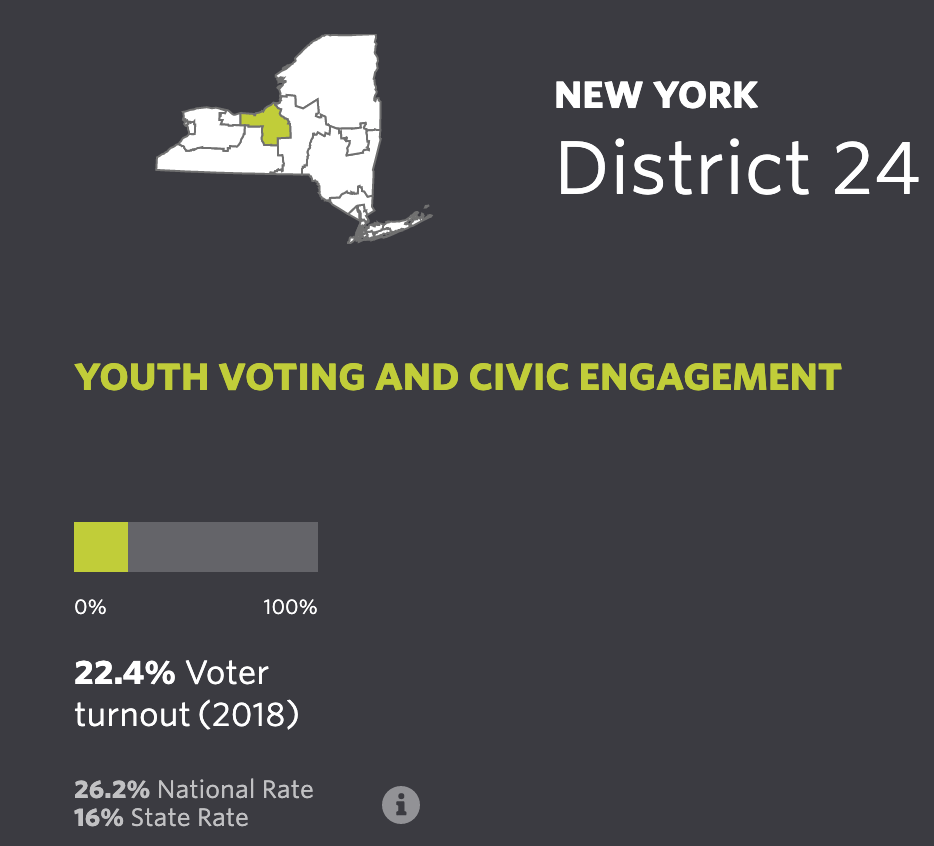
If you head to youthdata.circle.tufts.edu, you can explore youth registration and turnout, youth demographics, and an array of relevant civic factors for states and congressional districts over time–setting your own queries and seeing the results.

For instance, here is youth turnout in my hometown’s congressional district:

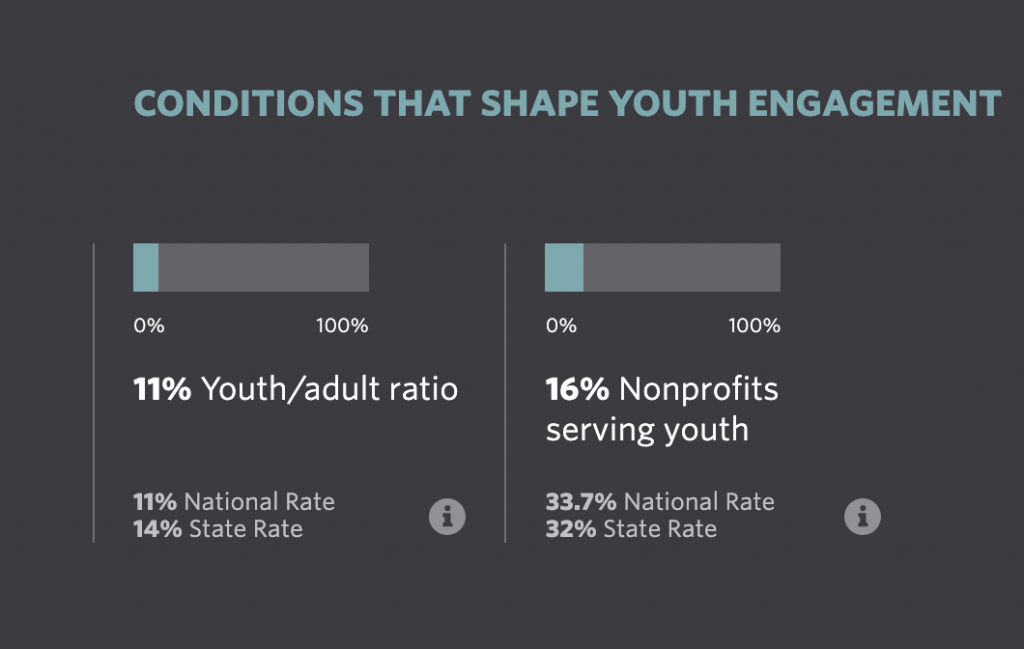
I also explored various underlying factors that might affect youth engagement in that district.

(The team has come a long way since the days when we’d generate a few charts and put them in a document that we expected people to print.)

mobilizing higher education against COVID-19

Tufts’ president, Anthony Monaco (an MD/PhD) has an op-ed in the Boston Globe calling on colleges and universities to deploy their resources to fight the public health emergency. He is not only talking about closing our campuses to reduce contagion or providing research and education for the public–although those are important contributions–but also about turning our dorms into quarantine centers and our college parking lots into “drive-through triage centers.” A longer list of highly tangible ideas is in his op-ed.