Author Archives: Peter

About Peter

Associate Dean for Research and the Lincoln Filene Professor of Citizenship and Public Affairs at Tufts University's Tisch College of Civic Life. Concerned about civic education, civic engagement, and democratic reform in the United States and elsewhere.

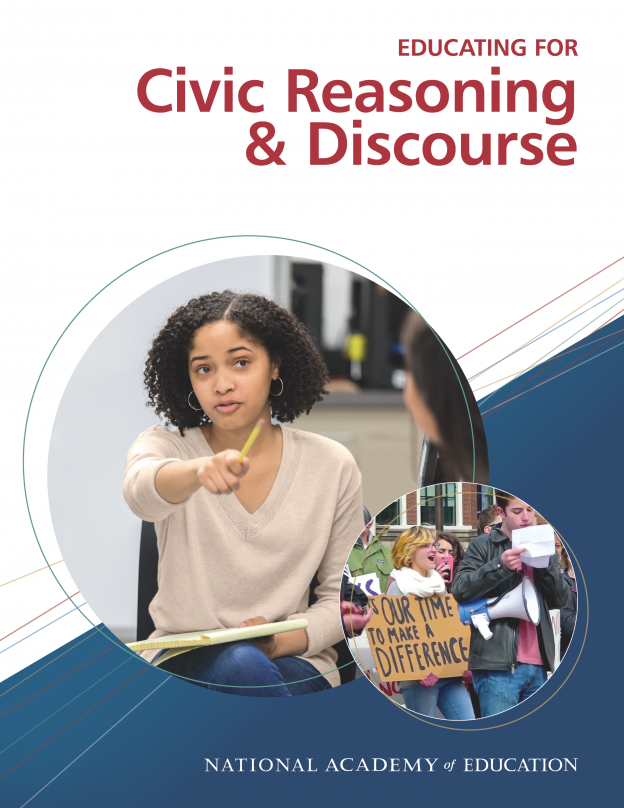
launch of Educating for American Democracy #EADRoadmap

Join us at the National Forum on March 2nd from 3-4:45pm ET for the official release of the Educating for American Democracy report.

Moderated by Judy Woodruff of PBS Newshour, the forum will feature leading scholars discussing the Roadmap’s guidance about what and how to teach in history and civics. This project is the result of 17 months of work by over 300 contributors.

I was one of the co-PIs, and this project has been my focus (outside of Tufts work) since 2019.

Please join us for the launch of the first truly national and cross-ideological conversation about civic learning and history at a time when our country needs it most.

All are welcome to attend the national forum. Please register and encourage others to register at forum.educatingforamericandemocracy.org.

The COVID 19 Vaccine in the Global North & Global South: Ethics, Access & Resistance

This is the video from a recent event sponsored by Tufts Global Education and the Fletcher Global One Health Diplomacy Initiative. Susan Sánchez-Casal organized and introduced the event. I moderated and posed the questions. The experts were Karsten Noko, a lawyer & humanitarian aid practitioner originally from Zimbabwe, and Josep Lobera, a sociology professor at the Universidad Autónoma de Madrid & Tufts in Madrid.

In the Global South, billions of people are not going to be vaccinated any time soon because of a shortage of vaccines in their countries. A realistic timetable is 2024. Meanwhile, millions of people in the Global North are going to refuse to be vaccinated because of skepticism and distrust, which is partly caused by elites’ use of weaponized misinformation.

The speakers also explored nuances–including vaccine shortages in the North and hesitancy and misinformation in the South.

syllabus of a course on the Philosophy of Martin Luther King, Jr.

Summary

In this seminar, we will study Martin Luther King Jr. as a political thinker. The whole class will read major works by King and excerpts from biographies and historical documents. Additional readings will be distributed among students, who will contribute insights from their assigned texts to the seminar discussions. The additional readings will include works that influenced King, writings by some of his contemporaries, and recent interpretations. We will investigate King’s understanding of the Civil Rights Movement—why it was necessary and what it aimed to achieve. Specifically, we will study his ideas about the political and economic organization of white supremacy, the impact of racial ideologies, and the importance of racial integration and the right to vote. We will investigate King’s philosophy of civil disobedience and nonviolence as well as a set of values he relates to that philosophy: dignity, sacrifice, self-reflection, self-improvement, love, faith, and freedom. We will relate these values to King’s understanding of justice. Criticisms of King will also be considered. Studying King and his critics will provide a window into post-WWII American political thought. (This course is the Capstone for the Civic Studies Major and open to other majors.)

Grading rubric:

  • Regular participation in Canvas discussion threads about the readings: 40%. I will post a prompt one week before each class session, and you will reply to my prompt before class. Reading and responding to other students’ comments will be appreciated but not graded.
  • 5-page paper, due at the end of the semester: 30%
  • class participation: 30%

Criteria for assessing class participation:

  1. Attendance. 
  2. Engaging in a discussion that is informed by the assigned texts. 
  3. Focusing on the topic and the texts, which does not preclude drawing connections beyond them.
  4. Being responsive to other students. Responsiveness needn’t always be immediate, verbal, or occur within the class discussion itself.
  5. Building on others’ contributions, and sometimes making links among different people’s contributions or between what they have said and the text.
  6. Demonstrating genuine respect for the others, where respect does not require agreement. In fact, sometimes respect requires explicit disagreement because you take the other person’s ideas seriously.
  7. Taking risks, trying out ideas that you don’t necessarily endorse, and asking questions that might be perceived as naive or uninformed.
  8. Seeking truth or clarity or insight (instead of other objectives).
  9. Exercising freedom of speech along with a degree of tact and concern for the other people.
  10. Demonstrating responsibility for the other students’ learning in what you say (and occasionally by a decision not to speak).
Continue reading

setting a higher standard for success in civic education

Sarah Garland has a good piece in The Hechinger Report on whether schools–and specifically, civic educators–can combat political extremism. She presents the evidence as mixed, and no one thinks that schools are equipped to solve that problem all by themselves.

Meanwhile Weinschenk & Dawes have a new article that re-analyzes longitudinal data from US students and finds that civic education does not boost voter turnout, once other factors are considered.*

My response is the same in both cases. Thousands of dedicated civic educators are doing their best in classrooms and community settings. However, as a society, we have not invested in civics. We have not put much public or private money into it, or built it into policy reforms, or required kids to spend much time on it, or emphasized it when educating future teachers, or even conveyed its importance to most of our youth.

As a result, the aggregate effects from taking a civics course are not likely to be large. Program evaluations and studies of specific classrooms sometimes find big impacts (albeit in the short term, since few evaluations involve long-term follow-up), but the effects of typical courses are limited.

If people take away the conclusion that civics doesn’t work, that will be a self-fulfilling prophesy. (And it would reflect a misunderstanding of the relationship between data–which always describes the past–and envisioning the future.) But it is true that we must invest considerably more in civics to get the results we need.

*Weinschenk, A., & Dawes, C. (2021). Civic Education in High School and Voter Turnout in Adulthood. British Journal of Political Science, 1-15. doi:10.1017/S0007123420000435. See also The Educating for Democracy Act of 2020.

Amanda Gorman rose to the occasion

Occasional poetry is verse written to be read or declaimed aloud: for instance, at a wedding, a funeral, a graduation, a coronation–or an inauguration.

Several genres won’t work for these purposes. For instance, the audience probably doesn’t have time for an epic or a ballad. Satire is not what the patron expects, at least not at a funeral or an inauguration.

Lyric verse is also problematic. Lyric poetry since the Romantic period has often aspired to authenticity: the author’s distinctive personality becomes concrete in words. But an occasion is not about the poet. If the poet’s sincere emotion happens to be completely aligned with the event, lyric can work. That can happen at a wedding or a funeral if the poet is a dear friend. But politics is less personal. How many poets are fully committed, to the bottom of their souls, to the presidency of Joseph R. Biden Jr.?

Another major direction has been irony and indirection. A lyric poem doesn’t plainly say what the author thinks; it demands intense interpretive work from the audience. But that won’t work for an occasion, especially a mass event dominated by speeches. The last thing we want at an inauguration is any text that is easy to misinterpret by careless or hostile listeners. Clarity is essential. Although lyric verse can be impressively clear about the concrete objects that it describes, it is rarely clear about the implications.

Some styles of lyric poetry do work well for occasional purposes. For example, in the era of Dryden and Pope, English lyric poetry did not usually aim for authenticity, originality, or ambiguity. Poetry was more often an art of elegant expression. Many poems stated conventional opinions, but with excellent use of formal properties that listeners were prepared to appreciate–clever rhymes and classical rhetorical devices.

Thus (Royall Sir,) to see you landed here
Was cause enough of triumph for a year:
Nor would your care those glorious joyes repeat
Till they at once might be sure and great...

Dryden, "To His Sacred Majesty: A Panegyric on his Coronation" (1662)

According to Elliott Colla, “Occasional poetry remains … more central in non-Western traditions such as Arabic, Persian, Urdu, Japanese, Korean and Chinese.” But in English, the neoclassicism of Dryden and Pope has been little admired. Some astute critics recognize its quality, but very few active poets aspire to write in that vein.

In fact, Romantic and modern lyric poetry is anti-occasional, in the sense that it is written by an autonomous individual for the private consumption of other private individuals, dispersed in time and place. When it seems occasional, it fails (except if that appearance is ironic.)

Most of the previous poems at US presidential inaugurations have dissatisfied me in one of two ways. Some have been genuine lyric poems that fell flat when delivered through a microphone to a mass audience. Robert Frost prepared a somewhat wry commentary in verse about occasional poetry but couldn’t see his text in the bright sunlight and declaimed a lyric instead. Others have essentially been speeches with irregular line breaks. But it is not clear why a poet is qualified to give a speech at a major political event. The poet is a formal craftsperson, not an expert on policy.

One exception was Maya Angelou, who spoke as a leading public intellectual as much as a poet. I thought her poem was basically a speech, albeit with more of a fictional narrative spine. In any case, she enriched the 1993 inauguration.

Amanda Gorman has the advantage of working in the tradition of spoken word poetry: verse written for public performance and usually drawing on oral genres, from folk stories to hip hop. Spoken word is occasional verse; it is written to be performed at events.

Gorman didn’t give a prose speech, because her words were carefully chosen for rhythm, rhyme, alliteration, and assonance:

This is the era of just redemption
We feared at its inception
We did not feel prepared to be the heirs
of such a terrifying hour
but within it we found the power

She accentuated those formal properties in her performance. Indeed, her performance was much better than the words on the page, and that is intrinsic to the genre. (In contrast, T.S. Eliot does a poor job reciting his poems.)

Gorman wrote for the occasion–words that would be useful for Biden and Harris and for Americans of good will who were watching the event. She didn’t necessarily disclose all that she believes about the new administration or the country. (I have no basis to speculate about her full beliefs.) Nevertheless, she was authentic as a performer, much as Lady Gaga gave an authentic performance of the “Star Spangled Banner” or Anya Taylor-Joy poured herself into the role of Beth Harmon in The Queen’s Gambit. Each of these people chose to support the event at which they starred.

This is not to doubt Gorman’s words, but to take them as “occasional” in the best sense of the word. What the nation needed on this occasion was to hear this particular person reassure us that:

Somehow we do it
 Somehow we've weathered and witnessed
 a nation that isn't broken
 but simply unfinished ...