Category Archives: Internet and public issues

Congress vs. Facebook

Any American between the ages of 15 and 25 (or any parent or teacher thereof) has probably heard of Facebook, Friendster, and MySpace, the social networking services. Users create webpages with their pictures and self-descriptive information. Visitors can also leave notes and see links to the owners’ friends’ pages.

Such services are hugely popular; in fact my college students use Facebook instead of email. The general idea has lots of potential for other applications. For example, e-ssembly is a new social networking service explicitly designed to facilitate political discussion and organization.

However, via Mobilizing America’s Youth, I learned about HR 5319, the “Deleting Online Predators Act” of 2006. This bill would require schools that accept federal discounts for Internet service to:

prohibit access by minors without parental authorization to a commercial social networking website or chat room through which minors may easily access or be presented with obscene or indecent material; may easily be subject to unlawful sexual advances, unlawful requests for sexual favors, or repeated offensive comments of a sexual nature from adults; or may easily access other material that is harmful to minors.

I can’t imagine a way to block all “harmful” material on a social network. That means that the bill would force high schools to ban social networking software. Granted, the expansion of Facebook to high schools has provoked criticisms. Among other problems, there is some potential for stalkers to create accounts. However, young people have First Amendment rights and need to be able to use new modes of communication. For example, almost everyone agrees that teenagers should be allowed to use email and the web, even though both contain much harmful material. When it comes to social network software, schools can set their own rules and don’t need to be babysat by the federal government. Surely there must be a better way to prevent stalking than by banning social software in all the high schools of America.

the world of DailyKos

In the New York Review of Books, Bill McKibben reviews a new book by the bloggers Jerome Armstrong and Markos Moulitsas Z?niga, Crashing the Gate: Netroots, Grassroots, and the Rise of People-Powered Politics. He uses the opportunity to describe the network of Z?niga’s DailyKos, Talking Points Memo, Atrios, and related blogs as “the most ambitious, interesting, and hopeful venture in progressive politics in decades.” I found the review a perceptive description of this network (which draws at least half a million people a day); but I have mixed feelings about its impact and potential.

Armstrong and Z?niga describe Howard Dean’s appeal in ’04 as “ideologically agnostic, purely partisan.” That’s also a reasonable summary of their style of web-based politics. [See an explicit statement here.] They want to see Democrats play hard. They admire politicians, like Gov. Dean, who attack the Republicans; and they despise Democrats, like Senator Lieberman, who cloud the issue by praising Republicans. Their fury at Lieberman is not ideological, for they will support Democrats who defend the Iraq war–it’s rather the anger of a sports fan who thinks that an athlete is not playing to win.

To give Z?niga and his allies their due: They have pioneered techniques that allow many thousands of people to participate in Party politics. People without much money can make small financial contributions that are aggregated strategically on the Web. Participants can also volunteer time and contribute ideas. Devoted fans of the Democrats are becoming players.

Another benefit of this new style of politics is to increase participation and competition in every community, even the “reddest,” most gerrymandered of GOP congressional districts. Unlike the official parties (which save their ammunition for “swing” seats), Kos and his allies believe that every election should be contested. That is good because it gives more people opportunities to participate.

I should also note that 2006 is the perfect year for the Kos approach. The main issue really will be incompetence and corruption in one-party Washington, and people (some people) really will vote Democratic simply in order to check and oversee the Republicans. This is one year when it may work simply to attack the incumbent party and promote an alternative set of players.

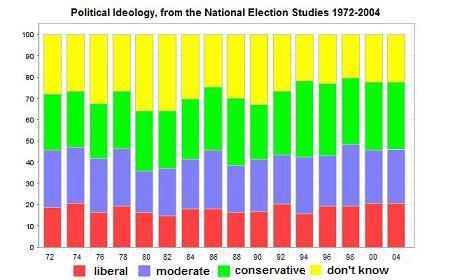
But that approach didn’t succeed in ’04, and it won’t work in ’08. The reason, in my opinion, is a basic imbalance between liberals and conservatives. For a long time, there have been more of the latter than the former.

Continue reading

websites for civic renewal

Along the right-hand column of this page, I’ve been running automated excerpts from blogs about civic renewal. Below is a list of these blogs, including some exciting newcomers. All these sites provide a high dose of news and information (along with some commentary and opinion) and emphasize civic work of various kinds:

  • Civic Mission of Schools blog, with the daily news on civic education and youth service, provided in part by CIRCLE graduate assistant Gary Homana.
  • Smart Communities, a blog by the President of the Pew Partnership for Civic Change, Suzanne Morse
  • The Public Journalism Network Blog: keeping alive the spirit of public or civic journalism
  • The National Coalition for Dialogue and Deliberation’s news page, for practical work on public deliberation
  • International Civic Engagement blog from Park University
  • Public Engagement, a blog by the University of Minnesota’s Associate VP for Public Engagement, Victor Bloomfield
  • Silver in Seattle, by David Silver, guru of online civic work
  • Otherwise Engaged by Alexandra Samuel: “Every blogger’s guide to civic engagement. Every citizen’s guide to blogging.”
  • Democracy LABlog, with Lars Hasselblad Torres’ “updates from the field”
  • digital media: the audience problem

    I’m writing a mini-proposal for a project on the digital media and civic engagement. I’m thinking of exploring the following problem.

    A new generation is coming of age at a time when various electronic media are ominipresent, cheap, and sophisticated. Two contradictory aspects of the new media will influence civic development. On one hand, people around the world can, with increasing ease, get access to the same materials–whether music, video, or political speeches and statements. Some items become extraordinarily popular. They often feature talented celebrities who have the support of technical experts. Although some products backed by big corporations fail in the marketplace, corporate investment at least increases the odds of obtaining a large audience. There is also the network-concentration problem that I mentioned last Friday: a few websites draw an enormous amount of traffic, presumably because they are popular; therefore, people (including me) want to know what they’re saying. What is popular tends to become more so.

    The easy availability of celebrity culture reduces demand for ordinary people’s creativity and makes the world more homogeneous, thus frustrating local communities (and even whole nations) that want to govern their own cultures. The more that slick, professional products penetrate the international market, the less scope exists for ordinary people to create cultural products that others will value. This phenomenon is relevant to “civic engagement.” We participate not only by influencing our governments, but also by helping to shape our cultures.

    On the other hand, the same technology that gives billions of human beings instant access to the world’s most popular culture also allows the same billions to produce and disseminate their own ideas, which can be diverse and relevant to their communities. Never has it been as cheap or quick to produce text, sound, or moving images. This opportunity for creativity has great civic potential; it could turn people from spectators and consumers into creators.

    However, most young people do not have such extraordinary talent (or privileged positions in networks) that they can gain huge followings. If there are several million blogs, then the average blog will attract just a few visitors. The topics that young people know best are very local, and that means that not many other people have an interest in what they say. And even if you attend the same school as someone, you may not be interested in her views about local issues like school uniforms or cafeteria food–not when you can download a professional video for free.

    An audience needn’t be big, but it must be interested and responsive, or else creativity is discouraging. What can help an ordinary group of kids to build a responsive and interactive audience? Do some technical choices matter? For example, is podcasting promising? Or must we change the context in which youth spend their time? For example, it seems plausible that students who attend a small high school with a coherent academic theme will be more interested in one another’s cultural products than students who attend a large “shopping mall” high school with lots of separate cliques. I would like to investigate these topics by looking for online youth products that do and do not have responsive audiences, and asking about the reasons for the differences.

    a steep popularity curve

    The following may be very elementary, but I’m just trying to figure it out for myself. …

    Websites often exhibit a pattern in which a few sites are far more popular than the rest. See, for example, this graph by Daniel Drezner and Henry Farrell, which plots the number of incoming links to each blog versus its popularity rank.

    The graph shows enormous inequality. That is a bit counter-intuitive; we might expect that given millions of choices, people would distribute their interest evenly across the whole web. However, we want to know what’s going on in the most popular nodes of a network such as the blogosphere. Therefore, we visit those nodes and comment on them, thereby making them even more popular. In other words, network traffic tends to concentrate.

    Clay Shirky thinks that blogs fall in a power-law distribution, so that the line above can be plotted as y=axk. Drezner and Farrell think the line is lognormal. That’s better news. A lognormal distribution is less steep, so it suggests that unknown websites sometimes gain popularity; the pattern is not perfectly self-reinforcing. In any case, the data clearly show a huge tilt toward top-ten sites.

    Some factor must cause mass attention to focus on certain targets rather than others. That factor could be quality, but it could also be precedence–older sites will tend to beat newer ones. For instance, I can’t believe that Instapundit is orders of magnitude better than the average blog, but it is older.

    Along similar lines, I observed recently that college applicants want to attend competitive universities, so that they can be exposed to other bright students and gain the reputational advantage of a degree from an institution that is known to be hard to get into. Thus we might expect the number of applications to follow a power-law distribution, with a few universities receiving overwhelming interest. But I don’t think that’s the case. The reason, surely, is that admission to a college (unlike access to a website) is selective. If you want to get into your “best” option, then you must apply to institutions to which you have a reasonable chance of being admitted. If everyone applied to Yale (currently the university with the lowest acceptance rate), then most would waste their application fee. I cannot find a table with the number of applications per institution. But I suspect that the number of applicants/per places does not vary enormously between the most competitive college in America and the nearby branch of the state university, especially if one could control for quality of education. People do tend to prefer already popular institutions; but that preference is countered by their fear of being rejected. [Yale admits 10% of applicants; University of Maryland–many rungs down the ladder–admits about 20%.]