Category Archives: Uncategorized

what will happen to youth turnout in ’06?

This is a question that we’re being asked with increasing frequency at CIRCLE. [One person who has asked is Zachary Goldfarb, who published a good story on the topic in the Sunday Washington Post.]

Clearly, youth turnout will be lower than it was in 2004, a presidential election year during which participation of the whole population returned to a level last seen in 1968. Youth contributed more than their share to that increase, but will surely vote at a lower rate in the upcoming congressional elections. After all, many live in completely uncompetitive House districts in states with no Senate races. Thus the relevant comparison is not to 2004 but to the last congressional election (2002) or the last election that followed a big surge in youth turnout (1994).

The comparison to 1994 is interesting because that election was viewed as a test of us Gen-Xers. My generation had turned out in the Bush-Clinton-Perot race of 1992. Would we respond to the call of celebrities like Madonna (who, wrapped only in an American flag, told us, “If you don’t vote, you?re going to get a spankie?), or would we prove to be slackers? We were slackers, voting at a 22% rate in the momentous election that gave Republicans control of the House. For the Millennials, 2004 was a banner year like 1992; and 2006, like 1994, will be viewed as something of a test.

What will happen next November depends on why there was a big surge in 2004. The reasons may include:

1. Generational replacement. The Millennials are different from X-ers in some basic and attractive ways; for example, they are more engaged in their communities, more optimistic, and more trustful of major institutions (other than the press). These qualities might explain higher turnout in ’04 and would help again in ’06.

2. Mobilization: Anecdotal evidence suggests that the parties and interest groups invested a lot of money in 2004 in techniques that work for young voters (such as face-to-face canvassing). They also specifically targeted youth. The level of mobilization will be lower this year, but probably at least as high as it was in 2002. An additional piece of good news is that mobilization in one election still motivates people in the next–as shown by careful experimental studies.

Partisanship: Although young voters skew toward moderates and independents and are still forming their political identities, they are increasingly hostile to the incumbent party. That anger was a motivator in 2004 and might again turn out the youth vote in ’06. However, Republican youth may not turn out unless the GOP works to mobilize them. The net result if Republicans stay home will be a bad year for youth turnout.

Attentiveness: Following the news is a leading indicator, because you must know what’s going on before you can vote. Young people’s news consumption rose sharply after 9/11/01. I see no evidence that it has increased since 2002. In fact, I would guess that it has fallen off.

international law and the current mideast conflict

I think that Hamas, Hezbollah, and Israel are all in violation of the Fourth Geneva Convention, Art. 33-34: “No protected person may be punished for an offence he or she has not personally committed. Collective penalties and likewise all measures of intimidation or of terrorism are prohibited. … Reprisals against protected persons and their property are prohibited. … The taking of hostages is prohibited.”

Hamas and Hezbollah took hostages, not just prisoners, if they captured soldiers for the purpose of exchanging them for Israeli prisoners. But Israel admits that its response is a form of collective punishment. For instance, “Israeli Prime Minister Ehud Olmert held Lebanon directly responsible for the ambush and promised a ‘painful and far-reaching response.'” The pain, evidently, is to be suffered by the Lebanese collectively, not just by Hezbollah as a military organization.

The Fourth Geneva Convention clearly binds Israel and Lebanon, which are signatories. When the PLO was responsible for the occupied territories, it filed a letter expressing a desire to sign as well. (The Swiss Federal Council replied “that it was not in a position to decide whether the letter constituted an instrument of accession, ‘due to the uncertainty within the international community as to the existence or non-existence of a State of Palestine.'”) In 1977, some countries–including the US but not Israel–accepted an addendum that would even more clearly render illegal some of the recent actions taken by Israel. I think the addendum is morally appropriate, although one could debate whether Hamas fits the description in Article 1 of “peoples fighting against colonial domination and alien occupation and against racist regimes in the exercise of their right of self-determination”.

The text of the addendum is below the fold. [I see that Chris Bertram on Crooked Timber has a similar take.]

Continue reading

democratic skills for professionals

What does an aspiring urban public school teacher need to know? Before she starts teaching, she should learn the material she is supposed to cover, something about pedagogy and assessment, some instructional techniques–and the ability to address fundamental problems in the system in which she will work. She cannot solve educational problems inside her own classroom, because senior managers and big bureaucratic structures create too many hurdles. She cannot take on managers and bureaucracies alone. In my experience, unions are unreliable. Thus she needs to work with other teachers, parents, kids, and community-members, often quite different from herself, to address common problems together.

Democratic skills (listening, deliberating, organizing, petitioning) are essential for teachers, as they are for many other professionals. For a good teacher, “civic engagement” is not a voluntary after-work activity, but the heart of her professional life. Therefore, it is exciting to watch Minneapolis Community College’s Urban Teacher Program embrace “advocacy and activism.” Specifically, their Associate’s Degree students lead urban students in Public Achievement projects. In Public Achievement, kids choose, define, and address community issues–a genuinely open-ended, non-ideological form of politics that will serve teachers well.

logical positivism and chivalry

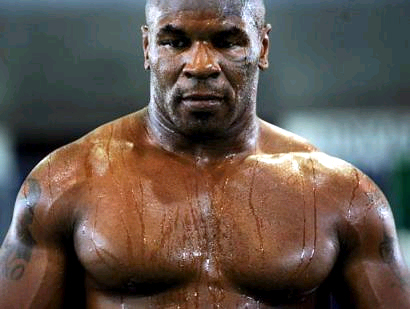
Until yesterday, I did not know the following story about the major British philosopher A.J. Ayer, which wikipedia borrows from Ben Rogers’ life of Ayer. In 1987, “At a party … held by fashion designer Fernando Sanchez, Ayer, then 77, confronted Mike Tyson harassing Naomi Campbell. When Ayer demanded that Tyson stop, the boxer said: “Do you know who the **** I am? I’m the heavyweight champion of the world,” to which Ayer replied: ‘And I am the former Wykeham Professor of Logic. We are both pre-eminent in our field. I suggest that we talk about this like rational men.’ Ayer and Tyson then began to talk, while Naomi Campbell slipped out.”

“the objectivist v. the constructivist”

A couple of professors have a joint blog in which they debate political issues from their opposing positions (respectively, libertarian and progressive). The tone tends to be “hot,” but the authors evidently enjoy the exchange and keep it going after the first volleys. Each post begins with a pair of essays that were first published in local newspapers, the Dunkirk-Fredonia (NY) Observer and the Jamestown (NY) Post-Journal. A nice example is their debate over school vouchers. I was put off by the initial ad hominem characterization of people who oppose vounchers. (That’s my position, at least for now, yet I don’t think I’m beholden to teachers’ unions, ignorant of the facts, or hate kids.) However, both sides ultimately score some good points.